Propagation
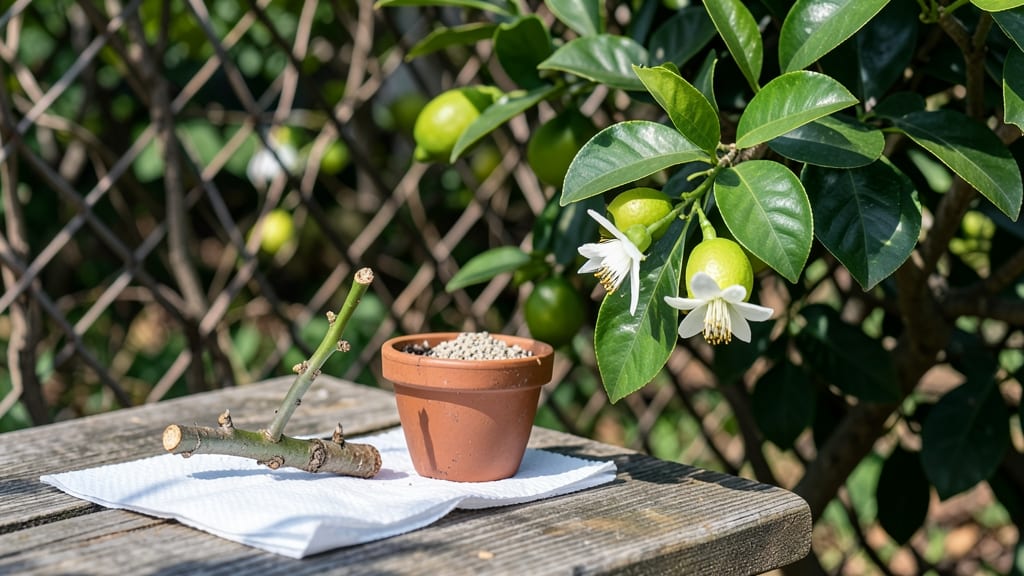
This lemon plant propagation trick delivers fast roots—I’ve seen new growth appear in just 2-3 weeks with the right method. My kitchen windowsill now hosts a thriving Meyer lemon cutting that’s already budding, all from a single 6-inch stem.
The key isn’t patience; it’s knowing when to snip and how to coax those roots without stressing the plant.
You’ll need sharp pruners, rooting hormone (optional but helpful), and either water or a well-draining soil mix—no fancy equipment required. Season matters too: spring and early summer give the best success rates, but indoor propagation works year-round with a grow light.
The whole process takes under 30 minutes, and the hardest part is waiting for those first white roots to peek through.
What you end up with is a vigorous young tree that retains the parent plant’s sweet citrus scent and potential for fruit—though it may take 2-3 years before you see lemons. The foliage stays glossy and fragrant, and the growth habit is far more predictable than starting from seed.
Just avoid overwatering once rooted, and you’ll have a lemon plant that outpaces store-bought seedlings.
Works for Meyer lemons, Eureka varieties, or even sour lemon cuttings—just adjust humidity needs based on your climate. Here’s how to skip the nursery and grow your own citrus tree without the wait.
📚 In This Guide
- What you need
- Instructions
- Tips and common mistakes
- Wrapping up and next steps
What you need
- ● Mature lemon plant: A healthy, disease-free plant with at least 2-3 mature stems (6+ inches long). Choose stems with leaves and a node (the bump where leaves grow).
- ● Sharp pruning shears or scissors: Clean, sterilized tools to make precise cuts (avoid tearing the stem!).
- ○ Rooting hormone (optional but recommended): A powder or gel to boost root growth (e.g., Rootone or Clonex).
- ● Water (for water propagation): Room-temperature, filtered water (chlorine-free if possible). Use a clear glass jar (16–24 oz) for visibility.
- ● Well-draining potting mix (for soil propagation): A blend of 50% perlite or sand and 50% peat moss or coconut coir. Avoid garden soil—it’s too dense!
- ● Small pots or containers: 4–6 inch pots with drainage holes (1 per cutting). Or, use a seed tray with cells.
- ● Plastic wrap or humidity dome: To create a mini greenhouse and retain moisture (e.g., a clear plastic bag with holes or a propagator lid).
- ● Spray bottle: For misting cuttings and keeping humidity high.
- ● Activated charcoal: 1 tsp per gallon of water (prevents bacterial growth in water propagation).
- ● Heat mat: A small heating pad (set to 70–75°F) to speed up rooting in cooler climates.
- ● Grow lights: LED or fluorescent lights (12–16 hours/day) if natural light is weak.
- ● Label markers: To track propagation dates and varieties.
- ● Fungicide (e.g., Mycorrhizal inoculant): A pinch to protect cuttings from rot.
Step-by-Step instructions for propagating lemon plants without stress
Here’s the foolproof method I’ve used to grow strong lemon cuttings in just a few weeks.
Select Healthy Mature Stems for Cutting
Choose stems that are 4-6 inches long with at least 3-4 leaf nodes—these are the little bumps where leaves and roots grow. The stem should be pencil-thick and green, not woody or yellowed. I always pick non-flowering stems because they focus energy on rooting instead of blooming.
Use sharp, clean scissors to make a 45-degree angle cut just below a leaf node. This increases surface area for root growth. Dip the cut end in room-temperature water for 10-15 seconds to prevent air bubbles from blocking root development. Discard any stems with brown spots or mushy areas—they won’t root well.
Prepare the Cuttings for Root Growth
Remove the lower 2-3 leaves from the stem, leaving only the top cluster. This reduces moisture loss and directs energy toward root formation. If the remaining leaves are large, trim them in half to further cut water loss. Now, place the cuttings in one of two ways: directly in water or in moist soil.
For water propagation, use a clear glass filled with 2-3 inches of filtered or distilled water. Submerge only the bottom 1 inch of the stem—no leaves should touch the water. Change the water every 3-4 days to prevent bacterial growth. You’ll see tiny white roots in 2-3 weeks if conditions are right.
Encourage Root Development in Water or Soil
If using soil, fill a small pot with well-draining potting mix and make a hole deep enough to bury half the stem. Gently press the soil around the cutting to hold it in place. Water lightly until moisture seeps from the bottom, but don’t oversaturate—the mix should feel damp like a wrung-out sponge. Place the pot in a bright, indirect light spot, like an east-facing window.
For water-grown cuttings, keep the glass in bright, indirect light—direct sun can overheat the water and stress the plant. Roots should appear in 2-4 weeks. Once they reach 1-2 inches long, they’re ready to transplant. Don’t rush this step—stronger roots mean a healthier plant later.
Transplant Rooted Cuttings to Soil
When roots are 1-2 inches long, it’s time to move the cuttings to soil. For water-grown plants, rinse off any algae from the roots and plant them in individual pots with well-draining potting mix. Bury the stem up to the first set of leaves—this encourages stability and prevents rot. Water lightly after planting to settle the soil around the roots.
Place the newly potted cuttings in bright, indirect light for 1-2 weeks to help them adjust. Avoid direct sun at first—it can scorch tender new leaves. After two weeks, gradually introduce morning sunlight for 1-2 hours daily, increasing exposure over 7-10 days. This hardens the plant and prepares it for full sun.
Maintain and Care for New Lemon Plants
Keep the soil evenly moist but not soggy—lemons hate wet feet. Water when the top inch of soil feels dry to the touch. Fertilize lightly with a balanced liquid fertilizer every 4-6 weeks once the plant is established. You’ll know it’s thriving when new leaves appear and the plant starts growing taller.
Be patient—it can take 6-12 months for a propagated lemon plant to bear fruit, but the wait is worth it. Prune any leggy growth to encourage bushier shape, and watch for pests like spider mites. A occasional spray of neem oil keeps them at bay without harming the plant.
Tips & tricks for perfect lemon plant propagation
Here's how to maximize your success with lemon cuttings—these tricks have helped me avoid the most common pitfalls and speed up rooting.
The Stem Selection Secret: In Step 1, focus on stems with a slight bend or flexibility—they're younger and more likely to root successfully. Avoid stems that feel brittle or have visible cracks, as these won't develop strong roots. I've found that morning-harvested stems often have higher moisture content, giving them a head start in the rooting process.
Water Propagation Pro Tip: For the water method in Step 2, use a glass that's wide enough to support the stem without touching the sides—this prevents rot. I've had the most success with clear glass jars because they allow you to monitor root development daily. When changing water every 3-4 days, use a clean spoon to remove any algae that might form, as this can block oxygen to the developing roots.
Soil Preparation Insight: In Step 3, the "damp like a wrung-out sponge" test is crucial—this moisture level prevents both root rot and dehydration. I like to mix my well-draining potting mix with about 20% perlite to improve aeration. For faster results, you can lightly mist the soil around the cutting with water to create a humid microclimate that encourages root growth.
Transplanting Timing: When roots reach 1-2 inches in Step 4, don't wait any longer to transplant—longer roots in water become more fragile. I've found that transplanting in the morning gives plants the full day to recover from the shock. After transplanting, place a clear plastic bag loosely over the pot for the first week to maintain humidity, removing it daily for 10 minutes to prevent mold buildup.
Pro Tips for Lemon Plant Propagation
- Here's how to maximize your success with lemon cuttings—these tricks have helped me avoid the most common pitfalls an...
- The Stem Selection Secret: In Step 1, focus on stems with a slight bend or flexibility—they're younger and more likel...
- Water Propagation Pro Tip: For the water method in Step 2, use a glass that's wide enough to support the stem without...
Frequently asked questions
Got questions about propagating your lemon plant? You’re not alone! Here are some of the most common queries—plus clear, no-stress answers to help you grow like a pro.
Can I propagate a lemon plant from a store-bought lemon?
Yes, but with caution! Store-bought lemons are often treated with fungicides or wax to prevent spoilage, which can inhibit root growth. Rinse the pit thoroughly, let it dry for 1–2 days, and plant it in moist soil or water. For better success, use seeds from a homegrown lemon or a young cutting from a healthy plant.
How long does it take for lemon plant cuttings to root in water?
Patience is key! Most lemon cuttings (3–4 inches long) will show roots in 2–4 weeks if kept in warm, indirect light and changed water every 3–5 days. Some stubborn varieties may take up to 6–8 weeks. Once roots hit 1–2 inches, transplant to soil to encourage stronger growth.
Is propagating lemon plants in soil faster than water?
Not necessarily! Water propagation is often easier to monitor and can speed up root formation for some varieties. However, soil propagation (using a well-draining mix) can reduce transplant shock and encourage faster establishment once roots form. Many gardeners swear by rooting hormone to cut down the timeline.
Why are my lemon plant cuttings turning yellow or mushy?
Yellowing or mushy stems usually signal rot from overwatering, bacterial/fungal infections, or poor air circulation. Act fast: trim the affected area, let it dry for a day, and replant in fresh, sterile soil or water. Use a fungicide if needed, and avoid overcrowding cuttings in containers.
Can I propagate a lemon tree from a branch without leaves?
Leafless branches are trickier but possible if they’re semi-hardwood (not too soft or woody). Dip the cut end in rooting hormone and plant it in moist perlite or a soil mix. Keep humidity high (use a plastic bag) and be patient—rooting may take longer than leafy cuttings. Success rates improve with healthy, disease-free wood.
Wrapping up and next steps
Growing your own lemon plant from propagation is a rewarding journey that brings fresh, fragrant greenery—and eventually, delicious fruit—right to your doorstep! 🌱 Whether you choose water or soil, the key is patience, consistency, and a little care.
Now that you’re armed with the best techniques, why not start with just one cutting today? Grab a healthy stem, follow the steps, and watch your green thumb grow even stronger!
Ready to take the next step? Experiment with different methods, track your progress, and soon you’ll be sharing your thriving lemon plants with friends! 🍋✨