Trees
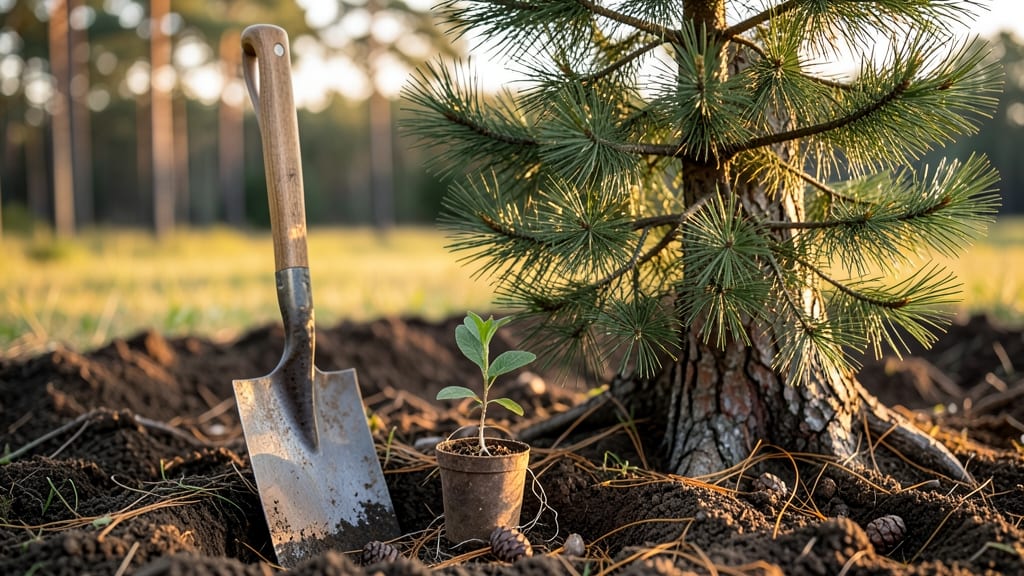
Planting evergreen trees transforms your yard from seasonal eye candy to a year-round privacy shield that barely needs upkeep. ✨ I’ve planted enough of them to know the difference between a tree that thrives and one that struggles—and it all starts with the right spot, soil, and a few simple techniques.
The payoff? Lush, wind-resistant greenery that stays vibrant even in winter, with minimal pruning or fuss.
You’ll need healthy nursery stock, a shovel, compost, and a watering can or hose. The soil should drain well but hold moisture, and spacing matters—too close, and roots compete; too far, and you’ll have gaps.
I’ve learned the hard way that skipping these basics means years of catching up. But once you nail them, your trees grow strong, fast, and with far fewer headaches than you’d expect.
By the end of the first growing season, you’ll have trees that look like they’ve been there for years—not just a few scraggly stems. The foliage stays dense, the branches fill in naturally, and you’ll spend less time fussing over them.
That’s the beauty of evergreens: they’re the ultimate low-maintenance investment for privacy, shade, and curb appeal.
Works for any yard size, from tight urban lots to spacious backyards. Whether you’re planting a single specimen or a windbreak, the same principles apply. Let’s get those roots in the ground the right way.
📚 In This Guide
- What you need
- Instructions
- Tips and common mistakes
- Wrapping up and next steps
What you need
- ● Evergreen tree saplings: Choose 3–5 mature, healthy trees (e.g., Thuja occidentalis, Picea glauca, or Juniperus virginiana). Size depends on your yard: 1–3 ft tall for quick privacy or 6+ ft for instant impact.
- ● Shovel: A round-point or digging shovel (16–18" blade) for planting holes.
- ● Garden gloves: Heavy-duty, waterproof gloves to protect your hands.
- ● Pruning shears: Sharp, bypass-pruners (for trimming roots or shaping).
- ● Mulch: 2–3 bags of pine bark or wood chips (3–4" thick layer per tree).
- ● Watering can or hose: With a soaker nozzle for deep hydration.
- ○ Tree stakes & ties (optional): 4–6 stakes per tree (if planting in windy areas).
- ● Soil amendments: Compost or peat moss (mix 1 part into native soil for drainage).
- ● Root stimulator: Liquid or powder (e.g., Mycorrhizal fungi) to boost growth.
- ● Drip irrigation kit: For automated watering (great for large plantings!).
- ● Post-hole digger: If staking trees for extra support.
Step-by-Step instructions for planting evergreen trees
Here's the foolproof method I use to plant evergreens that thrive for decades with almost no fuss.
🌱 Step 1: Choose the Right Location and Dig the Hole
Pick a spot with 6+ hours of sunlight daily—most evergreens need full sun to maintain their vibrant color and dense growth. Measure the root ball of your tree and dig a hole twice as wide and just as deep as the container. This gives roots room to spread without circling the trunk.
I always loosen the sides of the hole with a shovel to prevent soil compaction. Break up any hardpan or rocks at the bottom so roots can penetrate easily. The hole should be perfectly square—no need to shape it like a cone or pyramid. Real talk: Evergreens hate soggy roots, so if your yard holds water, consider mounding soil or amending with compost to improve drainage.
🪴 Step 2: Prepare the Tree and Backfill the Hole
Remove the tree from its container and gently loosen the roots at the edges with your fingers—this encourages them to spread outward instead of staying in a tight ball. If the roots are circling, untangle them carefully (don't tear them). Place the tree in the hole so the top of the root ball sits 1-2 inches above ground level—evergreens need this slight elevation to prevent root rot.
Backfill with the native soil you removed, tamping lightly every 6 inches to eliminate air pockets. I avoid adding amendments like fertilizer or peat moss at planting time—too much can burn tender roots. Water the hole thoroughly before the last shovelful to help settle the soil around the roots.
☀️ Step 3: Water Thoroughly and Mulch Properly
After planting, water deeply until the soil 12 inches down feels moist. You'll know it's enough when water runs out the bottom of the hole. Evergreens need consistent moisture, but they can't handle soggy soil—aim for 1-2 inches of water per week, more in hot, dry spells.
Spread 2-3 inches of mulch in a donut shape around the base, keeping it 6 inches away from the trunk. I use shredded bark or pine straw because they improve soil moisture retention and suppress weeds. Too much mulch smothers roots, and too little won't protect them from temperature swings.
✂️ Step 4: Stake Only If Necessary and Prune Lightly
Stake only if your tree is 6 feet tall or taller—smaller evergreens usually don't need support. If you do stake, use two stakes placed opposite each other and tie the trunk loosely with soft fabric strips. Tightening too much can girdle the tree as it grows. Check the ties every 3-4 months and loosen them if the tree isn't leaning.
Prune only to remove any broken branches or those rubbing against each other. Evergreens grow slowly, so avoid heavy pruning—they won't recover like fast-growing deciduous trees. Wait until spring or early summer to prune, never in fall or winter when the tree is dormant.
⏰ Step 5: Monitor and Maintain for Long-Term Health
Check the soil moisture weekly during the first growing season—evergreens wilt slowly, so by the time needles turn brown, it's often too late. Water deeply whenever the top 2 inches of soil feel dry. Fertilize only in early spring with a balanced, slow-release fertilizer (I use 10-10-10 at half strength).
Watch for yellowing needles, which usually means overwatering or poor drainage. Brown tips often signal underwatering or low humidity. If you notice pests like spider mites or aphids, treat with horticultural oil—evergreens are tough but still need protection against infestations. With proper care, your evergreens will provide year-round privacy with minimal effort.
Tips & tricks for planting evergreen trees
These simple tricks will help your evergreens establish strong roots and thrive for decades with minimal effort.
Soil Preparation Secret: In Step 1, when digging your hole, test the soil drainage by filling it halfway with water and timing how long it takes to drain. If it takes longer than 30 minutes, your soil is too compacted—mix in 20% compost by volume to improve aeration. Evergreens need well-draining soil to prevent root rot, and this quick test saves you from soggy soil headaches later.
Root Care Technique: During Step 2, when loosening those root edges, pay special attention to any roots growing in tight circles. These "pot-bound" roots can strangle your tree as it grows. Use your fingers to gently separate them—think of it like untangling headphones. This single step prevents girdling, which can kill your tree over time.
Watering Wisdom: In Step 3, the 12-inch deep watering might seem excessive, but it's crucial. Use a garden trowel to check moisture at that depth—if it's dry, water again. The goal is to encourage roots to grow deep, not just spread shallowly. A soaker hose works best for this, delivering water slowly right at the root zone.
Mulching Mastery: When applying that 2-3 inches of mulch in Step 3, remember the "donut shape" rule—keep mulch 6 inches away from the trunk. Too much mulch piled against the base creates moisture that promotes rot. Instead, think of it as a protective shield around the roots, not a blanket over the trunk. This simple adjustment prevents one of the most common evergreen planting mistakes.
Pro Tips for Planting Evergreen Trees
- These simple tricks will help your evergreens establish strong roots and thrive for decades with minimal effort.
- Soil Preparation Secret: In Step 1, when digging your hole, test the soil drainage by filling it halfway with water a...
- Root Care Technique: During Step 2, when loosening those root edges, pay special attention to any roots growing in ti...
Frequently asked questions
Got questions about planting evergreen trees? You’re not alone! Here are some of the most common concerns—and their answers—to help you get started with confidence.
When is the best time to plant evergreen trees?
The ideal window is early spring or fall (September–November or March–April), when soil is moist but not frozen. Avoid extreme heat or drought—evergreens struggle with transplant shock in harsh conditions. If you must plant in summer, water deeply 2–3 times per week to keep roots hydrated.
How much water do newly planted evergreens need?
Water thoroughly at planting (1–2 gallons per tree) and keep soil consistently moist for the first 6–12 months. After that, most mature evergreens tolerate drought, but young trees need 1–2 inches of water weekly. Mulch (2–4 inches) helps retain moisture and protect roots.
Can I plant evergreens in containers or small spaces?
Dwarf varieties (like Thuja occidentalis ‘Smaragd’ or Chamaecyparis lawsoniana ‘Ellwoodii’) thrive in containers or tight spots. Use well-draining soil and large pots (15+ gallons) for potted evergreens. For privacy hedges, space them 3–5 feet apart—closer for faster growth, wider for mature size.
Why are my evergreen needles turning brown?
Brown needles usually signal drought stress, sunburn, or pests. Check soil moisture first—evergreens hate dry roots. If the issue persists, inspect for spider mites or bagworms (common culprits). Prune affected branches and apply horticultural oil if needed. Pro tip: Avoid trimming in late summer—new growth is vulnerable to winter damage.
Do evergreens need fertilizer?
Most evergreens prefer low-maintenance soil, but a slow-release, acidic fertilizer (10-10-10 or 7-7-7) in early spring can boost growth. Over-fertilizing causes salt buildup—stick to half the recommended dose for young trees. Organic options like composted pine needles work too!
Wrapping up and next steps
Planting evergreen trees is a fantastic way to enjoy year-round privacy and beauty with minimal effort! These resilient trees offer lush foliage, windbreaks, and wildlife support—perfect for both urban and rural landscapes.
Whether you’re a beginner or a seasoned gardener, the right species and care routine will ensure your greenery thrives for decades.
Ready to transform your space? Start small—pick one or two trees, gather your tools, and get planting! With a little patience and love, you’ll soon have a serene, evergreen sanctuary that’s all yours. 🌲✨