Watering
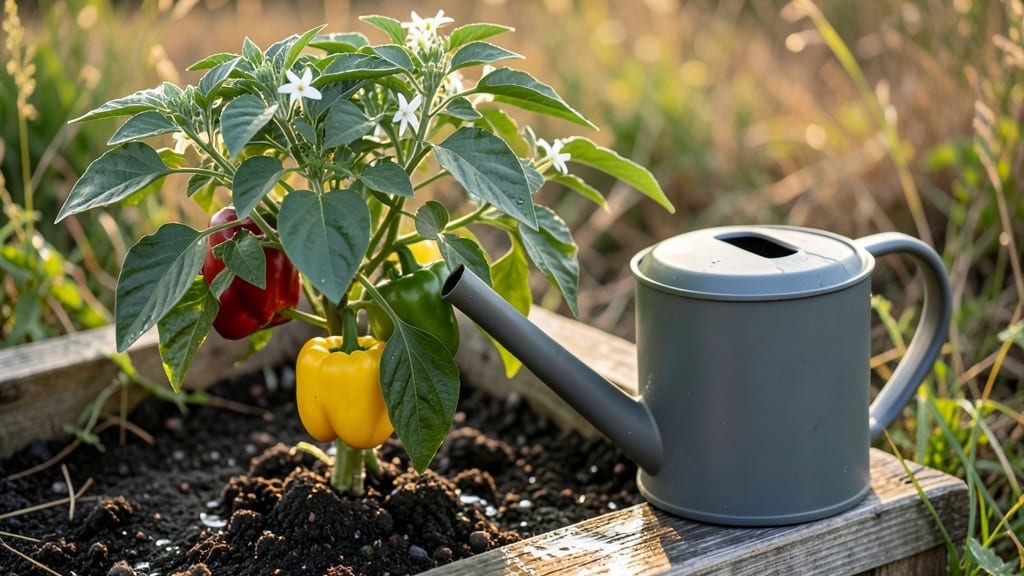
Overwatering pepper plants turns their roots into soggy messes that suffocate growth. 🌱 I’ve seen healthy plants collapse in days when water pools around their roots, and the first sign is always those sad, yellow leaves that won’t bounce back.
The real damage? Root rot creeping in silently, stealing nutrients and strength before you even notice.
Most gardeners overdo it because peppers need consistent moisture—but not swamp conditions. A quick finger test in the soil tells you everything: if the top 2 inches stay damp for more than 2 days, you’re drowning them.
The fix starts with better drainage: raised beds, containers with holes, or mixing in perlite to break up heavy soil. And here’s the trick—air-pruning pots keep roots healthy by preventing them from circling too tightly.
Within a week of cutting back on water, you’ll see new green leaves pushing out, and within a month, those peppers will rebound with vigor. The key is watching, not guessing—soil moisture meters are your new best friend.
If the rot’s already set in deep, you might need to repot or treat with fungicide, but most cases turn around faster than you’d think.
Prevention is easier than rescue: water deeply but less often, and always let the top inch dry out between soakings. Your peppers will thank you with thick stems, glossy leaves, and a harvest that keeps coming. Let’s get those roots breathing again.
Common Causes Of Excess Moisture
Overwatering pepper plants isn’t always about how much you water—it’s often about how and when you do it. Let’s break down the key reasons why your peppers might be drowning in their own soil, even if you think you’re being careful.
---
Pepper plants hate soggy feet, and poor drainage is the #1 culprit. When containers lack drainage holes or soil compacts too tightly, water pools at the roots instead of draining away.
- Why it happens: - Clay or loamy soil holds moisture like a sponge, suffocating roots. - Compacted soil (from heavy watering or foot traffic) blocks oxygen flow. - Cheap pots without holes trap water, turning roots into a science experiment gone wrong.
- Actionable fix: - Use well-draining mixes (50% potting soil, 30% perlite, 20% compost). - Elevate pots on feet or trays to prevent waterlogging. - Test drainage: If water sits in the saucer after 30 minutes, your pot needs holes.
---
Sticking to a rigid watering schedule (e.g., "every Tuesday") is a fast track to root rot. Pepper plants drink based on temperature, humidity, and sunlight—not your calendar.
- Why it happens: - Overcast days reduce evaporation, so soil stays wet longer. - High humidity (like in greenhouses) slows drying, keeping roots damp. - Cold soil (below 60°F) halts root absorption, leading to buildup.
- Actionable fix: - Stick your finger 1–2 inches deep—water only if soil is dry. - Morning watering (before 10 AM) gives roots time to dry. - Adjust for seasons: Less water in winter, more in summer heat.
---
Dumping water directly on leaves or pouring at the base like a firehose creates a swampy environment. Even "light" watering can be too much if done wrong.
- Why it happens: - Leaf wetness promotes fungal diseases (like Phytophthora), which rot roots. - Shallow watering encourages roots to stay near the surface, where they drown faster. - Automatic sprinklers (common in gardens) soak foliage instead of soil.
- Actionable fix: - Water at the base (not leaves) with a slow drip or soaker hose. - Avoid overhead sprinklers—they mimic rain, which peppers despise. - Use a moisture meter to track real soil conditions (not guesswork).
--- A pepper plant in a 4-inch pot won’t need as much water as one in a 12-inch container. Small pots dry out faster, but they also retain moisture longer once saturated.
- Why it happens: - Root-bound plants (crowded roots) can’t absorb water efficiently, leading to stagnation. - Large pots hold more water—if you water a 5-gallon pot like a 1-gallon one, roots suffocate. - Plastic pots trap heat and moisture, speeding up rot in hot climates.
- Actionable fix: - Upgrade pots gradually: Move seedlings to 1-gallon pots, then 3–5 gallons as they grow. - Choose breathable materials: Terracotta (for hot climates) or fabric grow bags (for airflow). - Empty saucers after watering to prevent passive rewetting.
--- Pepper plants are tropical but not swamp-dwelling. High humidity + cool temps = a root rot party.
- Why it happens: - Cool nights (below 65°F) slow evaporation, keeping soil damp. - Humid climates (70%+ humidity) prevent soil from drying between waterings. - Greenhouses or plastic covers trap moisture like a sauna.
- Actionable fix: - Improve airflow with fans (especially indoors). - Reduce humidity by spacing plants 12–18 inches apart. - Avoid watering at dusk—let soil dry overnight.
--- Too much fertilizer (especially synthetic blends) disrupts soil chemistry, making roots more susceptible to rot.
- Why it happens: - High salt levels (from fertilizers or tap water) repel water, causing uneven moisture. - Over-fertilizing stresses roots, making them vulnerable to pathogens. - Hard water (high in minerals) leaves a crust that blocks drainage.
- Actionable fix: - Flush soil every 2–3 months with plain water to remove salts. - Use organic fertilizers (compost tea, fish emulsion) for slower nutrient release. - Test your water—if it’s hard, use rainwater or distilled water for peppers.
--- Hidden pests like fungal gnats, nematodes, or slugs damage roots, making them unable to process water properly.
- Why it happens: - Fungal gnat larvae chew roots, creating entry points for rot-causing bacteria. - Nematodes weaken roots, reducing their ability to absorb water efficiently. - Slugs/snails create wounds that trap moisture against the plant.
- Actionable fix: - Inspect roots when repotting—look for slimy trails or tiny holes. - Use beneficial nematodes (Steinernema) to combat root pests. - Apply diatomaceous earth around the base to deter slugs.
Fixing Overwatered Pepper Plants Fast
Overwatering can turn your thriving pepper plants into a sad, mushy mess—but don’t panic! With the right steps, you can revive them and prevent future disasters. Below, we’ll break down cause-specific fixes, from adjusting your watering habits to saving roots from rot. Let’s get your peppers back on track!
---
Cause: Waterlogged soil suffocates roots, leading to rot and fungal growth. Fix: 1. Stop Watering Immediately 🚰 – Let the soil dry out before watering again. 2. Improve Drainage 🏗️ – - Add perlite, vermiculite, or coarse sand to heavy clay soil. - Elevate pots with feet or saucers to prevent pooling. 3. Loosen Compacted Soil 🔄 – Gently aerate the top 2–3 inches with a fork to help roots breathe.
Prevention Tip: 💡 Use a moisture meter or the "finger test" (stick your finger 1–2 inches deep—if damp, wait!).
---
Cause: Overwatering + poor airflow = fungal root rot (Phytophthora or Pythium). Fix: 1. Trim Damaged Roots ⚰️ – - Remove the plant and rinse roots in water to check for black/mushy spots. - Snip off rotted roots with sterilized scissors. 2. Repot in Fresh Soil 🌿 – - Use a well-draining potting mix (add compost or coconut coir). - Choose a container with drainage holes—no exceptions! 3. Fungal Treatment (If Needed) 💊 – - Spray roots with hydrogen peroxide (3%) or copper fungicide. - Avoid watering until soil is dry again.
Prevention Tip: ✨ Air-prune roots by planting peppers in fabric pots or hanging baskets—this encourages stronger root growth and reduces rot risk.
---
Cause: Overwatering in hot weather cools roots too fast, shocking the plant. Fix: 1. Move to Shade ☀️🚫 – Place peppers in partial shade for 2–3 days to reduce stress. 2. Water Deeply but Less Often 💧 – - Water only when the top 1–2 inches of soil are bone-dry. - Use drip irrigation or soaker hoses to avoid wetting leaves. 3. Boost Humidity (If Needed) 🌬️ – - Mist leaves lightly in the morning (avoid evening to prevent fungal growth).
Prevention Tip: 🌡️ Monitor temps—peppers hate soggy soil above 75°F (24°C). Mulch with straw to regulate moisture.
---
- Check Before Watering 👀 – Press soil; if it springs back, it’s too wet. - Water at the Right Time ⏰ – Morning (6–9 AM) is best—avoid evening watering. - Use the Right Pot Size 🏺 – Too-large containers hold excess moisture; opt for slightly snug pots. - Mulch Like a Pro 🌾 – Straw or wood chips slow evaporation and keep roots cool.
--- Remember: Peppers are drought-tolerant—better to underwater slightly than drown them! With these fixes, your plants will bounce back stronger (and maybe even drop a few extra peppers as thanks 😉).
Frequently asked questions
How do I know if my pepper plant is overwatered vs. underwatered?
Check the soil first—stick your finger 1-2 inches deep. If it feels damp, you're likely overwatering. Look for yellowing leaves (especially lower ones), wilting despite moist soil, or mushy stems. Underwatered plants have crispy brown edges and dry soil pulling away from pot edges.
Can I save my pepper plant if the roots are rotting?
Yes, but act fast! Remove the plant, rinse the roots, and trim away any black/mushy sections with clean scissors. Repot in fresh, well-draining soil with perlite and reduce watering immediately. For severe cases, hydrogen peroxide (3%) can help disinfect roots before repotting.
Why do my pepper plants need less water in containers than in garden beds?
Containers dry out faster, but they also retain moisture longer once saturated. The key difference is drainage—pots without holes trap water, while garden soil drains naturally. Use containers with drainage holes and upgrade pot size gradually (1-gallon → 3-gallon) as plants grow to match their needs.
Is it better to underwater or overwater pepper plants?
Peppers are drought-tolerant—it's always better to underwater slightly than drown them. Overwatering causes root rot, while underwatering just slows growth. The golden rule: water when the top 1 inch of soil is dry, and always check before adding more. A moisture meter takes the guesswork out!
How long does it take for pepper plants to recover from overwatering?
With proper care, you'll see improvement in 3-7 days—new green leaves will emerge as roots recover. Full recovery may take 2-4 weeks, depending on how severe the damage was. During this time, reduce watering further and ensure good airflow to prevent fungal issues. Patience is key!