Propagation
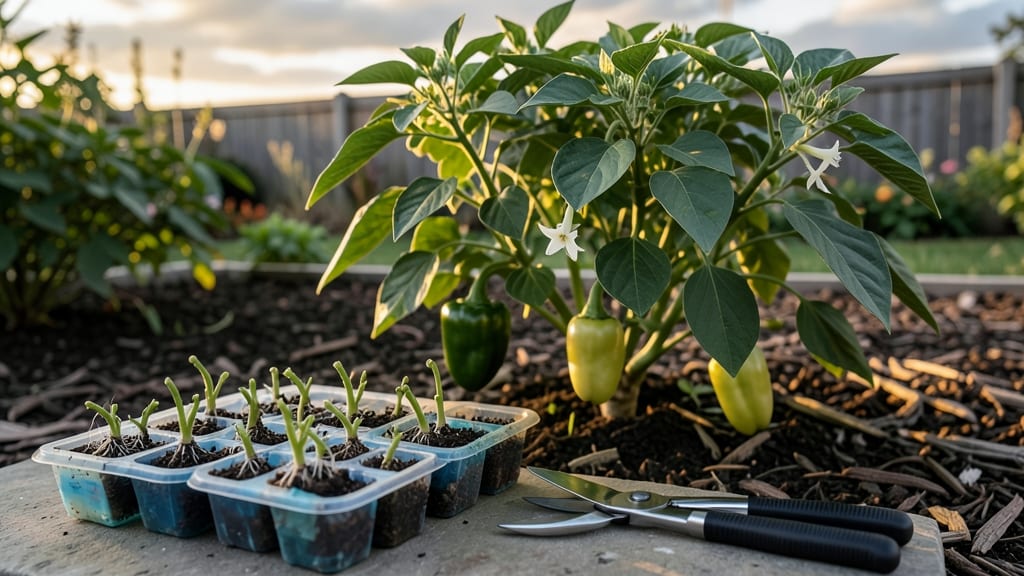
Propagating pepper plants from cuttings is the fastest way to get roots without stress—no fancy equipment needed. ✨ I’ve rooted dozens of peppers this way, and the secret lies in timing, clean cuts, and keeping the environment just right.
The first time we saw those white roots appear in water, it felt like magic.
You’ll need sharp scissors, clean water or moist soil, and a sunny windowsill or grow light. Most peppers root in 2-4 weeks, and the key is keeping the cutting humid while avoiding rot. We’ve learned that overwatering is the silent killer—always check moisture with a finger before adding more.
The payoff? Vigorous plants that transplant like pros, with bold green leaves and a head start on fruit production. These rooted cuttings outperform store-bought seedlings every time, and you get to grow exactly the varieties you love. Ready to skip the seedling stage?
Works for backyard gardens, containers, or even a sunny kitchen counter. Here’s how to do it without losing a single cutting along the way.
📚 In This Guide
- What you need
- Instructions
- Tips and common mistakes
- Wrapping up and next steps
What you need
- ● Pepper plant cuttings: 4–6 healthy, non-flowering stems (4–6 inches long)
- ● Cut just below a node (where leaves grow) for best rooting
- ● Rooting medium (choose one): Water method: Clean, room-temperature water (1–2 cups per cutting)
- ● Soil method: Well-draining potting mix (e.g., cactus/succulent mix or 50% perlite + 50% peat)
- ● Containers: Water method: Small glass jars (16–20 oz) or clear plastic cups with holes for drainage
- ● Soil method: 4–6 small pots (3–4 inches wide) with drainage holes
- ● Tools: Sharp, sterilized pruning shears or scissors
- ○ Optional: Rooting hormone (gel or powder) for faster results
- ● Humidity dome: Clear plastic bag or propagator lid to retain moisture
- ● Grow lights: LED or fluorescent lights (12–16 hrs/day) for weak-light conditions
- ● Fertilizer: Diluted seaweed extract or fish emulsion (after roots form)
- ● Label markers: To track pepper varieties (e.g., jalapeño, bell, habanero!)
Step-by-Step instructions for propagating pepper plants
Here’s how to grow strong, healthy pepper cuttings in just weeks—no fancy tools needed.
🌱 Step 1: Select and Prepare Healthy Cuttings
Choose a mature pepper plant with at least 4-6 inches of new growth. Look for stems that are 1/8-inch thick and have 2-3 sets of leaves. Use clean, sharp scissors to cut just below a leaf node—this is where roots will form. I like to make cuts at a 45-degree angle to increase surface area for root growth.
Remove the bottom leaves (about 1-2 inches from the cut end) so they won’t rot in water or soil. You’ll have 4 strong cuttings from one healthy plant. Dip the cut ends in rooting hormone (optional but speeds things up) before placing them in water or soil.
💧 Step 2: Root in Water for Fast Growth
Fill a clean glass or jar with room-temperature water until the cuttings sit with 1-2 inches submerged. Change the water every 2-3 days to prevent bacteria buildup. Place the container in a spot with bright, indirect light—direct sun can overheat the water and stress the cuttings.
You’ll see tiny white roots forming in 10-14 days. Once roots reach 1 inch long, they’re ready to transplant. I keep mine near a sunny window but not in harsh light—just enough to encourage growth without scorching.
🪴 Step 3: Transplant to Soil for Stronger Roots
Fill a small pot (about 4 inches wide) with well-draining potting mix. Make a hole with your finger and gently place the rooted cutting in, burying it to the first set of leaves. Press the soil lightly around the stem to secure it without compacting.
Water lightly until the soil is moist but not soggy. Place the pot in a spot with bright, indirect light for the first week to help the cutting adjust. After that, gradually introduce it to full sun over 3-5 days to avoid shock.
☀️ Step 4: Care for New Plants
Keep the soil consistently moist but not waterlogged—pepper cuttings need 1 inch of water per week. You’ll know it’s time to water when the top ½ inch of soil feels dry. Fertilize lightly with a balanced liquid fertilizer (half-strength) after 4 weeks to encourage strong growth.
Watch for new leaves forming on the top of the plant—this is your sign that the cutting has taken root and is thriving. Once you see steady growth, you can transplant to a larger pot or garden bed. Real talk: If a leaf yellows, don’t panic—it’s usually just adjusting to its new home.
Tips & tricks for propagating pepper plants without stress
Fast rooting isn't magic—it's about choosing the right cuttings and creating ideal conditions. Here's what I've learned from years of propagating peppers the easy way.
Selection is Everything: In Step 1, focus on stems that are 1/8-inch thick with 2-3 sets of leaves—these are your winners. The thicker the stem, the faster the roots will form. Confession: I skipped this detail for years and wondered why some cuttings rooted in 10 days while others took 3 weeks. The difference? Stem thickness and leaf sets.
Water Quality Matters: For Step 2, use room-temperature water—cold water shocks the cuttings while warm water can promote bacterial growth. I always use filtered or distilled water to prevent mineral buildup that can clog the stem ends. Change the water every 2-3 days religiously—this simple step prevents that nasty bacterial scum that can kill your cuttings before they even root.
Light Balance is Key: That bright, indirect light in Step 2 and Step 3 is non-negotiable. I learned this the hard way after my first batch of cuttings grew leggy and weak from too much direct sun. Place your cuttings near an east-facing window or under a grow light for 12-14 hours a day. The goal is to encourage root growth, not leaf production at this stage.
Soil Prep Shortcut: In Step 3, mix your well-draining potting mix with a handful of perlite or vermiculite for extra drainage. This prevents those dreaded root rot issues that can happen when soil stays too wet. I also like to warm my soil mix slightly before transplanting—just pop the pot in the sun for an hour or two to take the chill off. The cuttings will appreciate the gentle environment.
Pro Tips for Propagate Pepper Plants
- Fast rooting isn't magic—it's about choosing the right cuttings and creating ideal conditions. Here's what I've learn...
- Selection is Everything: In Step 1, focus on stems that are 1/8-inch thick with 2-3 sets of leaves—these are your win...
- Water Quality Matters: For Step 2, use room-temperature water—cold water shocks the cuttings while warm water can pro...
Frequently asked questions
Got questions about propagating pepper plants? You’re not alone! Here are some of the most common concerns—plus quick, no-stress solutions to keep your peppers thriving.
Can I propagate pepper plants from store-bought peppers?
Unfortunately, no—store-bought peppers are often treated with growth inhibitors or irradiated to prevent sprouting. Instead, save seeds from homegrown peppers or buy seeds labeled for propagation. If you’re curious, try germinating seeds from heirloom peppers for a fun experiment!
How long does it take for pepper cuttings to root in water?
Most pepper cuttings root in 2–4 weeks in water, but some varieties (like jalapeños or habaneros) may take longer. Keep the water warm (70–80°F) and change it every 3–4 days to prevent bacteria. Patience is key—don’t rush the process!
Is propagating in soil better than water?
Soil propagation often yields stronger roots faster because it mimics natural conditions. Use a moist, well-draining mix (like perlite + peat) and keep humidity high with a plastic bag. Water cuttings lightly to avoid rot. For beginners, water is simpler, but soil can reduce transplant shock.
Why are my pepper cuttings turning yellow or mushy?
Yellowing leaves or mushy stems usually mean overwatering, rot, or bacterial infection. If using water, ensure only the lower 1–2 inches of the stem are submerged. For soil, avoid soggy conditions. Trim affected areas with clean scissors and treat with a diluted hydrogen peroxide solution (1 part peroxide to 4 parts water) if needed.
What’s the best temperature for propagating pepper plants?
Peppers love warmth! Aim for 70–85°F during the day and 60–70°F at night. Use a heat mat if your home runs cooler. Cold drafts or sudden temperature drops can stunt root growth. A sunny windowsill or grow light works great for indoor propagation.
Can I propagate peppers from seeds instead of cuttings?
Seeds are a reliable alternative—just plant them 1/4 inch deep in warm soil and keep it moist. Germination takes 10–20 days. For faster results, soak seeds in warm water for 24 hours before planting. Cuttings are great for clones, but seeds let you experiment with new varieties!
Wrapping up and next steps
Propagating pepper plants is a rewarding journey that lets you grow your own flavorful harvest with minimal stress—whether in water or soil! 🌱 From selecting healthy cuttings to nurturing roots, each step builds confidence in your green thumb.
Now that you’re armed with tips and tricks, why not start today? Grab those cuttings, follow the simple steps, and soon you’ll be enjoying homegrown peppers that outshine store-bought.
Pro tip: Share your success with fellow gardeners or experiment with different varieties—your garden (and taste buds) will thank you! 🎉