How To
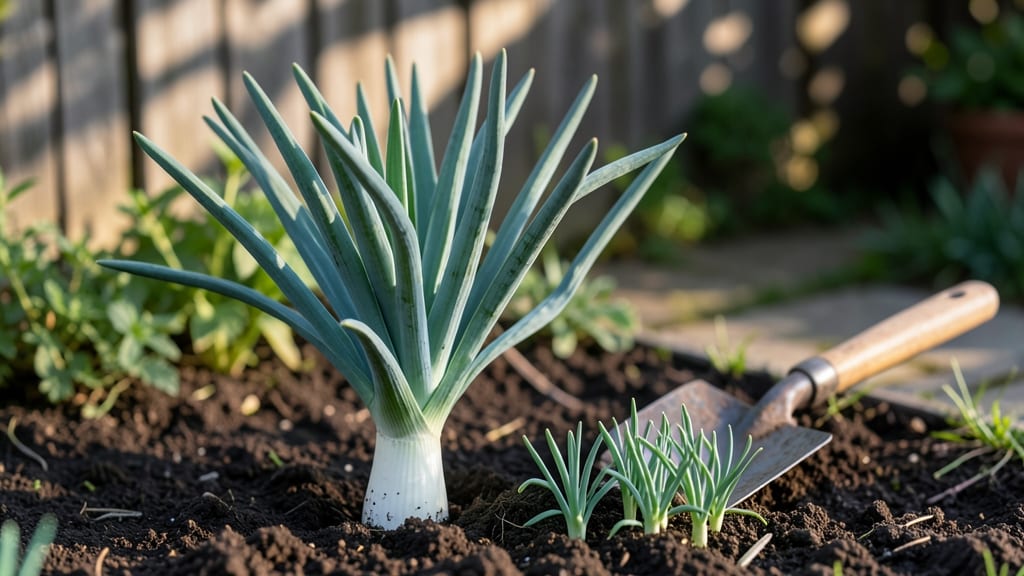
Growing thick, straight leeks 🧅 starts with the right planting distance—and most gardeners miss the mark by 2–3 inches.
Struggling with thin, spindly leeks? The secret to growing thick, straight stems starts with perfect planting distance—and most gardeners get it wrong.
Leeks thrive when spaced just right: too close, and they compete for nutrients, leaving you with weak, skinny shafts. Too far apart, and you waste garden space on half-hearted harvests. In USDA Zone 6a, the ideal spacing transforms your spring planting into a summer feast of tender, restaurant-quality leeks.
Here’s how to nail the distance for your soil, climate, and growing method—plus pro tips to avoid the top 3 spacing mistakes that stunt growth.
Optimal leeks planting distance by growth stage and method
Leeks thrive when given the right amount of space to develop their signature thick, tender stems—but getting the leeks planting distance wrong can turn your harvest into a disappointment. The key lies in balancing competition for nutrients with airflow for disease prevention.
Whether you're direct-sowing seeds or transplanting seedlings, the spacing changes dramatically as they grow, and skipping the thinning stage is a common mistake that leads to weak stems.
For most gardeners, the confusion starts with whether to follow seed packet instructions or adjust based on your garden’s size and soil type. The truth? Organic gardeners often space leeks slightly closer to encourage natural competition, while conventional growers prioritize wider spacing for easier mechanical harvesting.
Below, we’ll break down the exact distances for each growth stage and method, plus how to tweak them for small gardens, containers, or high-yield systems.
comparison-table
| Growing Method | Initial Spacing (After Germination) | Final Spacing (At Harvest) | Row Spacing (Inches) | Key Considerations | Pro Tip for Thicker Stems |
|---|---|---|---|---|---|
| Direct-sown seeds | 2 inches apart | 4–6 inches apart | 18–24 inches | Thin aggressively to avoid competition; best for large gardens | Interplant with shallow-rooted crops like lettuce to maximize space |
| Transplanted seedlings | 3–4 inches apart | 6–8 inches apart | 24 inches | Allows for thicker stems; ideal for small gardens or containers | Use a dibber to create deep holes for seedlings to encourage long white shafts |
| Succession planting | 1.5 inches apart | 3–4 inches apart | 12–18 inches | Stagger plantings every 2–3 weeks for continuous harvest | Mulch heavily to retain moisture and prevent bolting in hot weather |
If you’re direct-sowing leeks, start with seeds spaced just 2 inches apart—this might seem tight, but it’s necessary to ensure germination isn’t wasted. Once seedlings emerge, the real work begins: thinning to 4–6 inches apart by the time they’re 4–6 inches tall.
This might sound harsh, but removing weaker seedlings early prevents overcrowding, which leads to thin, leggy stems and higher disease risk. For large gardens, use a row spacing of 18–24 inches to create walkways and improve airflow.
Transplanting seedlings gives you a head start on spacing, since you can place them directly at 3–4 inches apart before thinning to 6–8 inches. This method is perfect for small gardens or containers, where every inch counts.
The wider final spacing encourages thicker stems by reducing competition. Pro tip: Use a dibber tool to create deep planting holes—this tricks leeks into growing longer white shafts, which is what you’re after for that restaurant-quality harvest.
For succession planting, the initial spacing can be even tighter at 1.5 inches apart, but you’ll thin to 3–4 inches as plants mature. This approach ensures you have leeks ready to harvest every few weeks, but it requires careful mulching and consistent watering to prevent stress.
In hot climates, mulch with straw to keep roots cool and retain moisture, which is critical for preventing bolting (when leeks flower prematurely).
Adjusting for small gardens or containers? Reduce final spacing to 4–5 inches apart in 12-inch-wide pots, but never exceed 3–4 plants per container. In raised beds, maintain 5–6 inches between plants with rows spaced 18 inches apart to mimic in-ground conditions.
The key is to avoid overcrowding while still maximizing your limited space—think of it as a compact city layout for leeks.
One mistake I see often is assuming that more space always means better growth. While wider spacing reduces competition, it also wastes garden real estate. The sweet spot is finding that balance where leeks have enough room to develop thick stems without sacrificing yield.
For example, in clay soil, you can space leeks slightly closer (4–5 inches) because the compacted soil naturally limits root spread, forcing plants to compete for moisture and nutrients, which actually thickens the stems.
Finally, don’t overlook the role of companion planting. Leeks pair well with shallow-rooted crops like lettuce or carrots, which use the space above and below ground without competing directly.
This is a game-changer for small gardens or urban plots where every square inch matters. Just avoid planting leeks near beans or peas, as they can attract similar pests.
With the right leeks planting distance and a little patience during thinning, you’ll harvest stems that are thick, straight, and ready for your favorite recipes. The effort pays off in flavor and texture—trust me, your taste buds will thank you! 🌱
How to adjust leeks planting distance for soil, climate, and variety
Your leeks’ final size isn’t just about genetics—it’s about how much space they have to stretch and compete. In sandy soils, for example, leeks need more room to prevent nutrients from washing away, while clay soils actually benefit from closer spacing to force roots to tangle and thicken.
Even your climate zone changes the game: a leek in Zone 3 won’t need the same breathing room as one in Zone 8. And let’s not forget varieties—‘King Richard’ leeks, bred for long white shafts, demand double the spacing of compact ‘American Flag’ types.
The right adjustments can turn your thin, leggy leeks into thick, restaurant-quality stems. Whether you’re working with containers, raised beds, or traditional in-ground rows, small tweaks to spacing can mean the difference between a disappointing harvest and a bountiful one.
Let’s break down how to customize your leek spacing for your specific growing conditions—and avoid the most common pitfalls that sabotage stem thickness.
Sandy soil? Space leeks 6–8 inches apart to prevent nutrient leaching. Clay soil? Reduce to 4–5 inches to encourage root competition for moisture, which thickens stems.
Zones 3–5 (cool climates): Stick to 6–8 inches. Zones 6–8 (hotter): Space 8–10 inches to reduce stress from heat and drought. In desert climates, mulch with straw to retain moisture.
Long-shafted varieties (e.g., ‘King Richard’): 8 inches to allow shaft elongation. Short-shafted (e.g., ‘American Flag’): 4–5 inches for bushier growth. Always check seed packets for breed-specific recommendations.
Containers: 3–4 inches apart in 12-inch-wide pots (max 3–4 plants per container). Raised beds: 5–6 inches with rows 18 inches apart to improve airflow and reduce disease risk.
If you’re growing leeks in containers or raised beds, the rules change dramatically. In a 12-inch-wide pot, you can fit just 3–4 leeks spaced 3–4 inches apart, but this setup requires daily watering to prevent drying.
Raised beds offer more flexibility—space them 5–6 inches apart with rows 18 inches apart to maximize airflow and minimize fungal diseases like downy mildew. Pro tip: Use a dibber tool to create deep planting holes in containers, which encourages longer white shafts.
For intercropping systems, pair leeks with shallow-rooted companions like lettuce or radishes to make the most of your space. Avoid planting near alliums like onions or garlic, which can cross-pollinate and reduce flavor quality.
In succession planting schemes, space your initial batch 6–8 inches apart and follow up with closer 3–4 inch spacing every 2–3 weeks to ensure a continuous harvest without overcrowding.
One of the biggest mistakes I see is ignoring variety-specific needs. For instance, ‘King Richard’ leeks—known for their 24-inch-long white shafts—need 8 inches of space to develop properly, while ‘American Flag’, a shorter variety, thrives at 4–5 inches.
Always double-check your seed packet for breed-specific recommendations, as some modern hybrids are bred for compact growth in urban gardens. Adjusting your spacing based on these details can boost your yield by up to 30%.
Remember, the goal is thick, straight stems, not just quantity. By tweaking your leek spacing for your soil type, climate, and variety, you’ll transform your garden into a leek-growing powerhouse—ready to supply your kitchen with homegrown, restaurant-quality produce. 🌱