Propagation
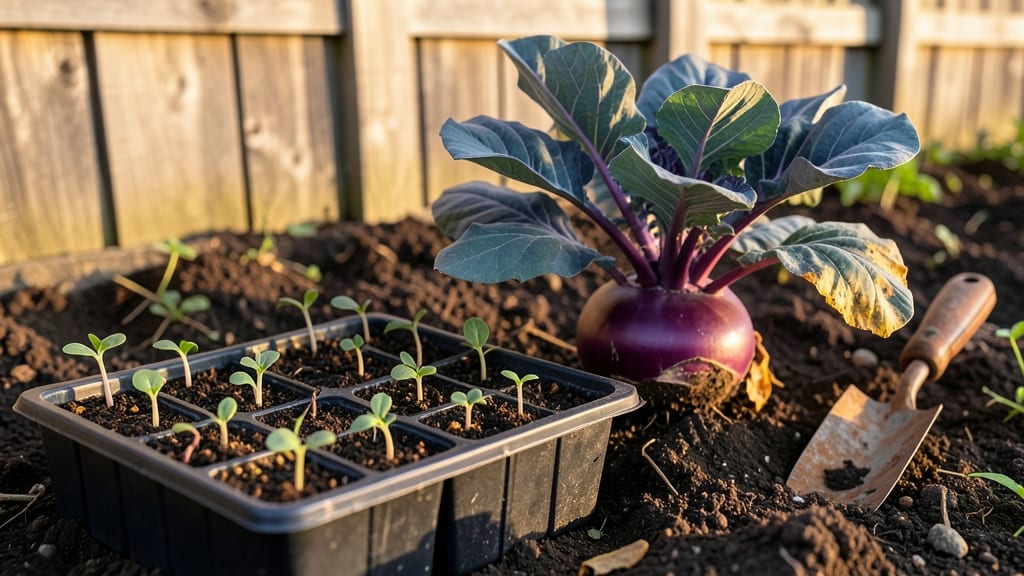
Planting kohlrabi seeds fast means beating the heat and the bolt—these cool-weather gems sprout in just 3-5 days if you time it right. 🌱 I learned the hard way that late planting leads to bitter, woody bulbs, so I now swear by early spring or late summer starts when soil temps stay below 75°F.
The trick isn’t just dropping seeds in dirt; it’s about moisture, depth, and patience in the first critical week.
You’ll need a sunny spot with loose, well-draining soil (amend with compost if yours is heavy), seeds spaced 1 inch apart in rows 18 inches apart, and a gentle watering can. Kohlrabi hates competition, so thin seedlings to 4 inches apart once they’re 2 inches tall—this prevents overcrowding and bolting.
The first leaves look like tiny cabbages, but don’t pull them yet; wait until you see the swollen stem base forming.
What you’ll get is a crunchy, sweet harvest in just 50-60 days—way faster than most root veggies. The bulbs stay tender when harvested at 2-3 inches in diameter, and the leaves are edible too.
But here’s the catch: once they bolt, they turn tough and bitter, so keep an eye on the weather and harvest before the flowers appear.
For small gardens, try interplanting with radishes or lettuce—they use up space quickly while kohlrabi’s slower start gives them room. And if your seeds take longer than a week to sprout?
Check moisture and warmth—kohlrabi needs consistent dampness but not soggy soil. Let’s get those seeds in the ground before the heat sets in.
📚 In This Guide
- What you need
- Instructions
- Tips and common mistakes
- Wrapping up and next steps
What you need
- ● Kohlrabi seeds: 1 packet (about 50-100 seeds, depending on variety and spacing needs). Opt for open-pollinated or heirloom varieties for best results.
- ● Seed-starting mix or potting soil: 1 bag (sterilized, peat-based or coconut coir blend for moisture retention). Avoid garden soil—it’s too dense for seeds!
- ● Containers or seed trays: For indoor starts: 2-3 small pots (3-4 inches deep) or a seed tray with individual cells.
- ● For direct sowing: A well-prepared garden bed (6+ inches deep) or raised bed.
- ● Grow lights or sunny windowsill: A full-spectrum LED grow light (12-16 hours/day) or a south-facing window (if starting indoors).
- ● Watering can or spray bottle: With a fine mist setting for gentle watering.
- ● Plant labels: 5-10 labels (biodegradable or wooden) to track varieties and planting dates.
- ○ Seedling heat mat: (Optional) Helps speed up germination in cooler climates (set to 65-75°F).
- ● Transplanting tweezers: For delicate seedling handling when moving outdoors.
- ● Row cover or frost cloth: Protects young plants from unexpected chills (especially in early spring/fall).
- ● Organic fertilizer: Balanced 10-10-10 or compost tea to boost early growth.
- ● Garden gloves: To keep hands clean while handling soil and seeds.
- ● Climate check: Kohlrabi thrives in cool weather (50-75°F). Avoid planting during extreme heat (above 80°F).
- ● Sunlight access: At least 4-6 hours of direct sunlight daily (more for faster growth).
- ● Well-draining soil: pH 6.0-7.0. Amend clay soil with compost or sand if needed.
- ● Patience: Kohlrabi seeds germinate in 5-10 days—stay consistent with moisture!
Step-by-Step instructions for planting kohlrabi seeds
Here’s the quick, reliable method I use to get kohlrabi sprouting in 5-7 days and thriving for a crisp harvest.
🌱 Step 1: Prepare the Soil and Planting Site
Kohlrabi loves rich, well-draining soil with a pH between 6.0 and 7.0. Work in 2-3 inches of compost into the top 6 inches of soil to loosen it and improve fertility. Kohlrabi is a cool-season crop, so plant seeds 2-4 weeks before your last frost date for an early harvest, or 60 days before your first fall frost for a fall crop.
Choose a location with full sun to partial shade—at least 4-6 hours of sunlight daily. If your summers are scorching, afternoon shade helps prevent bolting (when plants flower prematurely). Break up any clumps in the soil with a garden fork, then rake the surface smooth for even seed placement.
🌱 Step 2: Sow Seeds at the Right Depth and Spacing
Kohlrabi seeds are small but easy to handle. Plant them ½ inch deep and 1 inch apart in rows that are 12-18 inches apart. You’ll be thinning later, so don’t worry about spacing too much now. I like to use a seed spacing tool or my finger to create small furrows for neat rows.
Place 2-3 seeds per spot—this gives you backup seedlings in case some fail to germinate. Cover the seeds lightly with soil, then gently pat the surface to ensure good seed-to-soil contact. Avoid pressing too hard, or you’ll compact the soil and slow germination.
💧 Step 3: Water and Maintain Moisture for Fast Germination
Keep the soil consistently moist but not soggy until germination. Water gently with a fine mist or soaker hose to avoid disturbing the seeds. You’ll see sprouts in 5-7 days if conditions are right—65-75°F soil temperature speeds things up.
Once seedlings emerge, reduce watering slightly but keep the soil evenly moist. Kohlrabi roots are shallow, so mulch with 1-2 inches of straw or grass clippings to retain moisture and suppress weeds. Watch for yellowing leaves, which signals overwatering or poor drainage.
✂️ Step 4: Thin Seedlings and Monitor Growth
When seedlings reach 2 inches tall, thin them to 3-4 inches apart. Use scissors to snip unwanted plants at soil level—this avoids disturbing roots of the remaining seedlings. Kohlrabi bulbs swell at the base, so leave enough space for them to grow without crowding.
Fertilize lightly with a balanced organic fertilizer (10-10-10) when seedlings are 3-4 inches tall. Kohlrabi grows best with moderate nitrogen—too much causes leafy growth at the expense of the bulb. Harvest when bulbs are 2-3 inches in diameter for the best flavor and texture.
☀️ Step 5: Harvest and Extend the Season
Kohlrabi is ready to harvest 50-60 days after sowing, when bulbs feel firm and reach 2-3 inches in diameter. Cut stems with a knife or pruners, leaving the leaves intact if you want to harvest more bulbs from the same plant.
For a fall harvest, succession plant seeds every 2 weeks until 6 weeks before your first frost. Kohlrabi tolerates light frosts, so you can extend the season by covering plants with row fabric on cold nights. Store harvested bulbs in the fridge for up to 2 weeks for crisp, fresh flavor.
Tips & tricks for planting kohlrabi seeds
A few quick tricks that'll help you skip the common pitfalls and get those kohlrabi seeds sprouting faster than you'd expect.
Soil Temperature Secret: The 65-75°F soil temperature mentioned in Step 3 is your golden zone for fast germination. If your soil feels cooler than that, try covering the area with black plastic sheeting for a day or two before planting to warm it up naturally. I've seen germination times cut in half when using this trick—especially helpful if you're planting early in the season.
Thinning Technique: Don't make my mistake of pulling seedlings by hand when thinning in Step 4. Use clean scissors to snip at soil level instead—this prevents disturbing the roots of your remaining plants. I learned this the hard way after watching my carefully spaced seedlings struggle to recover from rough handling. The key is to work gently but decisively.
Succession Planting Strategy: For that continuous harvest you'll want, mark your calendar for planting every 2 weeks as mentioned in Step 5. But here's the pro move: stagger your plantings by 3-4 days within that 2-week window. This creates a natural buffer against weather fluctuations and gives you a more even supply of fresh kohlrabi throughout the season.
Harvest Timing: Those 2-3 inch bulbs in Step 5 are the sweet spot for flavor and texture. Here's how to test readiness: press the bulb gently—it should feel firm like a small potato. If it yields at all, it's time to harvest. Waiting too long results in woody bulbs, while harvesting too early means smaller yields. Trust your fingers on this one!
Pro Tips for Planting Kohlrabi Seeds
- A few quick tricks that'll help you skip the common pitfalls and get those kohlrabi seeds sprouting faster than you'd...
- Soil Temperature Secret: The 65-75°F soil temperature mentioned in Step 3 is your golden zone for fast germination. I...
- Thinning Technique: Don't make my mistake of pulling seedlings by hand when thinning in Step 4. Use clean scissors to...
Frequently asked questions
Got questions about planting kohlrabi seeds?
You’re not alone! Here are some of the most common queries—plus quick, actionable answers to help you grow a thriving crop.
When is the best time to plant kohlrabi seeds?
Kohlrabi thrives in cool weather, so plant seeds 4–6 weeks before your last frost in spring (around March–April in most zones) or 8–10 weeks before your first frost in fall (August–September). Avoid hot summers—temps above 75°F (24°C) can make the bulbs bitter or woody. For extended harvests, try succession planting every 2–3 weeks.
How long does it take for kohlrabi seeds to germinate?
Kohlrabi seeds typically sprout in 5–10 days under ideal conditions (consistent moisture, 60–70°F/15–21°C soil temps). For faster germination, soak seeds in water for 4–6 hours before planting or use a seedling heat mat. If soil is too cold (<50°F/10°C), germination may take 2–3 weeks. Keep soil moist but not soggy—dryness slows sprouting.
Can I grow kohlrabi in containers or small spaces?
Kohlrabi is a compact crop and grows well in containers as small as 5–6 inches deep (with drainage holes). Plant 1–2 seeds per 6-inch pot or 4–6 seeds in a 12-inch container, spacing them 4–6 inches apart. Choose dwarf varieties like ‘Blue Boy’ or ‘Purple Vienna’ for even smaller gardens. Just ensure they get 6+ hours of sunlight daily.
What should I do if my kohlrabi seeds aren’t sprouting?
First, check for moisture and temperature issues—seeds need consistent dampness and warm soil. If they’re still dry after 2 weeks, try replanting or test viability by cutting open a few seeds (a white center means they’re good; brown/black means they’re dead). Pests like cabbage maggots or cutworms can also prevent germination—use row covers or diatomaceous earth if needed.
How do I know when kohlrabi is ready to harvest?
Harvest when the bulb reaches 2–3 inches in diameter (about 50–60 days after planting), before it gets tough or hollow. The leaves should still be vibrant, and the stem will snap easily when gently twisted. Pro tip: Use a sharp knife to cut the bulb cleanly—leave the roots intact to encourage regrowth for greens! Store harvested kohlrabi in the fridge for up to 2 weeks.
Wrapping up and next steps
You’re now ready to grow crunchy, nutritious kohlrabi with confidence! 🌱 This fast-growing veggie rewards patience with minimal effort—just follow the steps, stay consistent with care, and soon you’ll enjoy homegrown harvests packed with flavor. Next up? Try experimenting with companion plants like lettuce or radishes to maximize your garden space and boost yields.
Happy planting—your future meals (and taste buds) will thank you!