Diseases
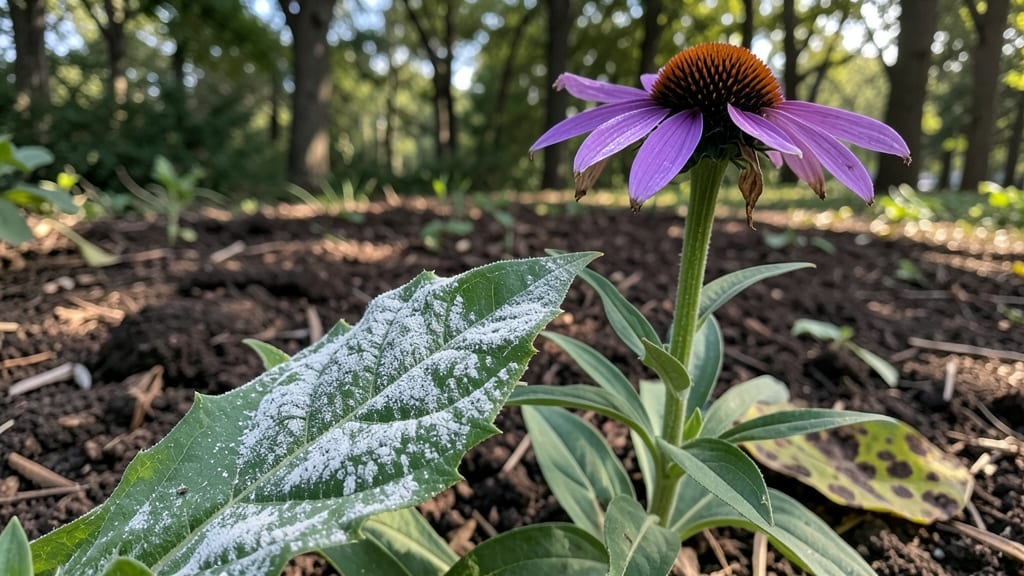
Echinacea plant diseases typically manifest as powdery mildew, rust, black spot, bacterial wilt, or fungal leaf spots, each triggering unique symptoms like discolored patches, wilting stems, or stunted blooms. Catching these early with neem oil sprays, copper-based fungicides, or improved airflow can save your plants from irreversible decline.
Echinacea plants are hardy but vulnerable to fungal and bacterial infections that thrive in crowded, damp conditions. 🌿 The key to prevention lies in proper spacing—at least 18-24 inches between plants—and avoiding overhead watering, which keeps foliage dry.
If you notice white powdery coatings or rust-colored spots, act fast: a homemade solution of 1 tablespoon baking soda per gallon of water with a drop of dish soap often works for mild cases, while severe infections may require systemic fungicides.
What many gardeners overlook is that bacterial wilt—often spread through contaminated tools or infected cuttings—can kill plants within weeks. 🚨 Always sterilize pruners with rubbing alcohol between uses, and remove any infected stems immediately to prevent spread.
The good news? Echinacea's natural resilience means even heavily damaged plants can bounce back with proper care and a clean growing environment.
💡 In This Article
- Identifying Echinacea Disease Symptoms Visually
- Preventing and Treating Echinacea Plant Diseases
Identifying echinacea disease symptoms visually
Echinacea plants often reveal their health struggles through distinctive visual cues on leaves and stems. Powdery mildew, for example, starts as faint white speckles on upper leaf surfaces that resemble dust or flour, gradually thickening into a chalky coating that can cover entire leaves within 7-10 days.
This fungal infection thrives in humid conditions (above 75% humidity) and spreads rapidly when plants are crowded or watered overhead. The key difference? Unlike other fungal diseases, powdery mildew rarely causes leaf drop until late stages.
Rust diseases present as bright orange or reddish-brown pustules on the undersides of leaves, often appearing in concentric rings.
These pustules eventually rupture, releasing spores that can travel up to 3 feet in windy conditions. 🌬️ What sets rust apart is its two-host lifecycle—some species require an alternate host like barberry—but in echinacea gardens, it completes its cycle entirely on your plants.
Black spot, meanwhile, creates irregular dark brown or purple spots with yellow halos, often merging into large necrotic areas that make leaves brittle and prone to tearing.
Bacterial wilt is the most aggressive and least visually obvious until it's too late. Early signs include sudden wilting of entire stems (even when soil is moist) and a dark, watery ooze at the stem base when cut open.
The bacteria Erwinia clogs vascular tissues, preventing water transport—similar to how a clogged straw stops liquid flow. Unlike fungal diseases, bacterial wilt spreads through contaminated tools or infected plant debris, making sanitation critical.
Viral infections (like echinacea mosaic virus) show up as yellow mosaic patterns on leaves, often accompanied by stunted growth and distorted flower buds.
Here's how to distinguish between fungal and bacterial infections at a glance:
- Fungal diseases: Surface growth (powdery coatings, rust pustules), often with white or colored spores visible to the naked eye
- Bacterial diseases: Water-soaked lesions, oozing sap, and vascular discoloration when stems are cut
- Viral diseases: Mosaic patterns, leaf curling, and systemic symptoms affecting new growth
The progression of these symptoms follows predictable patterns based on environmental conditions. Powdery mildew advances fastest in warm (70-80°F) and humid conditions, while rust thrives in cooler (60-70°F) but consistently damp environments.
Black spot spreads most aggressively when nights are cool (55-65°F) and days are warm—a common pattern in late spring or early fall. Understanding these environmental triggers helps you predict and prevent outbreaks before they start.
What most gardeners miss is how these diseases interact with echinacea's natural growth cycle.
For instance, rust often appears just as plants begin flowering, while powdery mildew peaks during bud formation when new growth is most vulnerable. 🌸 Pay special attention to these high-risk periods and adjust your monitoring schedule accordingly.
Early detection isn't just about spotting symptoms—it's about understanding the plant's biological clock and the pathogen's opportunistic timing.