
Shrubs
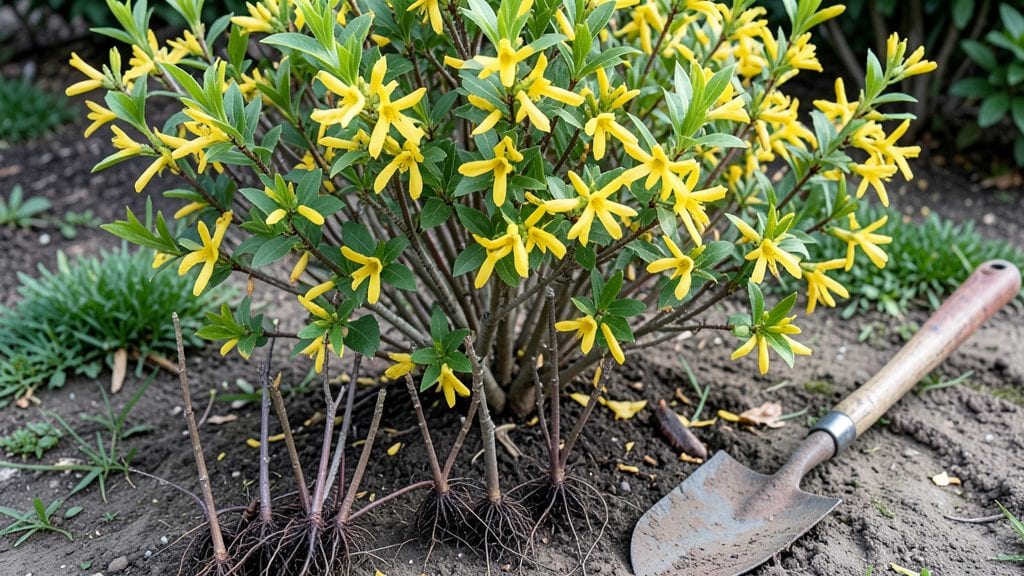
The forsythia planting distance—6 to 8 feet for single plants, 8 to 10 for hedges—sets the stage for a dazzling spring display where every shrub thrives without competing for space. I learned the hard way when my first cluster grew into a tangled mess, blocking sunlight and inviting pests.
The key is matching their mature width to your sunlight and soil conditions, not just eyeballing it.
Forsythia thrives in full sun, so spacing ensures every branch gets its share of light, which means more vibrant blooms and fewer disease issues. Most gardeners forget that these shrubs can grow 10 to 15 feet wide over time, so planting too close means pruning headaches later.
A simple trick: dig a hole twice as wide as the root ball to encourage outward growth and prevent root competition.
With proper spacing, you’ll see bold yellow cascades every spring, with healthier foliage and fewer fungal problems. The airflow keeps leaves dry, and the mature size creates a natural privacy screen or focal point. Just avoid planting near large trees—their roots will steal moisture and nutrients, leaving your forsythia struggling.
For small yards, try dwarf varieties like ‘Northern Gold’ (4 to 6 feet wide) and space them 4 to 5 feet apart. Container growing works too—just use a 15-gallon pot and prune annually to control size.
The right spacing isn’t just about looks; it’s about setting your shrubs up for decades of effortless blooms.
📚 In This Guide
- What you need
- Instructions
- Tips and common mistakes
- Wrapping up and next steps
What you need
- ● Forsythia shrubs: 3–5 healthy, container-grown plants (choose Forsythia x intermedia or Forsythia ovata for best results).
- ● Shovel or trowel: A 6-inch garden trowel for precise planting or a round-point shovel for larger holes (1–2 ft wide).
- ● Compost or well-aged manure: 2–3 gallons per plant to enrich the soil.
- ○ Mulch (optional but recommended): 3–4 inches of shredded bark, pine straw, or wood chips to retain moisture.
- ● Garden hose or watering can: For thorough watering (aim for 1–2 gallons per plant after planting).
- ● Gloves and knee pads: For comfort (especially if planting multiple shrubs!).
- ○ Soil pH tester (optional): Forsythia thrives in slightly acidic to neutral soil (pH 6.0–7.0).
- ● Staking (if needed): 3–4 ft bamboo stakes + soft ties for young, top-heavy plants.
- ● Pruning shears: For trimming dead branches post-planting (sterilize with rubbing alcohol!).
- ● Planting map or string: To mark forsythia planting distance (6–10 ft apart for mature size).
- ● Fertilizer (slow-release): 10-10-10 or 5-10-10 blend (apply sparingly—forsythia is low-maintenance!).
- ● Sunlight: A full-sun location (6+ hours of direct light daily)—forsythia loves the sunshine!
- ● Well-draining soil: Amend heavy clay with sand or perlite if drainage is poor.
- ● Planting season: Early spring or fall (avoid extreme heat or frost).
- ● Space planning: Measure your bed—forsythia grows 8–12 ft tall/wide at maturity!
Step-by-Step guide for planting forsythia shrubs with perfect spacing
Here's how to plant forsythia for vibrant blooms and healthy growth every spring.
Choose the Right Planting Location
Forsythia thrives in full sun, so select a spot that receives at least 6-8 hours of direct sunlight daily. These shrubs tolerate a range of soil types but perform best in well-draining, slightly acidic soil with a pH between 6.0 and 7.0. If your soil is heavy clay, amend it with 2-3 inches of compost before planting to improve drainage and nutrient availability.
Observe the area for at least a week to confirm sunlight exposure. Early morning sun paired with afternoon shade works well in hot climates, but forsythia can handle full sun in most regions. Avoid low-lying spots where cold air settles, as frost can damage new growth.
Dig Holes at the Correct Spacing
For 4 forsythia shrubs, dig 4 planting holes spaced 8-10 feet apart. This spacing ensures each shrub has enough room to mature without competing for sunlight or nutrients. The holes should be twice as wide as the root ball and slightly shallower—about 1-2 inches less deep than the container the shrub came in.
Loosen the soil at the bottom of each hole with your hands or a trowel to encourage root growth. Avoid compacting the soil, as this can restrict root expansion. If your soil is particularly dense, mix in a handful of organic matter like compost or peat moss to improve structure.
Plant Forsythia Shrubs Properly
Remove the forsythia from its container and gently loosen the roots if they appear circling or tangled. Place the shrub in the hole so the top of the root ball sits level with the surrounding soil—never bury the base of the stem, as this can cause rot. Backfill the hole with native soil, tamping lightly every 2-3 inches to eliminate air pockets.
Water deeply after planting to settle the soil and encourage root contact. Use 1-2 gallons of water per shrub, enough to moisten the soil to a depth of 6-8 inches. Mulch the base of each plant with 2-3 inches of organic mulch, keeping it 3-4 inches away from the stem to prevent moisture buildup and rot.
Water and Maintain for Establishment
Keep the soil consistently moist but not soggy for the first 4-6 weeks after planting. Water deeply 2-3 times per week, adjusting based on rainfall. Forsythia is drought-tolerant once established, but young shrubs need regular moisture to develop strong roots. You’ll know they’re thriving when new growth appears within 4-6 weeks of planting.
Fertilize lightly in early spring with a balanced, slow-release fertilizer to support blooming. Avoid heavy feeding, as forsythia blooms on old wood—too much nitrogen can reduce flower production. Prune immediately after flowering to shape the shrub and remove any dead or crossing branches.
Monitor Growth and Adjust Spacing if Needed
Forsythia grows 3-5 feet tall and wide annually, so check spacing every 2-3 years. If branches begin to touch, prune to maintain airflow and reduce disease risk. Thin out crowded stems by cutting them back to the base, which encourages new growth and keeps the shrub open and airy.
Watch for signs of stress, like yellowing leaves or stunted growth, which may indicate overcrowding or poor drainage. If needed, gradually space shrubs farther apart by transplanting one or two to a new location. Forsythia is adaptable, but proper spacing ensures bold, reliable blooms for decades.
Tips & tricks for perfect forsythia planting
Planting forsythia with the right spacing and care makes all the difference for those stunning spring blooms. Here's what I've learned after years of working with these sun-loving shrubs.
Sunlight is Non-Negotiable: That 6-8 hours of direct sunlight in Step 1 is critical—forsythia won't bloom reliably without it. If your yard has afternoon shade, position them to catch morning sun instead. I've seen forsythia planted in partial shade produce only sparse blooms, while those in full sun create dramatic canopies of yellow flowers. Trust me, the blooms will reward you for finding that perfect sunny spot.
Spacing Secrets for Healthy Growth: The 8-10 foot spacing in Step 2 might seem generous, but it's exactly what these shrubs need. Forsythia grows 3-5 feet annually, so that spacing prevents overcrowding that leads to disease and poor airflow. Pro tip: Use a tape measure to verify spacing before planting—it's easy to eyeball incorrectly and end up with overcrowded shrubs that compete for resources.
Root Ball Placement Matters: When you're planting in Step 3, pay special attention to that root ball placement. The top should be level with the surrounding soil—never bury the base of the stem. I've seen many gardeners make this mistake, thinking they're helping the plant establish better. The truth is, buried stems can rot and kill your forsythia before it even gets a chance to bloom.
Watering Wisdom: Those first 4-6 weeks after planting are crucial for root establishment. While 2-3 gallons of water per shrub might seem like a lot, it's exactly what you need to moisten the soil to that 6-8 inch depth. I recommend using a moisture meter to verify—you want the soil to feel consistently moist but not soggy. Overwatering can be just as damaging as underwatering during this critical period.
Pro Tips for Forsythia Planting Distance
- Planting forsythia with the right spacing and care makes all the difference for those stunning spring blooms.
- Sunlight is Non-Negotiable: That 6-8 hours of direct sunlight in Step 1 is critical—forsythia won't bloom reliably without it.
- Spacing Secrets for Healthy Growth: The 8-10 foot spacing in Step 2 might seem generous, but it's exactly what these shrubs need.
Frequently asked questions
Got questions about spacing your forsythia shrubs for the best blooms? You’re not alone! Here are some of the most common concerns—and their answers—to help you plant with confidence.
How close can I plant forsythia shrubs together?
For standard forsythia varieties, aim for 3 to 6 feet apart when planting. Dwarf types (like Forsythia ‘Little Witch’) can be spaced 2 to 3 feet apart. Closer spacing may lead to overcrowding, reducing airflow and increasing disease risk. Give them room to grow!
Should I plant forsythia shrubs in rows or clusters?
Both work, but clusters of 3–5 plants create a more natural, full look. For hedges or borders, plant in even rows 4–6 feet apart. Just avoid planting them too close to trees or structures—they need sunlight and space to thrive!
When is the best time to plant forsythia for proper spacing?
The ideal times are early spring or fall, when the soil is workable but not frozen. Planting in spring gives roots time to establish before summer heat, while fall planting lets them settle before winter dormancy. Avoid planting in extreme heat or cold.
What if my forsythia shrubs are already too close together?
If your shrubs are overcrowded, prune them back by 1/3 in early spring to reduce density. For severe cases, dig up and transplant one shrub to a new location with proper spacing. Mulch well and water deeply to help them recover.
Can I plant forsythia near other shrubs or flowers?
Yes! Forsythia pairs well with hydrangeas, roses, or boxwoods for a layered look. Just ensure other plants have similar sunlight and water needs. Avoid planting them near aggressive spreaders like mint or bamboo, which can crowd them out.
Still unsure? Drop your spacing challenge in the comments—we’re happy to help!
Wrapping up and next steps
Planting forsythia with the right spacing ensures vibrant blooms and healthy growth—so don’t stress over getting it perfect! 🌸 Whether you’re tucking them into borders, hedges, or containers, 3-6 feet apart is your golden rule for optimal airflow and sunlight.
With proper care, your forsythia will reward you with cheerful yellow cascades year after year.
Ready to transform your garden? Grab your gloves, mark those spots, and get planting! For extra inspiration, check out design ideas or pruning tips to keep your shrubs thriving.