
Pruning
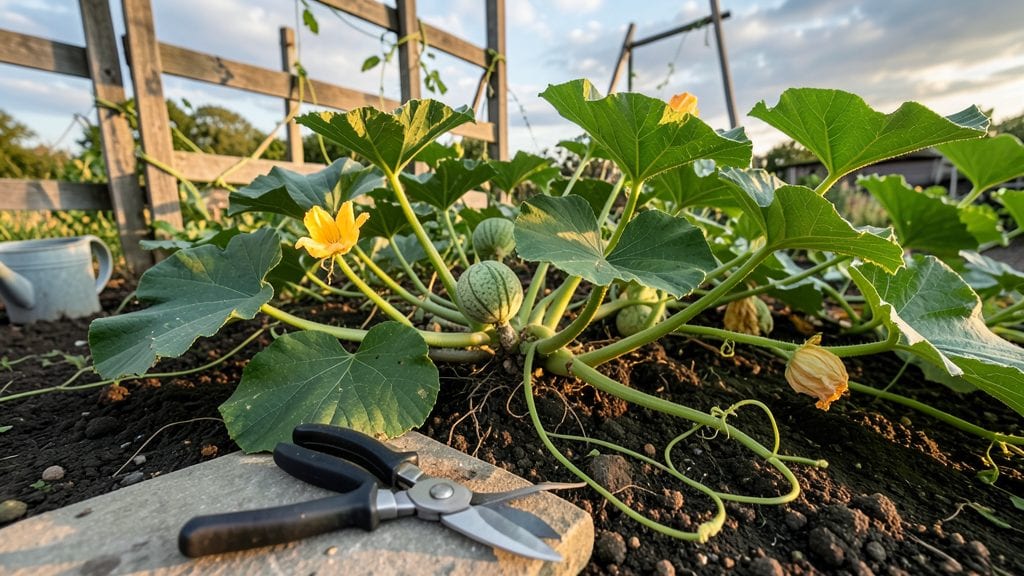
Pruning cantaloupe plants might seem counterintuitive—after all, why cut back a plant that's already loaded with vines? 🌱 The truth is, strategic pruning redirects energy from wild growth to bigger, sweeter fruit. I’ve seen firsthand how three simple cuts can double your harvest when done right.
Here’s the game-changer: focus on removing the first few flowers that appear, thinning crowded vines, and cutting back side shoots that steal nutrients. You’ll need sharp pruning shears, a sunny morning for the job, and about 15 minutes of your time.
The goal isn’t to shear the plant but to shape it for maximum fruit production.
What you’ll end up with is a plant that puts all its energy into fewer, larger melons instead of dozens of small, bitter ones. The vines stay strong, the fruit ripens evenly, and you’ll avoid the frustration of watching half your harvest rot under the vines.
This method works just as well for muskmelons and honeydew varieties.
Fair warning: skip the pruning, and you’ll likely end up with a bushy plant full of tiny melons. But once you master these three cuts, you’ll never go back. The payoff? Melons so large they’ll make your neighbors ask for seeds—and that’s a harvest worth pruning for.
📚 In This Guide
- What you need
- Instructions
- Tips and common mistakes
- Wrapping up and next steps
What you need
- ● Bypass pruning shears – Choose a pair with sharp, stainless steel blades (4-6" length) for precise cuts. Example: Felco F-2 or Corona Tools Classic.
- ● Garden gloves – Heavy-duty, chemical-resistant gloves (size medium/large) to protect your hands from thorns and dirt.
- ● Disinfectant (70% isopropyl alcohol or bleach solution) – 1 part bleach to 9 parts water to sterilize tools between cuts and prevent disease spread.
- ○ Sharpie or permanent marker – For labeling pruned sections (optional but helpful for tracking growth).
- ● Watering can or hose with gentle spray nozzle – To hydrate plants before and after pruning (1-2 gallons of water).
- ● Mulch (straw or shredded leaves) – 2-3 inches thick to retain moisture and protect roots post-pruning.
- ● Hand pruners (for smaller stems) – Ergonomic design for extended pruning sessions.
- ● Knee pads or a small stool – For comfort if your cantaloupe patch is sprawling.
- ○ Plant growth regulator (optional) – Such as Bonide Fruit & Flower Set to encourage bushier growth post-pruning.
- ● Pruning saw (for thick vines) – Only needed if your cantaloupe vines have woody stems thicker than ½ inch.
Step-by-Step guide to pruning cantaloupe plants
Pruning these vines isn't just about shaping—it's about directing energy where it matters most.
🌿 Step 1: Remove Weak or Damaged Growth Early
Start by inspecting your cantaloupe vines for any stems that are thin, leggy, or showing signs of disease. These weak growths compete with your main plant for nutrients and water, so they need to go. Use clean, sharp pruning shears to cut just above a leaf node where two leaves meet the stem—this ensures new growth can sprout from that point.
Here's the thing—don't wait until the plant is mature to prune. I always tackle this within the first 2-3 weeks after planting, when the vines are still young. You'll see healthier, sturdier vines that focus their energy on producing fruit rather than maintaining weak stems.
✂️ Step 2: Thin Out Excessive Side Shoots
Cantaloupe vines naturally produce side shoots that grow from the main stem. While a few are fine, too many will drain the plant's resources. Once your main vine reaches about 3-4 feet long, start checking for side shoots that are growing below the first 5-6 leaves from the main stem—these are the ones to remove.
Use your fingers to gently pinch off the smaller side shoots rather than cutting with shears. This prevents damage to the main vine and encourages the plant to focus on the stronger, higher-up side shoots that will produce fruit. I like to do this every 7-10 days during the early growth phase to keep the plant balanced.
🌱 Step 3: Prune After Fruit Sets to Boost Yield
Once your cantaloupe plant begins flowering and small fruits start to form, it's time for the final pruning push. Focus on removing any flowers or fruits that appear below the first 12-18 inches of the main vine. These low-growing fruits won't mature properly and will steal energy from the main harvest.
You'll know it's working when you see the remaining fruits growing larger and the plant putting more energy into their development. I also remove any fruits that are smaller than a golf ball—keeping only the largest, healthiest ones ensures the plant can fully support them. This step is critical for maximizing your yield, especially if you're growing in a smaller space.
💧 Step 4: Maintain Airflow and Prevent Disease
As your cantaloupe vines grow, they can become dense and crowded, which traps moisture and invites fungal diseases like powdery mildew. Prune any overly crowded or tangled vines to improve airflow. Focus on the areas where leaves are rubbing against each other or blocking sunlight from reaching the lower parts of the plant.
I always prune in the morning when the plant is dry, so any cuts have time to heal before evening moisture sets in. After pruning, give the plant a light watering to help it recover. This keeps your cantaloupe healthy and productive throughout the growing season.
Tips & tricks for pruning cantaloupe plants
Real talk: Pruning cantaloupe plants can feel intimidating, but these tricks will help you boost your harvest without stressing the plant.
Timing is Everything: In Step 1, those first 2-3 weeks are critical for establishing strong growth. I've found that pruning too late means the plant has already wasted energy on weak stems. Think of it like giving your plant a fresh start—cutting early redirects its focus to what really matters: fruit production. Confession: I skipped this step for years and wondered why my yields were disappointing.
Visual Cues for Pruning: When you're thinning side shoots in Step 2, look for the 5-6 leaf marker on your main stem. Any side shoots below that point should go—they're just taking energy from your main harvest. I use my thumb to gently pinch them off, which is faster than using shears and prevents accidental damage to the main vine. The key is consistency: doing this every 7-10 days keeps the plant balanced.
Fruit Selection Strategy: In Step 3, when you're choosing which fruits to keep, size matters more than you'd think. I always remove anything smaller than a golf ball because these little fruits will never mature properly. Instead, let the plant focus its energy on the largest, healthiest fruits. This isn't about quantity—it's about quality. I've seen cantaloupe plants double their yield just by making this simple adjustment.
Disease Prevention: That morning pruning tip in Step 4 isn't just about timing—it's about giving your cuts time to heal before evening moisture sets in. I've seen powdery mildew ruin entire cantaloupe crops because the plants were pruned at night. After pruning, I give everything a light mist with water to help the plant recover, but I always do it before the sun gets too intense. This keeps your vines healthy and productive all season long.
Pro Tips for Prune Cantaloupe Plants
- Real talk: Pruning cantaloupe plants can feel intimidating, but these tricks will help you boost your harvest without stressing the plant.
- Timing is Everything: In Step 1, those first 2-3 weeks are critical for establishing strong growth.
- Visual Cues for Pruning: When you're thinning side shoots in Step 2, look for the 5-6 leaf marker on your main stem.
Frequently asked questions
Got questions about pruning cantaloupe plants? You’re not alone! Here are some of the most common concerns—and straightforward answers—to help you prune like a pro.
When is the best time to prune cantaloupe plants?
Prune your cantaloupe plants early in their growth cycle, ideally when they’re 3–4 weeks old and have 3–4 true leaves. Avoid pruning during flowering or fruiting, as this can stress the plant and reduce yield. Focus on shaping the vines before they become too woody.
Do I really need to prune cantaloupe plants? Can’t I just let them grow wild?
While cantaloupes can grow without pruning, proper pruning boosts air circulation, reduces disease risk, and directs energy toward fruit production. Unpruned plants may produce smaller, lower-quality melons and become overrun with vines. Think of it as giving your plants a "haircut" for better results!
What happens if I prune too much or too late?
Over-pruning or cutting too late can stunt growth, delay flowering, or even kill the plant. If you prune too aggressively, the plant may struggle to recover. Late pruning (after flowering) can reduce fruit set. Rule of thumb: Never remove more than 1/3 of the plant’s foliage at once, and stop pruning once flowers appear.
Can I use the same pruning techniques for watermelon and cantaloupe?
While both are cucurbits, cantaloupes and watermelons have slightly different needs. Cantaloupes benefit from selective pruning to encourage bushier growth, while watermelons often thrive with minimal pruning. Avoid heavy pruning on watermelons, as they prefer a more sprawling habit. When in doubt, follow cantaloupe-specific guidelines!
My cantaloupe plant has bugs after pruning. Did I do something wrong?
Not necessarily! Pruning can temporarily stress plants, making them more attractive to pests like aphids or cucumber beetles. To prevent this, prune in the morning so cuts have time to heal, and use neem oil or insecticidal soap as a precaution. Keep your garden clean and monitor for pests regularly.
Wrapping up and next steps
Pruning your cantaloupe plants might seem tricky, but with the right cuts—removing suckers, thinning vines, and trimming runners—you’ll boost fruit size, improve airflow, and maximize your harvest. 🌱 The key is timing, clean tools, and a little patience.
Now that you’re armed with these techniques, there’s no better time to roll up your sleeves and give your vines the care they deserve.
Ready to see those sweet melons thrive? Start pruning this season and watch your cantaloupe yield shine! 🍉 For even more gardening wins, explore our guide on cantaloupe care next.