
Pests and Diseases
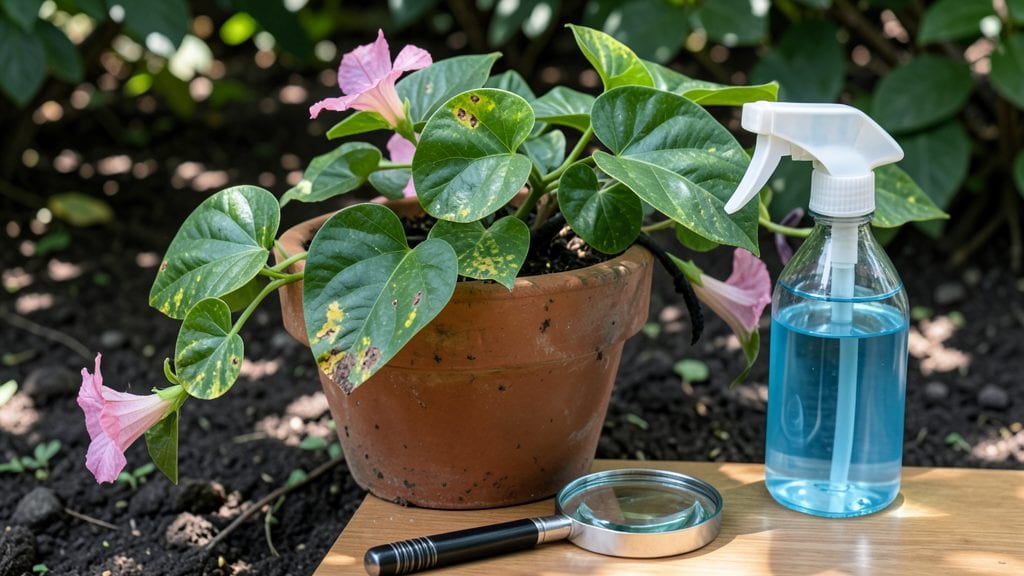
When your mandevilla’s glossy leaves start looking dull or develop strange spots, you’re dealing with plant diseases that spread fast if ignored. 🌿 I’ve battled everything from powdery mildew to bacterial leaf spot on my own mandevillas, and the key to saving them is catching problems early—before they turn your beautiful vines into a sad, yellowing mess.
Most issues pop up because of three things: too much moisture, poor airflow, or dirty tools spreading trouble from plant to plant. I learned the hard way that skipping proper watering habits or crowding plants leads to fungal feasts.
The good news? Simple fixes like spacing vines 6 inches apart and watering at the base (not overhead) cut down on 90% of problems before they start.
You’ll spot early warning signs like white powder on leaves (powdery mildew) or dark, greasy spots (bacterial infections). Once identified, treatments range from homemade sprays like neem oil to targeted fungicides for stubborn cases.
The goal is to restore that deep green, healthy shine—because a thriving mandevilla is the star of any patio or hanging basket.
Even experienced gardeners miss subtle clues, so I’ll walk you through the most common diseases, their telltale marks, and the exact steps to revive your plants. No more guessing—just clear, actionable care to keep your mandevillas looking their best all season long.
Root Causes Behind Mandevilla Troubles
Mandevilla plants are stunning tropical beauties, but like all living things, they’re vulnerable to stress—whether from unseen pathogens, environmental mismatches, or simple care oversights. Understanding why diseases strike is the first step to protecting your plant. Let’s break down the science behind the most common culprits.
Mandevilla plants thrive in well-draining soil and moderate moisture, but when water pools around roots, it creates the perfect breeding ground for fungal infections like root rot and powdery mildew. Here’s why it happens:
- Oxygen Deprivation: Roots need oxygen to respire.
Excess water displaces air in the soil, suffocating roots and weakening the plant’s defenses. - Fungal Feast: Pathogens like Phytophthora and Pythium flourish in soggy conditions, invading roots and blocking nutrient uptake. - Salt Buildup: Overwatering leaches nutrients but also leaves behind harmful salts, further stressing the plant.
💡 Pro Tip: Use a moisture meter to check soil before watering—aim for 60-70% drainage in pots. If your plant is in the ground, ensure the soil has a slope to prevent waterlogging.
Mandevilla plants love humidity, but too much moisture in the air (especially above 80% relative humidity) turns their leaves into a fungal buffet. Diseases like leaf spot and anthracnose thrive here because:
- Spores Spread Easily: Fungal spores float in damp air and land on leaves, where they germinate in 24-48 hours if conditions are right.
- Stunted Stomata: High humidity prevents leaves from transpiring properly, trapping moisture and creating ideal fungal incubators.
- Weakened Defenses: Stressed plants (from overwatering, poor light, or nutrient deficiencies) can’t fight off infections as effectively.
🌡️ Key Factor: Fungi need three things to spread—moisture, warmth (70-85°F), and organic matter (like dead leaves). Remove fallen leaves and improve airflow to disrupt this cycle.
Before diseases take hold, sap-sucking pests like aphids, mealybugs, and spider mites often compromise the plant’s health. Here’s how they pave the way for infections:
- Honeydew Production: Aphids excrete sticky honeydew, which attracts sooty mold—a fungal growth that coats leaves and blocks sunlight.
- Physical Damage: Pests pierce leaves and stems, creating entry points for bacteria and fungi.
- Stress Response: A weakened mandevilla reduces chlorophyll production, making it more susceptible to diseases like bacterial leaf blight.
🔥 Action Step: Inspect leaves undersides and new growth weekly. Use neem oil or insecticidal soap to knock out pests before they cause irreversible damage.
Mandevilla plants are tropical—they hate sudden temperature drops or intense, direct sunlight. When environmental conditions swing too far from their comfort zone, diseases exploit the chaos:
- Cold Stress: Temperatures below 50°F slow metabolism, making the plant vulnerable to bacterial infections like Xanthomonas.
- Sunburn: While mandevilla loves bright light, harsh afternoon sun can scorch leaves, creating open wounds for pathogens.
- Nighttime Chills: A warm day followed by a cold night causes transpirational stress, weakening the plant’s cuticle (its natural protective barrier).
🎯 Solution: Keep mandevilla in partial shade (morning sun, afternoon shade) and never below 55°F. Use row covers if nighttime temps dip unexpectedly.
Too little or too much fertilizer throws off a mandevilla’s balance, making it an easy target for diseases. Here’s how:
- Nitrogen Deficiency: Leads to yellowing leaves (chlorosis), which are more prone to fungal infections because they can’t photosynthesize efficiently.
- Phosphorus/Potassium Imbalance: Weakens cell walls, making leaves susceptible to bacterial soft rot.
- Salt Burn: Over-fertilizing (especially with synthetic mixes) burns roots, reducing water uptake and increasing disease risk.
💪 Fix It: Use a balanced, slow-release fertilizer (10-10-10) every 6-8 weeks in growing season. Flush soil every 3 months to prevent salt buildup.
Even the cleanest garden can spread diseases if tools or soil are shared between plants. Here’s how it happens:
- Pruning Shears: Cutting infected branches with unsterilized tools transfers pathogens to healthy plants.
- Soil Mix: Reusing potting soil from a diseased plant introduces fungi or bacteria to new mandevillas.
- Water Sources: Using recycled water (like from a rain barrel with algae) can harbor Pythium or Fusarium.
🔪 Prevention: Sanitize tools with 70% isopropyl alcohol between uses. Pot in fresh, sterile soil or pasteurize used soil by baking it at 200°F for 30 minutes.
Quick Fixes for Mandevilla Struggles
When your Mandevilla shows signs of stress—whether it’s wilting, discolored leaves, or mysterious spots—acting fast is key. Below, we’ve mapped out practical solutions for the most common issues, along with prevention tips to keep your plant thriving. Think of this as your Mandevilla first-aid kit!
If you spot white powdery patches, brown spots, or mushy stems, fungi are likely the culprit. These thrive in damp, humid conditions, so airflow and cleanliness are your best defenses.
🔥 How to Treat Fungal Problems
- 🍳 Prune the Damaged Parts
- Use sterilized scissors (wipe with rubbing alcohol) to cut off infected leaves, stems, or roots.
- Dispose of clippings in the trash not the compost—fungi spread easily!
- 👨🍳 Apply Fungicide
- Spray with a copper-based fungicide (like Copper Soap) or a neem oil solution (2 tbsp neem oil + 1 tsp mild soap per quart of water).
- Reapply every 7–10 days until symptoms fade.
- 🌿 Improve Air Circulation
- Move the plant to a sunnier spot with partial shade (fungi love low light).
- Space plants 12–18 inches apart to reduce humidity buildup.
- ⏰ Adjust Watering Habits
- Let the top 1–2 inches of soil dry out between waterings.
- Water in the morning so leaves dry quickly—fungi hate dry foliage!
💡 Prevention Tips
- 🌡️ Avoid overhead watering—use a drip irrigation system or water at the base.
- ✨ Sterilize tools before and after pruning to prevent cross-contamination.
- 🎯 Monitor humidity—aim for 40–60%; use a fan if needed.
Tiny invaders like aphids (sap-sucking pests), mealybugs (cottony white blobs), or spider mites (tiny webs) can weaken your Mandevilla fast. Early detection = easy removal!
🔪 How to Eliminate Pests
- 🍳 Isolate the Plant
- Move it away from other plants to prevent spreading.
- 👨🍳 Blast Them Off
- For aphids/mealybugs: Spray with a soapy water solution (1 tsp mild dish soap + 1 quart water). Let sit for 10 minutes, then rinse.
- For spider mites: Wipe leaves with a damp cloth dipped in rubbing alcohol (50% water, 50% alcohol).
- 🌿 Introduce Beneficial Insects
- Release ladybugs or lacewings (available at garden centers) to eat aphids naturally.
- 🔄 Repeat Treatments
- Pests often return—reapply every 3–5 days until gone.
💡 Prevention Tips
- 🌡️ Inspect new plants before bringing them home—quarantine for 2 weeks.
- 🎯 Encourage natural predators by planting marigolds or basil nearby.
- ✨ Keep leaves dry—pests love damp foliage.
Yellowing leaves, soft stems, or a musty smell from the soil? Your Mandevilla is likely drowning. Root rot is sneaky—it starts underground!
💦 How to Revive an Overwatered Mandevilla
- ⏰ Stop Watering Immediately
- Let the soil dry out completely (this could take 1–2 weeks).
- 🌿 Repot in Fresh Soil
- Remove the plant, trim mushy, black roots with sterilized scissors.
- Repot in a well-draining mix (add perlite or orchid bark to regular potting soil).
- 🔄 Adjust Your Routine
- Water only when the top 2 inches of soil are bone-dry.
- Use a pot with drainage holes—no exceptions!
💡 Prevention Tips
- 🌡️ Check soil moisture with your finger before watering.
- 🎯 Choose the right pot—terracotta (porous) is better than plastic for airflow.
- ✨ Mulch lightly to retain moisture without suffocating roots.
Pale, yellow leaves or stunted growth? Your Mandevilla might be hungry. Unlike pests or fungi, this is a fixable diet issue!
🍽️ How to Feed Your Mandevilla
- 🌿 Test Your Soil
- Use a simple soil test kit to check pH (ideal: 6.0–7.0) and nutrient levels.
- 💪 Fertilize Right
- Use a balanced liquid fertilizer (10-10-10 or 20-20-20) every 4–6 weeks in spring/summer.
- Dilute to half-strength to avoid burning roots.
- 🍎 Boost with Micronutrients
- If leaves are yellow between veins (magnesium deficiency), spray with Epsom salt solution (1 tbsp per gallon of water).
- For purple stems/leaves (phosphorus deficiency), use a bone meal supplement.
💡 Prevention Tips
- 🌡️ Feed less in winter—growth slows, so skip fertilizer or use a low-dose option.
- ✨ Flush the soil every few months with water to remove excess salts from fertilizer.
- 🎯 Rotate fertilizers—alternate between organic (fish emulsion) and synthetic for best results.
With these targeted fixes, your Mandevilla should bounce back in no time. Remember: prevention is the best cure—so stay vigilant, adjust care as needed, and enjoy your lush, disease-free beauty! 🌸
Frequently asked questions about mandevilla plant diseases
What are the first signs my mandevilla has a fungal infection?
Watch for white powdery coatings (powdery mildew) or dark, greasy spots with yellow halos (leaf spot). Fungal infections often start on older leaves and spread upward. Check undersides too—fungi love damp, shaded areas. If you see these in humid conditions, act fast with neem oil or copper fungicide.
Can I save a mandevilla with bacterial leaf spot?
Yes, but you must act quickly! Prune infected leaves immediately with sterilized tools, then apply a copper-based bactericide every 7 days. Improve airflow by spacing plants 12+ inches apart and avoid overhead watering. Severe cases may need systemic antibiotics (like Agri-Fos), but prevention is easier than cure.
Why does my mandevilla get diseases even with proper care?
Diseases often spread through contaminated tools, shared soil, or pests like aphids that create entry points. Even with great care, stress from temperature swings or poor drainage can weaken defenses. Always sterilize tools, quarantine new plants, and test soil pH—small oversights cause big problems.
How often should I treat my mandevilla for diseases?
Preventive sprays (like neem oil) every 4-6 weeks during growing season keep pathogens in check. If you spot issues, treat immediately with fungicide/bactericide, then reapply every 7-10 days until symptoms vanish. In winter, reduce treatments to monthly since growth slows.
Are home remedies safe for mandevilla diseases?
Yes! Neem oil (1 tbsp + 1 tsp soap per quart of water) works for fungi/pests, while baking soda spray (1 tsp baking soda + 1 quart water) helps with powdery mildew. For bacterial issues, hydrogen peroxide (3%) (1 part H₂O₂ to 10 parts water) can disinfect leaves. Always test on a small area first—some plants are sensitive.