
Watering
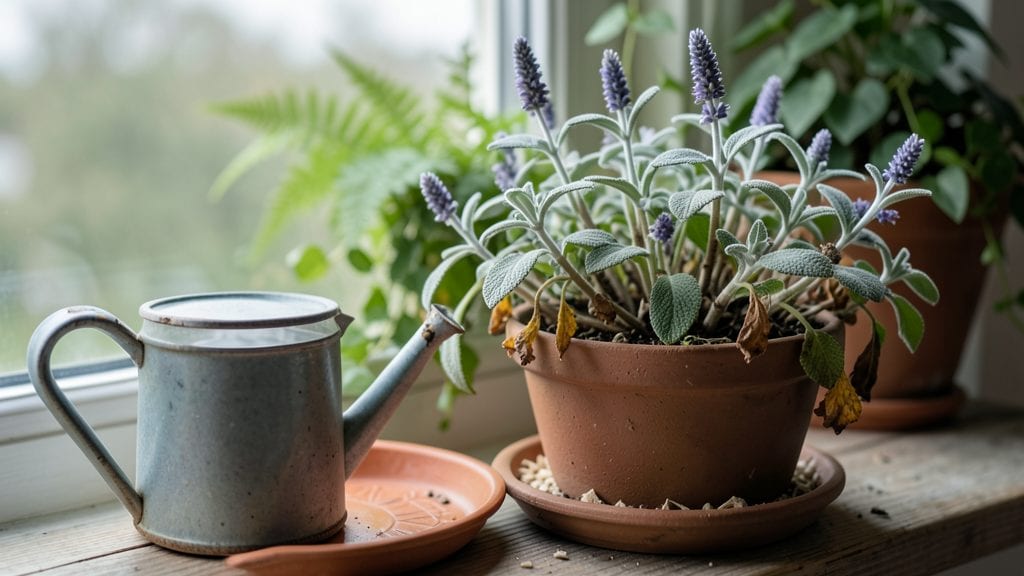
An overwatered sage plant can look like it’s drowning—droopy, yellow leaves that won’t bounce back no matter how much you wish for a comeback. 🌿 I’ve nursed plenty of these back to health, and the fix is simpler than you’d think: it’s all about cutting back on the water and giving the roots room to breathe.
Sage hates soggy soil, and once you adjust your routine, those woody stems will start pushing out fresh, fragrant leaves again.
The real damage happens when roots suffocate, turning brown and mushy. That’s why I always check soil moisture with my finger before watering—sage prefers dry spells between drinks. A quick soil test (stick your finger in 1 inch deep) tells you everything you need to know.
Most people overcorrect by watering less, but the key is consistency: let the top inch dry out completely before adding more water.
Within a week, you’ll see the difference—leaves perk up, new growth appears, and that classic sage aroma returns. The plant will reward your patience with sturdy stems and those signature silvery-green leaves.
Just remember: sage is a drought-tolerant shrub, not a thirsty annual, and it’ll thrive once you treat it like one.
This works for both potted sage and in-ground plants, whether you’re dealing with a single pot on your windowsill or a full herb garden bed. The same principles apply—just adjust for container size. Once you’ve saved one, you’ll never overwater again (or at least, not as often).
Root Causes Of Excess Moisture
When your Salvia officinalis (common sage) starts wilting despite your best efforts, overwatering is often the silent villain. But why does this happen? Let’s dig into the science behind soggy soil and how it stresses your plant.
Sage thrives in well-draining soil—yet many gardeners unknowingly create the perfect recipe for root rot by using heavy, clay-rich, or peat-heavy mixes. Here’s why:
- Compacted soil traps water around roots, cutting off oxygen. Sage roots need aeration to absorb nutrients efficiently. Without it, they suffocate.
- Lack of organic matter (like perlite, sand, or compost) prevents water from draining quickly. A mix with <10% organic material can hold moisture for days, inviting fungal growth.
- Potted plants are especially vulnerable—small containers dry out slower, and excess water pools at the bottom, drowning roots.
Pro Tip: 🌡️ Amend your soil with coarse sand or pumice (20-30% of the mix) to mimic sage’s natural Mediterranean habitat. Test drainage by pouring water into a pot: if it sits above the soil after 30 minutes, it’s too dense.
Many gardeners follow a rigid watering schedule—like every Tuesday and Friday—without checking soil moisture. But sage is drought-tolerant and signals distress long before roots rot. Here’s the mismatch:
| What You Do | What Sage Needs |
|---|---|
| Water when the calendar says | Water when the top 1–2 inches of soil are dry (stick your finger in!) |
| Assume "a little water is fine" | Sage roots need oxygen more than water—overwatering triggers anaerobic conditions, where roots "drown." |
| Ignore humidity changes | High humidity (e.g., bathrooms, kitchens) slows evaporation, keeping soil wet longer. |
Pro Tip: ✨ Use a moisture meter or the finger test (insert your finger 1 inch deep—if damp, wait). In pots, water only when the soil feels bone-dry at the surface.
Potted sage is a common victim because 90% of commercial pots lack drainage. Without holes, water pools at the bottom, creating a permanent swamp around the roots. Here’s the breakdown:
- No escape route: Water can’t seep out, so every drop stays in the pot, compressing soil and suffocating roots.
- Root-bound stress: Even with drainage holes, overcrowded roots in small pots compete for oxygen, making them more susceptible to rot.
- Saucers trap excess: While saucers catch runoff, they also reabsorb moisture into the soil if emptied infrequently.
Pro Tip: 🔥 Repot sage in containers with multiple drainage holes (or drill them yourself). After watering, empty saucers immediately to prevent moisture feedback.
Understanding these root causes is the first step to saving your sage. Next, we’ll tackle how to revive wilted leaves—without repeating the same mistakes.
Revive your dying sage plant
If your sage plant is looking more like a soggy mess than a thriving herb, don’t panic—it’s time to roll up your sleeves and take action! Overwatering can turn your once-vibrant sage into a sad, wilted pile of leaves, but with the right steps, you can nurse it back to health. Below, we’ll break down the most common causes of an overwatered sage plant and provide practical, step-by-step solutions to get it back on track. Plus, we’ll share some pro tips to keep your sage happy and prevent future watering woes.
Yellow leaves and drooping stems are classic signs of overwatering. Sage plants are seriously drought-tolerant—too much water suffocates their roots, cutting off oxygen and nutrients.
🔥 Step 1: Stop Watering Immediately
Yes, you read that right—cut off the water until the soil dries out completely. Sage plants prefer to be on the drier side, so let the top 1–2 inches of soil become bone-dry before watering again. If you’re unsure, stick your finger in the soil: if it’s damp past your first knuckle, wait a few more days.
🍳 Step 2: Check the Drainage
If water pools at the bottom of the pot or takes forever to drain, your sage is sitting in a swamp. Fix it fast:
- 🔪 Repot if needed: Move your sage to a pot with drainage holes (if it isn’t already there). Terracotta pots are great because they breathe and help evaporate excess moisture.
- 🌱 Add perlite or sand: Mix in 20–30% perlite, coarse sand, or pumice into the soil to improve aeration and drainage. Sage loves well-draining soil—think "sandy loam" or a cactus/succulent mix.
👨🍳 Step 3: Trim the Damage (But Don’t Overdo It!)
Snip off any yellow or mushy leaves with clean scissors or pruning shears. These leaves won’t recover, and they’re just leeching energy from the plant. Focus on removing leaves at the base where the stem meets the leaf—this encourages new growth.
Pro Tip: 💡 If more than 30% of the plant is damaged, don’t panic. Sage is resilient—trim back to healthy green stems, and it’ll bounce back faster.
If your sage’s stems feel soft, squishy, or blackened, root rot has likely set in. This is a silent killer—once it starts, it spreads fast. But you can still save your plant with these steps.
⏰ Step 1: Remove the Plant from the Pot
Gently tip the pot and slide the sage out. Shake off excess soil to inspect the roots. Healthy roots are firm and white; rotten roots are dark, mushy, and smell foul.
🔪 Step 2: Prune the Rotten Roots
Use sterilized scissors or pruners to cut away any black, slimy, or soft roots. Snip back to the last healthy section—even if it means removing half the roots, the plant will regrow new ones.
🌡️ Step 3: Let It Dry & Repot
Place the trimmed plant in a shady, dry spot for 24–48 hours to let the cut roots callous over. Then, repot it in fresh, well-draining soil (see the drainage tips above). Water lightly only after a week.
Pro Tip: 🌡️ If repotting feels risky, try the "air drying" method: Lay the plant on a paper towel in a dry, shaded area for a few days to let excess moisture evaporate before repotting.
If your sage is growing sluggishly or putting out tiny, weak leaves, it’s likely stressed from overwatering. The good news? Sage plants are tough—they’ll perk up once you adjust their care.
💡 Step 1: Adjust Your Watering Schedule
Sage plants hate soggy soil. Here’s how to water like a pro:
- 🌱 Water deeply but infrequently: When you do water, soak the soil until water runs out the drainage holes. Then, wait until the top 2 inches are dry before watering again.
- ⏰ Seasonal adjustments: In spring/summer, water every 2–3 weeks. In fall/winter, cut back to once a month (or less).
☀️ Step 2: Give It More Sunlight
Sage thrives in full sun (6+ hours daily). If it’s not getting enough light, it’ll grow weak and leggy. Move it to a sunnier spot (a south-facing window or outdoors in partial shade if it’s too hot).
🍽️ Step 3: Feed It Lightly (If Needed)
Overwatered plants often don’t need fertilizer—they’re already stressed. But if your sage is still weak after a few weeks, give it a very diluted dose of balanced liquid fertilizer (10-10-10) or a low-nitrogen succulent fertilizer. Mix it to half-strength and apply once a month in growing season.
Pro Tip: ✨ Compost tea is a gentle, organic way to boost roots without overloading the plant. Brew a batch and use it every 2–3 months.
Once your sage is back in fighting shape, keep it thriving with these easy maintenance habits:
- 📅 Water only when necessary: Stick your finger in the soil—if it’s dry, water; if it’s damp, wait.
- 🏺 Use the right pot: Always choose pots with drainage holes. No exceptions!
- 🌿 Prune regularly: Trim back leggy growth in early spring to encourage bushier, healthier growth.
- 🌡️ Monitor humidity: Sage dislikes high humidity. If you live in a damp climate, place it near a fan or in a spot with good airflow.
- 🍃 Harvest wisely: Pinch off sprigs for cooking, but don’t take more than 1/3 of the plant at once.
With these fixes, your sage should start looking perky and green within a few weeks. Remember, sage is a low-maintenance herb—once you get the watering right, it’ll reward you with fragrant leaves for years to come. Happy gardening! 🌿✨
Frequently asked questions
How do I know if my sage plant is overwatered?
Check for yellowing leaves, especially on the lower stems, and stems that feel soft or mushy when touched. Overwatered sage often wilts despite having wet soil, and the leaves may develop brown edges. If the soil smells foul or the pot feels heavy with moisture, that’s a red flag.
Can I save sage with root rot?
Yes, but act fast! Remove the plant from its pot, trim away all black, mushy roots, and let the remaining plant dry in shade for 24-48 hours. Repot in fresh, well-draining soil with perlite, and avoid watering for a week. With proper care, sage can regrow new roots within 2-3 weeks.
Why does my potted sage always get overwatered?
Most commercial pots lack drainage holes, trapping excess water. Even with holes, small containers dry out slowly. Upgrade to terracotta pots (they wick moisture) or add 20-30% perlite/sand to improve drainage. Always empty saucers after watering to prevent moisture feedback.
How often should I water sage in winter?
Cut back dramatically! In winter, water only when the top 3 inches of soil are completely dry—typically every 4-6 weeks. Sage goes semi-dormant in cold months, so less water prevents root rot while keeping it alive. Place pots near sunny windows to help dry soil faster.
Will pruning help an overwatered sage plant recover?
Prune away all yellow or mushy leaves and up to 30% of leggy growth to redirect energy. Cut just above leaf nodes (where new growth emerges) to encourage bushier regrowth. Avoid heavy pruning until you’ve fixed drainage and watering habits first.