
Watering
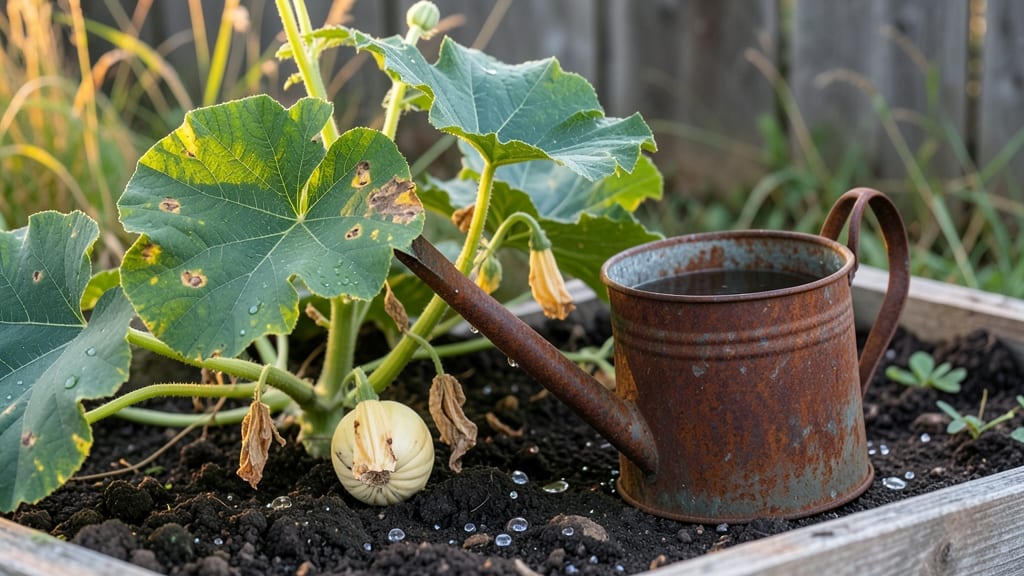
Overwatered squash plants can turn your garden from productive to pathetic in days—yellowing leaves, mushy vines, and that dreaded fungal smell. I’ve nursed back more squash plants than I’d like to admit, and the key always starts with cutting back on water.
The moment you see leaves curling or stems turning soft, you’ve got a waterlogged crisis on your hands.
Here’s the simple truth: squash plants hate soggy roots. They need 1-1.5 inches of water per week, but if your soil stays wet for more than a day, you’re drowning them. The fix begins with stopping water immediately and letting the soil dry out.
Grab a trowel, loosen the top inch of soil around the base, and let air circulate—this alone can save a plant in 24-48 hours.
Once the soil’s dry, adjust your watering game. Focus on deep, infrequent watering—aim for the roots, not the leaves—and always check drainage. If water pools in the pot or ground, your plants will never recover.
With the right routine, your squash will bounce back with vibrant green leaves and new vines within a week.
For long-term health, mix in compost or coarse sand to improve drainage, and consider raised beds if your yard stays damp. The goal? Happy plants that thrive without your constant attention. Let’s get those vines back on track!
Root Causes Of Too Much Water
When your squash plants look more like soggy sponges than thriving vines, the issue often boils down to a few key factors related to water management, soil health, and environmental conditions.
Understanding these causes helps you adjust your care routine before the problem worsens. Let’s break it down into the most common culprits:
Squash plants thrive in consistent moisture, but that doesn’t mean they’re fans of standing water. Many gardeners—especially newcomers—err on the side of caution and water too much, too often. Here’s why this backfires:
- Poor Oxygen Exchange: Soil needs a balance of water and air for roots to breathe. When you water excessively, oxygen is displaced, suffocating roots and preventing them from absorbing nutrients efficiently. This leads to root rot, a fungal infection that turns roots mushy and black.
- Leaching of Nutrients: Frequent watering flushes essential nutrients like nitrogen, phosphorus, and potassium out of the root zone. Squash plants, which are heavy feeders, become nutrient-deficient, causing yellowing leaves and stunted growth.
- Surface Crusting: Overwatering can create a hard, compacted layer on the soil surface, blocking water and air from penetrating deeper. This traps moisture at the top while the roots below remain dry—a classic case of drought stress despite wet soil.
Actionable Fix: Water deeply but infrequently. Aim for 1–1.5 inches of water per week (including rainfall), delivered in the early morning to allow foliage to dry before evening. Use a moisture meter or the "finger test" (stick your finger 2 inches into the soil—if it’s damp, wait before watering again).
Not all soils are created equal, and squash plants despise soggy conditions. If your garden beds or pots lack proper drainage, water pools around the roots instead of draining away. Here’s how this plays out:
- Clay or Compacted Soil: Heavy clay soils hold water like a sponge and drain poorly. Even if you water moderately, the excess moisture lingers, creating anaerobic (oxygen-free) conditions that invite root rot pathogens like Phytophthora.
- Lack of Amendments: Soil without organic matter (like compost or aged manure) can’t absorb and release water efficiently. This leads to waterlogging, where roots sit in a perpetually damp environment.
- Container Drainage Failures: Pots without drainage holes or those lined with plastic (instead of breathable fabric) trap water at the bottom. Even if you think you’re watering correctly, the roots suffocate.
Actionable Fix:
- Amend heavy soil with compost or perlite to improve aeration and drainage.
- Raise garden beds slightly or add a gravel layer at the bottom before planting.
- For containers, ensure they have drainage holes and use a well-draining potting mix (avoid garden soil).
- Consider raised beds or container gardening if your native soil is problematic.
Sometimes, the issue isn’t what you’re doing—it’s what’s happening around your plants. Humidity, rainfall, and even wind can turn your garden into a sauna, exacerbating overwatering effects. Key triggers include:
- High Humidity: Squash plants prefer moderate humidity (40–70%). In humid climates or during rainy seasons, the air is already saturated. Adding extra water creates a double whammy of moisture stress, promoting fungal diseases like powdery mildew or downy mildew.
- Poor Airflow: Crowded plants or those growing in shaded areas don’t dry out quickly. Stagnant air traps moisture on leaves and soil, increasing the risk of blossom end rot (common in squash) and root rot.
- Heavy or Frequent Rainfall: If you’re watering on top of recent rains, you’re essentially drowning the roots. Squash plants native to warm climates are adapted to drought tolerance, not constant moisture.
Actionable Fix:
- Space plants 3–4 feet apart to improve airflow.
- Use mulch (straw or wood chips) to regulate soil temperature and reduce evaporation.
- Adjust your watering schedule based on weather forecasts—skip watering if rain is expected.
- In humid climates, water in the early morning to allow foliage to dry before nightfall.
Believe it or not, how and when you plant squash can set the stage for overwatering issues. Here’s how:
- Too Deep or Shallow Planting: Burying seeds or transplants too deeply can delay germination or encourage weak, shallow root systems that struggle in wet soil. Conversely, planting too shallowly leaves roots exposed to rapid drying or overheating.
- Planting in Cool Soil: Squash thrives in warm soil (70°F+). Planting too early in cool, damp conditions slows root development, making them more susceptible to rot when watered.
- Overcrowded Starts: If seedlings are too close together, they compete for nutrients and water, leading to stress and poor root growth. Weak roots can’t handle excess moisture.
Actionable Fix:
- Plant seeds 1 inch deep in warm soil (use a soil thermometer if unsure).
- Wait until soil is at least 60°F before transplanting.
- Thin seedlings to 2–3 feet apart to reduce competition.
- Use black plastic mulch to warm soil faster in early spring.
Fixing Overwatered Squash Plants
Reviving your soggy squash vines starts with identifying the root cause—literally! Overwatering can drown roots, invite pests, or even lead to fungal diseases, but the good news is that with the right steps, your plants can bounce back.
Below are practical, step-by-step solutions tailored to the most common causes of overwatered squash, plus prevention tips to keep your garden thriving.
Overwatering often leaves soil waterlogged, cutting off oxygen to roots. Here’s how to fix it fast:
🔥 Step 1: Pause Watering Immediately
Skip your next watering schedule. Let the soil dry out naturally—this prevents further root suffocation.
🍳 Step 2: Improve Drainage
- Raise the plant bed (if possible) by adding a layer of gravel or sand at the base.
- Aerate the soil with a garden fork to break up compacted areas.
- Mulch lightly (with straw or wood chips) to help moisture evaporate evenly—but avoid piling it against stems.
👨🍳 Step 3: Test Soil Moisture
Stick your finger 1–2 inches deep into the soil. If it’s still damp after 24 hours, wait longer. Healthy squash soil should feel like a slightly damp sponge, not a soggy washcloth.
✨ Pro Tip: If your garden has poor drainage, consider container growing for next season—elevated pots with drainage holes solve many water woes!
Yellowing leaves, black spots, or moldy stems? Overwatering creates the perfect breeding ground for fungi like powdery mildew or downy mildew.
🔪 Step 1: Prune Affected Leaves
- Remove and discard (don’t compost!) yellow, spotted, or mushy leaves.
- Use sterilized pruners (wipe with rubbing alcohol) to avoid spreading spores.
🌡️ Step 2: Apply Fungicide
- Baking soda spray (1 tsp baking soda + 1 quart water + a drop of dish soap) works for mild cases.
- For severe infections, use a copper-based fungicide (follow label instructions).
🎯 Step 3: Adjust Watering Habits
- Water at the base (not overhead) to keep foliage dry.
- Water in the morning so leaves dry quickly—fungi love dampness!
- Space plants properly (3–4 feet apart) for airflow.
💡 Pro Tip: Neem oil (a natural fungicide) can be sprayed preventatively every 2 weeks during humid seasons.
Overwatered soil attracts slugs, aphids, and root maggots. Here’s how to evict them:
⏰ Step 1: Inspect for Pests
- Check undersides of leaves for aphids or tiny eggs.
- Lift the plant gently to spot slugs or grubs in the soil.
🍎 Step 2: Use Natural Repellents
- Diatomaceous earth (food-grade) around the base deters slugs.
- Soapy water spray (1 tsp mild soap per quart of water) kills aphids.
- Beneficial nematodes (microscopic worms) target root maggots—mix into soil as directed.
🔥 Step 3: Fix Watering to Deter Pests
- Reduce evening watering—slugs thrive in moist conditions.
- Use drip irrigation instead of sprinklers to keep foliage dry.
✨ Pro Tip: Crushed eggshells around plants act as a physical barrier for slugs and add calcium to the soil!
Once your squash plants recover, keep them happy long-term with these habits:
| Problem | Prevention Fix |
|---|---|
| Poor drainage | Amend soil with compost + perlite. |
| Overzealous watering | Use a moisture meter or your finger. |
| Fungal risks | Rotate crops—don’t plant squash in the same spot yearly. |
| Pest hotspots | Interplant with herbs (basil repels pests!). |
Final Thought: Overwatered squash plants can recover in 1–2 weeks with the right care. Stay patient, adjust your watering routine, and soon you’ll be harvesting plump, healthy squash instead of wilting vines! 🎉
Frequently asked questions
How do I know if my squash plants are overwatered?
Check for yellowing leaves, especially the older ones, and soft, mushy stems. Overwatered plants often develop blackened roots or a foul smell from root rot. If the soil feels soggy even 24 hours after watering, you’ve likely overdone it.
Can I save squash plants that are already wilting from overwatering?
Yes! Stop watering immediately and let the soil dry out. Loosen the top 1-2 inches of soil to improve airflow to the roots. Most plants recover within 3-5 days if the roots aren’t completely rotted. Prune any mushy leaves to prevent fungal spread.
What’s the best way to water squash plants to avoid overwatering?
Water deeply but infrequently—about 1-1.5 inches per week—directly at the base in the morning. Use the "finger test": stick your finger 2 inches deep; if it’s damp, wait before watering again. Mulch with straw to regulate moisture.
Why do my squash plants get fungal diseases after overwatering?
Excess moisture creates the perfect environment for fungi like powdery mildew. Wet leaves stay damp overnight, promoting spores. Always water at the base, not overhead, and space plants 3-4 feet apart for airflow. Remove infected leaves immediately.
Should I use containers to prevent overwatering squash?
Containers are ideal if your garden soil drains poorly! Use pots with drainage holes and a well-draining mix (50% potting soil, 30% compost, 20% perlite). They warm up faster in spring and let you control moisture precisely. Great for heavy clay soils!