
Watering
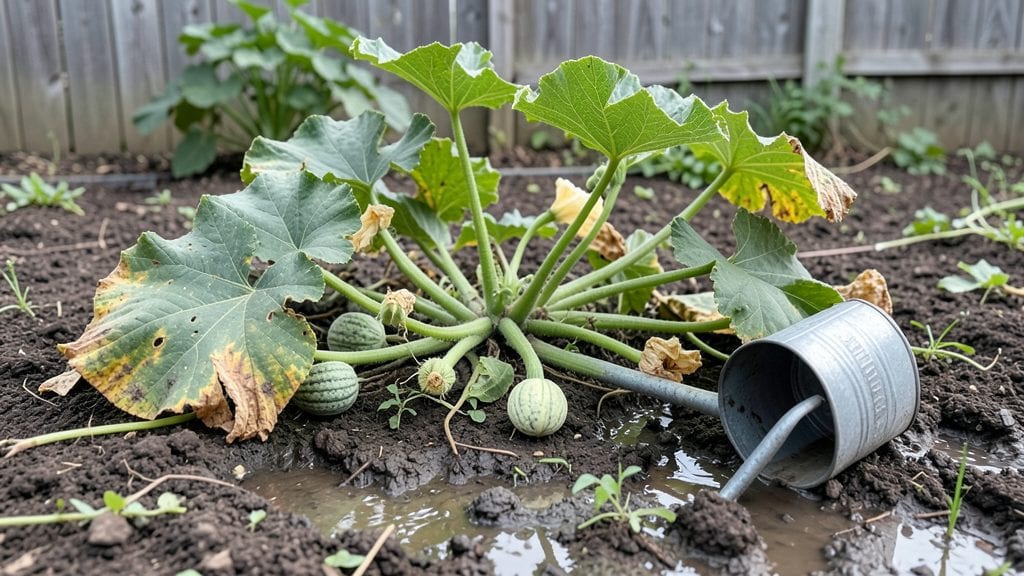
Overwatering squash plants turns your garden into a swamp—yellowing leaves, mushy stems, and vines that collapse like wet paper. 🌱 I’ve pulled squash plants back from the brink after drowning them in good intentions, and the fix isn’t as scary as it sounds.
The key is stopping the rot before it spreads, then giving your plants the right conditions to bounce back.
Here’s the hard truth: squash hates soggy feet. When roots suffocate from too much water, they can’t absorb nutrients, and fungal diseases move in like unwelcome houseguests. You’ll spot the problem first in the leaves—yellowing between the veins, or stems that feel soft when you squeeze them.
The good news? With three simple adjustments—watering less, improving drainage, and cutting back on mulch—you can turn things around in just a few days.
By the time you’re done, your squash vines will be standing tall again, with firm stems and leaves that snap back when you touch them. The secret isn’t just cutting back on water—it’s making sure the soil around your plants can breathe.
Think of it like giving your squash a fresh start, without the drama.
This works for zucchini, summer squash, pumpkins, and winter varieties alike, whether you’re growing in raised beds or straight in the ground. The same rules apply whether you’re dealing with a single wilted plant or a whole patch of sad vines. Let’s get those roots happy again.
Root Causes Of Excess Moisture
When your squash plants start wilting despite damp soil or even sitting in puddles, the issue likely stems from overwatering. Unlike drought stress, which causes plants to droop from dehydration, overwatering creates a suffocating environment that disrupts critical growth processes.
Let’s break down the key reasons why this happens—and how to recognize them before it’s too late.
Squash plants thrive in well-draining soil, but heavy clay, compacted dirt, or amended soil with too much organic matter (like fresh mulch or peat) can act like a sponge, holding excess water around roots.
When roots sit in soggy conditions for more than a day, they struggle to absorb oxygen—a process called hypoxia. Without oxygen, roots can’t respire properly, leading to:
- Root rot (fungal/bacterial infections like Phytophthora or Pythium)
- Nutrient uptake failure (waterlogged cells block transport of essential minerals like nitrogen or potassium)
- Weakened cell structure (roots become mushy and collapse under pressure)
🔍 Pro Tip: Test your soil’s drainage by digging a 6-inch hole, filling it with water, and timing how long it takes to drain. If it takes more than 2 hours, amend with perlite, coarse sand, or compost to improve airflow.
Squash plants have shallow root systems that spread widely (not deeply), so they rely on consistent moisture—but that doesn’t mean daily drenching. Common mistakes include:
- Watering on a fixed schedule (e.g., every morning regardless of weather). Rain or humidity can make soil soggy even if you haven’t watered.
- Ignoring soil moisture cues (poking fingers 1–2 inches deep is better than guessing). Squash prefers soil that’s moist but not wet.
- Using overhead sprinklers (leaves stay wet for hours, inviting fungal diseases like powdery mildew, which stress plants further).
Overwatering also leaches nutrients from the topsoil, leaving roots starved even if the plant looks hydrated. A quick check: If water runs off the surface instead of soaking in within 10 minutes, you’re overdoing it.
Potted squash plants are especially vulnerable because:
- Small pots dry out faster, but if you water at the first sign of dryness, you risk creating a cycle of alternating drought and flood—both harmful to roots.
- No room for drainage: Many gardeners skip drainage holes or use saucers that trap excess water, turning containers into root prisons.
- Slow-draining soil mixes: Pre-mixed potting soils often retain moisture longer than garden soil. Adding vermiculite or coconut coir helps balance moisture retention.
💡 Fix It: Use pots with 3+ drainage holes and elevate them on saucers with pebbles (to create an air gap). Water only when the top inch of soil feels dry.
Even with perfect watering habits, external conditions can amplify overwatering damage:
- High humidity: Stagnant air slows evaporation, keeping soil damp longer. Squash plants in greenhouses or shaded areas are at higher risk.
- Cold soil temperatures: Below 50°F (10°C), roots metabolize slower, making them more sensitive to waterlogging.
- Poor airflow: Dense foliage or nearby structures trap moisture, creating a microclimate that encourages rot.
🌡️ Watch For: If your area has consistent rain or high humidity, reduce watering by 30–50% and mulch with straw (not wood chips, which can compact soil).
Fixing Overwatered Squash Plants
Now that you know the signs and root causes of overwatering, it’s time to take action! The good news is that squash plants are surprisingly resilient—with the right approach, you can revive them and prevent future waterlogging.
Below, we’ll break down practical solutions tailored to each common cause, plus prevention tips to keep your plants thriving.
If your squash plants are sitting in soggy soil, stop watering right away and focus on drainage. Overwatering creates anaerobic conditions that suffocate roots, so your first priority is to remove excess moisture.
🔥 How to Do It: - Check soil moisture by sticking your finger 1–2 inches deep.
If it’s damp, wait before watering again. - Move potted plants to a dry, shaded spot to allow soil to dry out naturally. - For in-ground plants, create small trenches around the base to help excess water drain away. - Use a moisture meter (if available) to monitor soil conditions accurately.
💡 Pro Tip:
If your garden has poor drainage, consider raising beds or adding organic matter (like compost or coconut coir) to improve soil structure.
Consistent overwatering often stems from poor timing, frequency, or technique. Squash plants need deep but infrequent watering—not daily shallow soaks.
🍳 How to Fix It:
- Water deeply but less often—aim for 1–1.5 inches per week, including rainfall.
Use a soaker hose or drip irrigation to deliver water directly to the roots. - Water in the morning (before 10 AM) to allow foliage to dry out, reducing fungal risks. - Avoid wetting leaves—water at the base to prevent diseases like powdery mildew. - Mulch around plants (with straw or shredded leaves) to retain moisture without keeping soil soggy.
⏰ Schedule Check:
- Hot/dry weather? Water every 2–3 days.
- Cool/cloudy weather? Water every 5–7 days.
- Always check soil first!
Compacted or clay-heavy soil traps water, leading to root rot. If your squash plants are struggling, it’s time to loosen up the soil and boost airflow.
👨🍳 How to Treat It:
- For potted plants:
- Gently loosen the top 2–3 inches of soil with a fork or your fingers.
- Mix in perlite, vermiculite, or coarse sand (20–30%) to improve drainage.
- Repot if the current container lacks drainage holes.
- For in-ground plants:
- Aerate the soil by digging 1–2 inches deep around the plant’s base.
- Amend with compost or aged manure to improve structure.
- Consider planting in raised beds if your garden soil is consistently waterlogged.
🎯 Long-Term Fix:
If your yard has poor drainage, test the soil’s percolation rate (dig a 12-inch hole, fill with water, and time how long it drains). If it takes more than 6 hours, you may need to install French drains or plant in mounds.
If overwatering has caused yellowing leaves, wilting, or fungal spots, pruning can help the plant redirect energy to recovery.
✂️ How to Prune Correctly:
- Remove only the worst-affected leaves (those that are mushy, black, or covered in mold).
- Use clean, sharp scissors to avoid tearing stems.
- Avoid over-pruning—never remove more than 20–30% of the plant at once.
- Dispose of diseased leaves in the trash (not compost) to prevent spread.
✨ Bonus Recovery Boost:
- Trim back vines that are overly crowded to improve airflow.
- Apply a balanced fertilizer (like 10-10-10) once the plant shows signs of recovery (not while still stressed).
Once your squash plants bounce back, keep them healthy long-term with these easy habits:
| Problem | Prevention Solution | How to Do It |
|---|---|---|
| Poor drainage | Raise beds or amend soil | Mix in compost, perlite, or sand. |
| Inconsistent watering | Use drip irrigation or soaker hoses | Set on a timer for deep, slow watering. |
| Compacted soil | Mulch & aerate regularly | Add 2–3 inches of mulch after planting. |
| Fungal diseases | Water at the base, avoid wetting leaves | Use a watering wand for precision. |
| Overcrowding | Thin plants early | Space squash 3–5 feet apart for airflow. |
- Mild overwatering? You may see improvement in 3–7 days if drainage improves.
- Severe root rot? Recovery can take 2–3 weeks—be patient and keep soil slightly moist (not soggy).
- If leaves stay yellow/mushy, the plant may not recover—consider replacing it and adjusting care for the next one.
Final Thought: Overwatering is a fixable issue—don’t let it discourage you! With these steps, your squash plants will bounce back stronger and produce bountiful harvests all season. 🎉🍉🎉
Frequently asked questions
Why do my squash leaves turn yellow when I water them daily?
Daily watering creates waterlogged roots that can't absorb oxygen, causing yellowing between leaf veins—a classic sign of overwatering. Squash prefers soil that's moist but not soggy. Let the top 1–2 inches dry out between waterings, especially in clay soil or containers without drainage.
Can I save squash plants with mushy stems from overwatering?
It depends! If only the stems are soft (not black/moldy), prune back affected areas and improve drainage immediately. For severe cases, check roots—if they smell foul or are brown/mushy, the plant may not recover. Focus on preventing future issues by raising beds or using containers with holes.
How often should I water squash in pots vs. garden beds?
Potted squash needs watering every 2–3 days (check soil daily), while garden beds only need 1–1.5 inches per week. Pots dry out faster, so use well-draining soil mixes with perlite and water deeply until it runs from drainage holes. Never let them sit in saucers of water!
Will mulch make my squash plants overwatered?
Not if used correctly! Straw or shredded leaves (2–3 inches thick) help retain moisture without suffocating roots. Avoid thick mulch layers in humid climates or after heavy rains. For overwatered plants, temporarily remove mulch to speed up soil drying.
Can I use hydrogen peroxide to fix overwatered squash?
Yes! Mix 1 tablespoon of 3% hydrogen peroxide per gallon of water and water the base (not leaves) to oxygenate roots and prevent rot. Repeat every 3–4 days until you see improvement. It’s a natural fungicide too, helping with any mild disease from damp conditions.