
Diseases
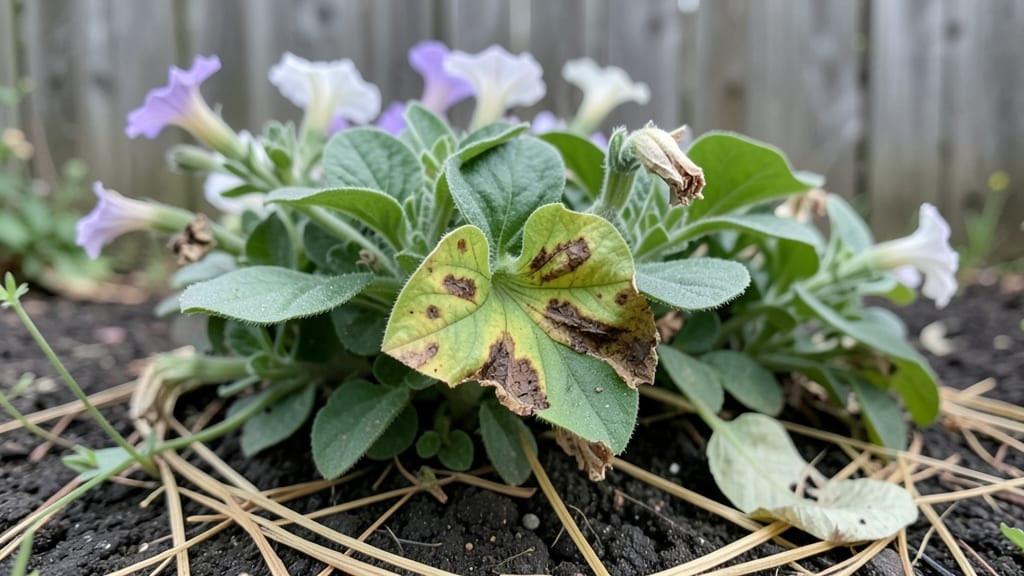
Petunia plant diseases don’t have to mean game over—my first powdery mildew outbreak taught me how to spot, diagnose, and cure the most common fungal threats before they wreck your blooms. That white dust on leaves?
It’s not flour, and it’s not harmless. The key is acting fast, whether you’re dealing with leaf spots, black stem rot, or that dreaded wilting that starts in the roots.
I’ve learned the hard way that prevention is easier than cleanup—proper spacing, watering at the base (not overhead), and avoiding soggy soil cuts down on 90% of fungal problems. Most gardeners overlook airflow, but petunias need it like they need sunlight.
Once you recognize the symptoms—yellowing leaves, dark spots, or stems that snap like dry twigs—you can grab the right treatment before the plant checks out.
You’ll walk away with a three-step cure for each disease: remove infected parts, apply the correct spray (organic or chemical), and adjust care to stop it from coming back.
Think of it like a checkup—early action keeps your petunias lush, blooming, and disease-free all season. Let’s get those plants back to their showstopping best.
This works for container gardens, hanging baskets, or in-ground plantings—no matter where your petunias live, the same principles apply. The goal is to keep them thriving, not just surviving. Ready to save your plants?
Root Causes Behind Petunia Woes
Petunias are stunning, low-maintenance bloomers—until disease strikes. Understanding why these fungal foes target your plants is the first step to prevention. Below, we break down the science behind the most common triggers, so you can address the real issues before they spiral.
Fungal diseases like Botrytis blight and powdery mildew thrive in soggy conditions. Here’s why:
- Excess moisture: Petunias hate "wet feet." When soil stays damp for days, fungal spores germinate and infect stems, leaves, and flowers. Botrytis (gray mold) loves this environment, spreading like wildfire in humid air.
- Root rot connection: Waterlogged roots weaken the plant, making it far more susceptible to secondary infections. Phytophthora fungi exploit stressed roots, cutting off nutrient flow.
- Compacted soil: Heavy or clay-like soil traps moisture and blocks oxygen. Without airflow, beneficial microbes die off, and pathogens take over.
💡 Pro Tip: Test your soil’s drainage by digging a hole, filling it with water, and timing how long it takes to drain. If it’s slower than 4 hours, amend with perlite or sand.
Petunias need airflow—but many gardeners pack them too closely. Here’s the fungal-friendly setup:
- Humidity buildup: Dense foliage traps moisture, creating the perfect greenhouse for powdery mildew (a white, talcum-powder-like fungus). Spores spread via wind or splashing water.
- Shaded leaves: When plants block sunlight, lower leaves stay damp longer. Alternaria leaf spot (brown, target-like lesions) loves these conditions.
- Dead leaves/debris: Fallen petal debris or old growth harbor spores. Fusarium wilt can lurk in soil for years, waiting for the right moment to strike.
🎯 Fix It: Space petunias 12–18 inches apart. Prune regularly to improve airflow, and remove diseased leaves immediately (don’t compost them—toss in the trash!).
Fungi are opportunistic—they strike when conditions are just right. For petunias, that’s often:
- Cool, wet nights: Temperatures between 60–75°F (15–24°C) with high humidity (70%+) trigger downy mildew (yellow spots on top, fuzzy gray growth underneath).
- Sudden temperature drops: Stress from cold snaps weakens petunias, making them vulnerable to Rhizoctonia (a soil-borne fungus causing dark, sunken lesions).
- Morning dew: While dew itself isn’t harmful, if it lingers until after sunrise, leaves stay wet for hours—ideal for powdery mildew spores to activate.
✨ Prevention Hack: Water in the early morning (before 9 AM) so foliage dries by sunset. Use a soaker hose to avoid wetting leaves.
Fungi don’t just appear—they hitchhike. Here’s how:
- Old garden soil: If you reused soil from last year’s infected petunias, spores may still be dormant. Verticillium wilt can survive for decades in soil.
- Unsterilized pots/tools: Pruners, trowels, or containers harboring fungal spores can transfer diseases to healthy plants. Pythium (a water mold) spreads this way.
- Infected transplants: Buying petunias from nurseries with poor ventilation may mean you’re bringing home hidden fungal stowaways.
🔥 Sanitation Checklist:
- Sterilize pots with a 10% bleach solution (1 part bleach to 9 parts water).
- Disinfect tools with rubbing alcohol or a 1:10 bleach-water mix.
- Test soil with a pH kit—aim for 6.0–7.0; fungi thrive in acidic or alkaline extremes.
Now that you know the why, the next step is spotting the signs early. But first—prevent. Adjust watering, spacing, and airflow, and you’ll starve those fungi before they start.
Quick Fixes for Petunia Pests & Problems
Fungal diseases and pests can turn your vibrant petunias into a sad, wilted mess—but don’t panic! With the right approach, you can nurse them back to health (or prevent issues entirely). Below, we’ve mapped out practical, step-by-step solutions for each common problem, plus prevention tips to keep your petunias thriving.
Fungi thrive in damp, crowded conditions, but you can outsmart them with these targeted fixes.
🔥 Powdery Mildew: Scrub & Spray
Cause: White, powdery coating on leaves (usually from poor airflow or overhead watering). Fix:
- 🍳 Remove infected leaves – Snip off heavily affected foliage with clean scissors and dispose of it in the trash (not compost).
- 👨🍳 Apply fungicide – Mix 1 tsp baking soda + 1 quart water + a few drops of dish soap (or use a neem oil spray).
Spray both sides of leaves in the early morning or evening (avoid direct sun). - 🌡️ Boost airflow – Space plants 12–18 inches apart and prune nearby foliage blocking circulation.
💡 Prevention Tip: Water at the base (not overhead) and avoid planting petunias in shady, humid spots.
🍅 Early Blight & Late Blight: Prune & Protect
Cause: Dark, concentric spots on leaves (early blight) or rapid leaf collapse (late blight). Fix:
- ⏰ Remove diseased leaves immediately – Don’t leave them on the plant or the soil.
- 🔪 Prune for airflow – Trim lower leaves and thin out crowded stems to improve drying.
- ✨ Use copper fungicide – Spray every 7–10 days (or rotate with bacillus subtilis for organic control).
- 🌡️ Adjust watering – Water deeply but infrequently (early morning only) to prevent soil splashing.
💡 Prevention Tip: Rotate crops—don’t plant petunias in the same spot year after year.
🍄 Gray Mold (Botrytis): Sterilize & Isolate
Cause: Gray, fuzzy patches on flowers and stems (often from wet petals). Fix:
- 🔪 Cut back infected growth – Remove all affected stems and flowers—don’t compost them!
- 🧼 Sterilize tools – Wipe pruners with rubbing alcohol between cuts.
- 🌡️ Space plants wider – Gray mold spreads faster in tight clusters.
- 💧 Avoid evening watering – Wet foliage overnight = fungal buffet.
💡 Prevention Tip: Deadhead flowers daily to prevent trapped moisture.
Pests like aphids, spider mites, and whiteflies can drain your petunias. Act fast with these low-toxicity solutions.
🐜 Aphids & Whiteflies: Blast & Beneficials
Cause: Sticky residue, curled leaves, or tiny flying insects. Fix:
- 💦 Blast with water – Use a strong hose spray to knock off aphids (repeat every 2–3 days).
- 🌿 Introduce predators – Ladybugs, lacewings, or parasitic wasps (buy online or from garden centers).
- 🍎 Neem oil spray – Mix 1 tbsp neem oil + 1 tsp mild soap + 1 quart water.
Spray every 5–7 days.
💡 Prevention Tip: Reflective mulch (like aluminum foil) confuses whiteflies—try it under pots!
🕷️ Spider Mites: Mist & Mitigate
Cause: Tiny webs, speckled leaves, or a "bronzed" look. Fix:
- 💦 Increase humidity – Mites love dry air. Mist plants daily or place a tray of water nearby.
- 🍳 Soap spray – Mix 1 tsp castile soap + 1 quart water.
Spray directly on mites (they hate it!). - 🌿 Release predatory mites – Phytoseiulus persimilis (sold at garden stores) eat spider mites like pizza.
💡 Prevention Tip: Avoid over-fertilizing—mites thrive on stressed plants.
A healthy plant fights disease better—follow these easy maintenance habits:
| Problem | Solution | Prevention |
|---|---|---|
| Wilting | Check roots (rot?), water deeply | Well-draining soil + saucer for pots |
| Yellow Leaves | Test soil pH (too acidic?), check for pests | Balanced fertilizer (10-10-10) |
| Stunted Growth | Too much shade? Not enough nutrients? | Full sun (6+ hours), feed every 2 weeks |
🎯 Pro Tip: Rotate pots occasionally so all sides get sun—petunias love even light!
Final Thought: Most petunia problems are preventable with good airflow, smart watering, and quick action. Spot an issue early? Isolate the plant, clean up debris, and treat it—your blooms will thank you! 🌸
Frequently asked questions
How do I tell if my petunia has a fungal disease vs. pest damage?
Fungal diseases usually show as powdery coatings (like mildew), dark spots with fuzzy edges, or gray mold on petals. Pests often leave holes in leaves, sticky residue (aphids), or tiny webs (spider mites). Check the undersides of leaves—fungi often start there, while pests cluster on new growth.
Can I save a petunia plant already showing signs of gray mold?
Yes, but act fast! Prune all infected stems and flowers immediately, then spray with a copper fungicide or 1% hydrogen peroxide solution (1 part peroxide to 9 parts water). Move the plant to a dry, sunny spot with good airflow—gray mold spreads when humidity is high.
What’s the best organic fungicide for petunias?
For powdery mildew, mix 1 tsp baking soda + 1 quart water + a few drops of dish soap. For leaf spots, try neem oil spray (1 tbsp oil + 1 tsp mild soap per quart of water). Always spray both sides of leaves in the early morning to avoid burning foliage.
Why do my petunias get diseases even when I water them properly?
Diseases often strike due to poor airflow or overcrowding. Space plants 12–18 inches apart and prune regularly to improve circulation. Also, avoid evening watering—wet leaves overnight create the perfect fungal buffet. Test your soil drainage too; soggy roots weaken plants.
Can I reuse soil from last year’s petunias without sterilizing it?
No—soil may harbor dormant fungal spores like Verticillium wilt or Fusarium, which can survive for years. Sterilize soil by baking it at 200°F for 30 minutes or mixing in 10% compost to dilute pathogens. Always disinfect pots with a 10% bleach solution before reuse.