
Trees
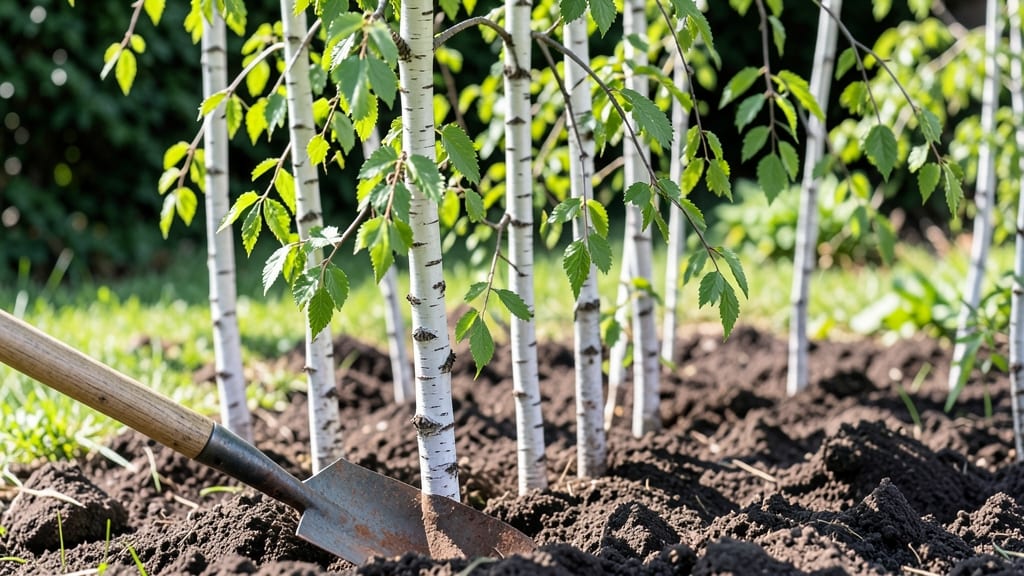
Planting birch trees delivers that instant sense of vertical beauty—peeling bark and delicate leaves that transform any yard into a serene woodland escape. 🌿 I’ve planted birches in everything from clay-heavy soil to rocky slopes, and the key to their fast rooting success always starts with the same three steps: picking the right spot, prepping the ground, and planting at the perfect time.
The first year is critical, but once established, these trees need shockingly little care to thrive for decades.
You’ll need a sunny or partially shaded site with well-draining soil—birches hate soggy roots—and a spot where their mature width (15–25 feet) won’t crowd sidewalks or foundations.
Dig a hole twice as wide as the root ball but no deeper, then loosen the soil at the bottom to encourage roots to spread outward.
For fastest results, plant in early spring or fall when temperatures are mild, giving roots time to settle before summer heat or winter freeze.
Watering is where most people trip up: birches need deep, infrequent watering—about 10 gallons per week for the first year—to encourage deep roots. Mulch heavily (3–4 inches) to retain moisture and protect roots, but keep mulch 6 inches away from the trunk to prevent rot.
By year two, you’ll see those signature white trunks emerging, and the tree will start fending for itself with minimal effort.
Container-grown birches? Absolutely—just choose a 5-gallon or larger pot with drainage, and upgrade to a 15-gallon container within a year. For climates with harsh winters, protect young trees with burlap wraps or a thick layer of mulch.
The payoff? A tree that grows 3–4 feet per year and stays elegant year-round, whether you’re in zone 3 or zone 7.
📚 In This Guide
- What you need
- Instructions
- Tips and common mistakes
- Wrapping up and next steps
What you need
- ● Birch tree saplings: 1–5+ (depending on desired spacing; paper birch (Betula papyrifera) or yellow birch (Betula alleghaniensis) are popular choices).
- ● Size: 1–3 feet tall (container-grown or bare-root, depending on season).
- ● Shovel or spade: For digging holes (12–18 inches wide and deep).
- ○ Garden fork or tiller: To loosen compacted soil (optional but helpful).
- ● Compost or organic matter: 2–3 gallons per hole (improves drainage and nutrients).
- ● Mulch (wood chips or straw): 2–3 inches thick (keeps roots cool and retains moisture).
- ● Watering can or hose with nozzle: For gentle, deep watering.
- ● Pruning shears: To trim dead or damaged branches (if needed).
- ○ Tree stakes & ties (optional): For young saplings in windy areas.
- ● Sunlight: Full sun (6+ hours/day) or partial shade (young trees tolerate light shade).
- ● Soil type: Well-draining, slightly acidic (pH 4.5–6.0). Birch trees hate soggy soil!
- ● Spacing: Tree Type Spacing (ft) Dwarf birch (e.g., Betula pendula 'Fastigiata') 8–10 ft apart Standard birch (e.g., Betula papyrifera) 15–25 ft apart
- ● Timing: Plant in early spring or fall (avoid extreme heat or frost).
Instructions for planting birch trees with rapid root establishment
Here’s how to get those delicate white trunks thriving in your landscape within weeks.
🌱 Step 1: Choose the Right Time and Location
Birch trees establish roots fastest when planted in early spring or fall, before the ground freezes or extreme heat sets in. Avoid planting during summer droughts or winter frost—the roots won’t have time to anchor before stress kicks in. For year-round elegance, pick a site with partial shade to full sun (young trees tolerate shade better than mature ones).
Check the soil by digging a 6-inch hole—birches prefer moist, well-draining soil with a slightly acidic pH (5.0-6.5). If your soil is heavy clay, mix in 2 inches of compost to improve drainage. The spot should have at least 15 feet of clearance from sidewalks or structures to avoid root competition later.
🪴 Step 2: Dig the Hole and Prepare the Root Ball
Dig a hole twice as wide as the root ball but no deeper—birch roots are shallow and sensitive to being buried too deeply. For a 4-foot-tall sapling, that’s a 24-inch-wide hole. Loosen the sides of the hole with a shovel to encourage root spread into the surrounding soil.
If the tree arrives bare-root, soak the roots in lukewarm water for 2-3 hours before planting to revive them. For container-grown trees, gently tease the roots at the edges of the pot to prevent circling. Place the tree in the hole so the top of the root ball sits 1-2 inches above ground level—birches hate having their trunks buried, which causes rot.
💧 Step 3: Plant and Water for Immediate Root Contact
Backfill the hole with the native soil you removed, tamping down lightly every 2 inches to eliminate air pockets. Avoid compacting too hard—birch roots need loose soil to spread quickly. Once planted, water deeply (about 5 gallons) to settle the soil and encourage root-to-soil contact. The soil should be moist but not soggy—birches hate waterlogged roots.
Mulch the base with 2-3 inches of wood chips, keeping it 6 inches away from the trunk to prevent rot. Water again every 3-4 days for the first month, then taper to once a week once the tree is established. You’ll see new growth within 4-6 weeks—that’s your sign the roots are taking hold.
☀️ Step 4: Protect and Monitor for Fast Establishment
Young birch trees need support against wind—stake the trunk with two stakes and a soft tie if your area gets gusty. Prune only dead or crossing branches in the first year; birches establish faster with minimal stress. Watch for yellowing leaves (a sign of overwatering) or wilting (underwatering)—birches are sensitive to moisture extremes.
By fall of the first year, the roots should have spread 12-18 inches outward. If the tree drops leaves early, it’s struggling—check for compacted soil (loosen it) or pests (like borers). With proper care, birches grow 2-3 feet per year, giving you that iconic white bark and airy canopy in no time.
Tips & tricks for planting birch trees with rapid root establishment
Fast root establishment is all about timing, soil prep, and post-planting care—here’s how to give your birch trees the best possible start.
Timing is Everything: That 2-3 hour soaking for bare-root trees in Step 2 isn’t just a suggestion—it’s critical. I’ve seen roots revive dramatically after this treatment, especially in dry conditions. For container-grown trees, don’t rush the root teasing; take your time to avoid damaging delicate feeder roots that spread horizontally. These roots are your tree’s lifeline for the first year.
Soil Science Matters: The 6-inch soil test in Step 1 reveals everything about your planting site. If your soil tests above pH 6.5, mix in 1 cup of sulfur per square foot to adjust acidity—birches are sensitive to alkaline conditions. For clay soils, blend in 2 inches of compost AND 1 inch of perlite to improve drainage without losing moisture retention. The goal is that perfect balance of aeration and hydration.
Watering Wisdom: Those 5 gallons of initial water in Step 3 should penetrate at least 12 inches deep. Use a moisture meter to verify—if it reads dry at 6 inches, water again. The key is consistent moisture without saturation. I’ve seen birches struggle when gardeners assume "more water is better"—birches hate soggy roots. For the first month, check soil moisture every 3-4 days by hand before watering; your fingers are better than a schedule.
Mulching Mastery: The 2-3 inches of wood chips in Step 3 should be organic mulch only—never use plastic or rocks. Organic mulch breaks down, improving soil structure over time, while maintaining the right moisture level. Keep it 6 inches from the trunk to prevent rot, but don’t skimp—this layer acts as insulation in winter and moisture retention in summer. For extra protection in windy areas, add a 3-inch layer of straw around the base after planting.
Pro Tips for Planting Birch Trees
- Fast root establishment is all about timing, soil prep, and post-planting care—here’s how to give your birch trees the best possible start.
- Timing is Everything: That 2-3 hour soaking for bare-root trees in Step 2 isn’t just a suggestion—it’s critical.
- Soil Science Matters: The 6-inch soil test in Step 1 reveals everything about your planting site.
Frequently asked questions
Got questions about planting birch trees? You’re not alone! Here are some of the most common concerns—and answers—to help you grow a thriving stand of these graceful trees.
When is the best time to plant birch trees?
The ideal window is early spring (as soon as the ground thaws) or early fall (4–6 weeks before frost). Avoid planting in extreme heat or drought—birch trees need moisture to establish roots. If you must plant in summer, water deeply every 2–3 days for the first month.
Can I plant birch trees in winter?
While birch trees can survive winter dormancy, planting in freezing temperatures is not recommended. Bare-root trees planted in winter may struggle to establish roots before spring. If you must plant in cold months, choose container-grown trees and mulch heavily to protect roots.
How close can I plant birch trees to my house or fence?
Keep birch trees at least 15–20 feet from structures to avoid root competition and foundation issues. Their shallow roots can also lift sidewalks or driveways over time. For smaller varieties (like dwarf birch), maintain a 10-foot buffer.
Why are my newly planted birch tree leaves turning yellow?
Yellowing leaves often signal overwatering, poor drainage, or nutrient deficiency. Check soil moisture—birch trees prefer consistently moist but not soggy soil. Amend heavy clay with compost or sand, and fertilize lightly in spring with a balanced 10-10-10 formula.
Are there low-maintenance alternatives to traditional birch trees?
Yes! Consider paper birch hybrids (like ‘Fastigiata’ for upright growth) or dwarf varieties (e.g., ‘Copper Magic’). For even less upkeep, try hazelnut shrubs or ornamental grasses—they offer year-round interest with minimal pruning.
Wrapping up and next steps
Planting birch trees is a rewarding way to add timeless beauty and practical benefits to your garden—whether you crave fast-growing shade, delicate foliage, or even wildlife-friendly habitat. From choosing the right variety to nurturing young saplings, every step brings you closer to a serene, sustainable outdoor space.
Now that you’re armed with the know-how, there’s no time like the present to dig in!
🌱 Next steps:
- Pick your spot and grab your supplies—your birch’s future starts today!
- Check your local climate for the best planting window (spring or fall are ideal!).
- Share your progress with fellow green thumbs—tag us in your birch’s growth journey! 📸