Pruning
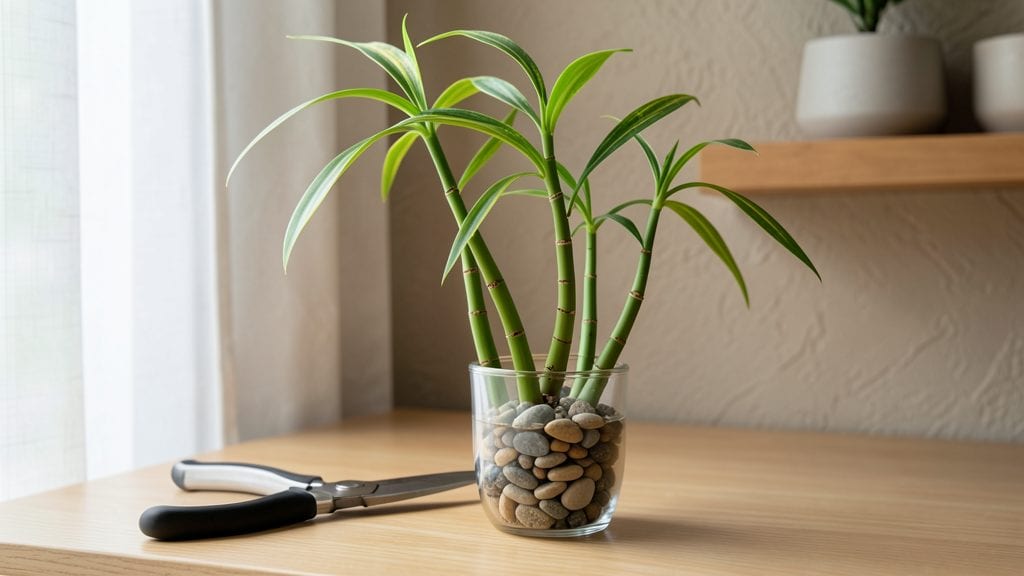
Pruning bamboo plants keeps them lush and under control—something I learned the hard way after my running bamboo took over half the yard. 🌱 The key is timing, technique, and knowing when to stop before you strip the plant bare.
Most gardeners prune once a year, but bamboo responds well to light trims throughout the growing season too.
You’ll need sharp loppers for thick canes, gloves to protect your hands, and a pruning saw for the toughest stems. Safety first: wear long sleeves and eye protection when cutting running bamboo, as the sharp edges can snap back unexpectedly.
The best time to prune is late winter or early spring, just as new shoots start pushing through the soil.
Start by removing any dead or damaged canes at the base, then thin out crowded growth to improve airflow. For clumping bamboo, prune back to the ground any canes that spread beyond your desired area.
The goal is to encourage fresh, vibrant growth while keeping the plant’s energy focused on what you want to see thrive.
After pruning, give your bamboo a light feeding with balanced fertilizer and water deeply to help it recover. Watch for new shoots in 2-4 weeks, and avoid over-pruning—bamboo is resilient but not invincible.
With the right approach, your bamboo will stay healthy, dense, and exactly where you want it to grow.
📚 In This Guide
- What you need
- Instructions
- Tips and common mistakes
- Wrapping up and next steps
What you need
- ● Pruning shears or loppers: Choose bypass pruners (for clean cuts) or loppers (for thicker stems, 1–2 inches in diameter). Quantity: 1 pair.
- ● Heavy-duty pruning saw: For thick bamboo culms (3+ inches). Opt for a curved-tooth saw to avoid splintering. Quantity: 1.
- ● Gloves: Wear cut-resistant gloves (e.g., garden or mechanic-grade) to protect hands from sharp edges and sap. Quantity: 1 pair.
- ● Disinfectant (70% isopropyl alcohol or bleach solution): Clean tools between cuts to prevent disease spread. Quantity: Small bottle or spray.
- ● Rake or broom: For clearing debris post-pruning. Quantity: 1.
- ● Wheelbarrow or trash bags: Collect clippings for compost or disposal. Quantity: 1–2 (depending on volume).
- ● Safety goggles: Protect eyes from flying debris, especially when using a saw. Quantity: 1 pair.
- ● Root barrier spray: If pruning to control spread, apply to freshly cut rhizomes (e.g., Vigoro Root Barrier).
- ● Pruning sealant: For large cuts (1+ inch diameter) to prevent disease entry (e.g., Tanglefoot Tree Wound Pruning Seal).
- ● Measuring tape: Track culm height or spacing for uniform pruning. Quantity: 1.
- ● Knee pads or stool: For comfort during extended pruning sessions.
- ● Camera or sketchpad: Document your bamboo’s structure before pruning for reference later!
Step-by-step instructions for pruning bamboo plants
Here's how to keep your bamboo lush and contained without stressing the plant.
✂️ Step 1: Time Your Pruning for Optimal Growth
Prune bamboo in late winter or early spring before new growth begins. This timing gives the plant time to recover and grow strong before summer heat. Avoid pruning in fall—new shoots won’t have time to establish before winter dormancy. If you must prune later in the year, do it in early summer when the plant is actively growing.
Look for dormant canes (thin, brown, or dead-looking stems) and remove them first. These won’t regrow and only take energy from healthy shoots. Healthy canes are thick, green, and firm to the touch—leave these alone for now. If you’re unsure, wait a week and check again; sometimes canes look dormant but are just resting.
✂️ Step 2: Remove Dead or Weak Canes First
Use clean, sharp pruners to cut dead or weak canes at the ground level. Angle the cut slightly to prevent water from pooling on the stub. If a cane is hollow or mushy inside, it’s dead and should be removed immediately. Healthy canes will have a solid, green center when cut open.
I like to bundle and remove all dead canes at once—it’s easier to see the plant’s structure afterward. Step back and assess the overall shape. If the bamboo looks too dense, you’ll thin it further in the next step. Never remove more than one-third of the plant’s canes in a single pruning session, or you’ll stress it.
✂️ Step 3: Thin Out Crowded Canes for Airflow
Select 3-5 of the strongest, healthiest canes to keep as your main structure. These should be evenly spaced and growing upright. Use your pruners to cut the remaining canes at the base, making sure to leave a clean cut. If canes are leaning or crossing over others, remove them to improve airflow and reduce disease risk.
Watch for suckers—small, thin shoots growing from the base or along the rhizomes. These compete with your main canes for nutrients. Snip them off immediately with sharp scissors or pruners. Suckers left unchecked will take over the plant and weaken its growth. If you see a cluster of suckers, dig up and remove the entire root system to prevent regrowth.
✂️ Step 4: Trim Back Overgrowth and Shape the Plant
Once you’ve removed dead canes and thinned the plant, focus on shaping. Use pruners to trim back any overly long or leggy canes to maintain a full, rounded shape. Cut just above a leaf node (the bump where leaves grow) to encourage bushier growth. Avoid cutting into old wood—new growth only comes from the current season’s shoots.
For clumping bamboo, trim canes that grow too far outward to keep the plant compact. For running bamboo, prune aggressively to contain its spread. If you’ve installed a root barrier, check it now—pruning helps prevent rhizomes from escaping. Water the plant deeply after pruning to help it recover and reduce stress.
🌱 Step 5: Clean Up and Monitor for Recovery
Rake up and dispose of all pruned material, especially if it’s diseased. Never compost bamboo clippings from infected plants—it spreads fungus and bacteria. After pruning, give the plant a balanced fertilizer to support new growth. Look for one with equal parts nitrogen, phosphorus, and potassium (like a 10-10-10 formula).
Over the next 2-4 weeks, watch for new shoots emerging from the base. These are your plant’s way of replacing what you removed. If you see yellowing leaves or wilting, you may have pruned too aggressively—scale back next time. With regular pruning, your bamboo will stay lush, contained, and healthy year-round.
Tips & tricks for pruning bamboo plants
Timing and technique make all the difference when pruning bamboo—here's how to keep your plant thriving without stressing it.
The Timing Factor: Late winter or early spring is ideal because your bamboo is just waking up from dormancy and ready to bounce back. If you must prune in summer, do it early in the season before the heat sets in. I've learned the hard way—pruning in fall leaves your plant vulnerable to winter stress. Wait until you see fresh green growth emerging from the base before you start cutting.
Tool Selection: Invest in a good pair of bypass pruners—they make cleaner cuts than anvil pruners and reduce damage to the plant. For larger canes, a pruning saw works better. Always keep your tools clean and sharp to prevent spreading disease. I sterilize mine with rubbing alcohol between plants, especially if I've been working with diseased foliage.
Visual Cues for Healthy Canes: When deciding which canes to keep, look for these signs: healthy canes have a solid green center when cut open, while dead ones will be hollow or mushy. Also check for leaf nodes—these are the bumps where new leaves grow. Cut just above a leaf node to encourage bushier growth. If you're unsure whether a cane is dead or just resting, wait a week and check again—sometimes they just need more time.
Recovery Strategy: After pruning, give your bamboo a balanced fertilizer (like 10-10-10) to support new growth. Watch for new shoots emerging from the base over the next 2-4 weeks—these are your plant's way of replacing what you removed. If you see yellowing leaves or wilting, you may have pruned too aggressively. In that case, scale back next time and focus on removing only dead or weak canes.
Pro Tips for Pruning Bamboo Plant
- Timing and technique make all the difference when pruning bamboo—here's how to keep your plant thriving without stres...
- The Timing Factor: Late winter or early spring is ideal because your bamboo is just waking up from dormancy and ready...
- Tool Selection: Invest in a good pair of bypass pruners—they make cleaner cuts than anvil pruners and reduce damage t...
Frequently asked questions
Got questions about keeping your bamboo lush and contained? Here are answers to the most common concerns—so you can prune with confidence!
When is the best time to prune bamboo?
The ideal time is late winter or early spring (just before new growth starts). For clumping bamboo, prune after flowering, while running bamboo should be trimmed in spring and fall to manage spread. Avoid heavy pruning in summer—it stresses the plant!
How do I stop bamboo from spreading uncontrollably?
For running bamboo, install a root barrier (30"+ deep) before planting. If it’s already spreading, dig up rhizomes outside the barrier or use a physical trench lined with hardware cloth. Clumping bamboo spreads less aggressively—just prune canes at the base to control size.
Can I prune bamboo in winter?
Light pruning (removing dead or damaged canes) is fine in winter, but avoid heavy cuts—bamboo stores energy in its rhizomes, and winter pruning can weaken regrowth. If you must prune, do it on mild days (above freezing) to prevent shock.
What should I do if my bamboo looks leggy or sparse?
Leggy bamboo often needs thinning—remove 1/3 of the oldest canes at the base to encourage new, bushier growth. For sparse areas, fertilize with balanced 10-10-10 in spring and water deeply. If the problem persists, check for overcrowding or nutrient deficiencies.
Is it okay to prune bamboo too much?
Yes! Over-pruning (cutting >30% of canes) can stress the plant, leading to weak growth or even death. For running bamboo, never remove all canes—leave some to photosynthesize. For clumping types, prune selectively to maintain shape without overburdening the plant.
What’s the difference between pruning clumping vs. running bamboo?
| Clumping Bamboo | Running Bamboo |
|---|---|
| Prune to shape and thin—remove oldest canes at the base. | Prune to control spread—cut back aggressive shoots regularly. |
| No root barrier needed (naturally contained). | Root barrier required—dig trenches or use barriers. |
| Flowering = prune after blooms appear. | Flowering is rare; focus on rhizome management. |
Wrapping up and next steps
Pruning your bamboo isn’t just about keeping it tidy—it’s the secret to lush, controlled growth and a thriving privacy screen! 🌿 Whether you’re tackling clumping types or managing running varieties, the right timing, tools, and techniques make all the difference.
With these year-round hacks, you’re well on your way to a bamboo border that’s both beautiful and low-maintenance.
Now that you’re armed with the know-how, roll up your sleeves and get pruning! Start small—pick one section to refine—and watch your bamboo transform into the perfect green backdrop for your space. Happy gardening! 🌱