
Pruning
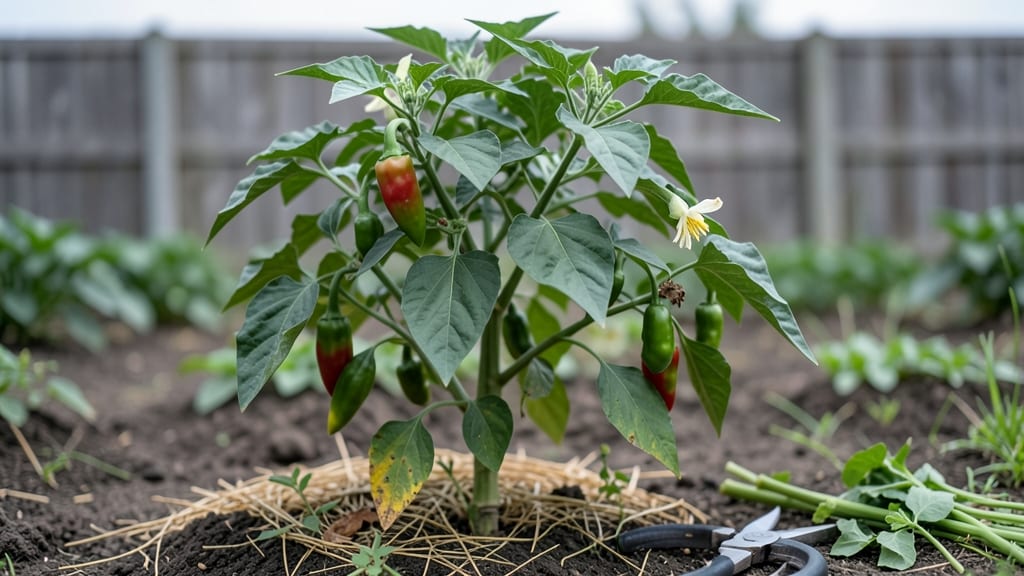
Pruning chilli plants isn’t just about shaping them—it’s about unlocking a harvest that’ll make your neighbors jealous. 🌱 I’ve gone from struggling with leggy, fruitless plants to tables full of peppers by mastering just three strategic cuts each season.
The difference isn’t just in the quantity but in the size and flavor of those peppers.
You don’t need fancy tools—just sharp pruning shears, a clean cutting surface, and a little patience. The real secret is timing: pinch back early, remove suckers mid-season, and trim leaves at the bottom to boost airflow.
Most people skip pruning entirely, so even small adjustments will put your plants ahead of 90% of gardeners.
What you’ll end up with is a bushy, productive plant that focuses its energy on fruit instead of wild growth. Thicker stems mean fewer broken branches, and better airflow keeps diseases at bay. By late summer, you’ll be harvesting peppers that are bigger, hotter, and more abundant than ever before.
This method works for both indoor pots and outdoor beds, and it’s just as effective for mild jalapeños as it is for fiery habaneros. Let’s get those plants shaped up for a season of serious harvests!
📚 In This Guide
- What you need
- Instructions
- Tips and common mistakes
- Wrapping up and next steps
What you need
- ● Pruning shears or scissors: Sharp, clean, and sterilized (70% isopropyl alcohol or bleach solution). Avoid dull tools—they crush stems instead of making clean cuts.
- ○ Gloves: Heavy-duty gardening gloves (nitrile or leather) to protect against thorns and spicy sap. Optional but highly recommended!
- ● Disinfectant: Rubbing alcohol (70% or higher) or a 1:9 bleach-to-water solution to sterilize tools before and after each use.
- ● Small bucket or bag: For collecting pruned material (compostable bags work great!).
- ● Pencil or marker: To label plants if you’re experimenting with different pruning techniques.
- ● Hand lens or magnifying glass: For inspecting stems and leaves for pests or disease before pruning.
- ● Rooting hormone: If you plan to propagate cuttings (great for expanding your chilli collection!).
- ● Plant tie or twine: To support stems if your chilli plants become top-heavy after pruning.
- ● Spray bottle with water: To mist plants and reduce stress after pruning.
- ● Wait until your chilli plant is at least 6–8 inches tall before pruning (unless removing damaged leaves).
- ● Prune on a dry, sunny day to allow cuts to dry quickly and reduce disease risk.
- ● Avoid pruning within 24 hours of watering—wet plants are more prone to infection.
Step-by-Step guide to pruning chili plants for bigger harvests
Here’s how to keep your chili plants healthy and packed with peppers all season—no fancy tools needed.
✂️ Step 1: Remove Damaged or Diseased Leaves Early
Start by inspecting your plants for any yellow, brown, or spotted leaves—they’re signs of disease or pests. Use clean, sharp pruning shears to snip these off at the base, just above a leaf node (the bump where a leaf or branch grows). This prevents the problem from spreading to healthy parts of the plant.
I always prune in the morning when the plants are dry. The reason? Wet leaves can trap moisture, making diseases worse. If you spot any black spots or mold, remove those leaves immediately. Don’t skip this step—it’s the best way to keep your plants thriving.
✂️ Step 2: Pinch Off Sucker Growths for Stronger Plants
Look for small shoots growing between the main stem and branches—they’re called suckers. These compete with your plant for energy, slowing down fruit production. Use your fingers or shears to pinch them off when they’re still small, about 1-2 inches long. The goal is to redirect the plant’s energy into the main branches where the peppers form.
Here’s the thing—if you wait too long, suckers can grow into thick, woody stems that are harder to remove. I like to check for suckers every 2-3 weeks during the growing season. If your plant is small, you might only see one or two; larger plants can have several. Just focus on the ones growing in the fork between the main stem and branches.
✂️ Step 3: Trim Overly Long Branches to Encourage Bushier Growth
Once your plant has 4-6 main branches, it’s time to shape it. Look for branches that are growing too long or leggy—they’ll produce fewer peppers and can shade the lower parts of the plant. Cut back these branches by about one-third, making the cut just above a leaf node. This encourages the plant to grow bushier and produce more flowers (and eventually, more peppers).
Don’t trim more than a third of the plant at once—you’ll shock it. I usually do this in late spring or early summer, when the plant is already established but still has plenty of growing season ahead. After trimming, give your plant a little extra water to help it recover. You’ll notice new growth within a few weeks.
🌿 Step 4: Deadhead Spent Flowers for Continuous Harvesting
As your chili plant matures, it will produce flowers that eventually turn into peppers. Once a pepper forms and starts to ripen, the flower below it will dry up. Snip off these spent flowers using clean shears or your fingers. This might seem counterintuitive, but it tricks the plant into producing more flowers and peppers instead of wasting energy on seeds.
I do this throughout the growing season, especially in late summer and early fall, when the plant is still putting out new flowers. You’ll see a surge in new blooms within a week or two. Just be careful not to over-prune—leave at least 2-3 flowers per branch to ensure a steady harvest. This step is what keeps your plants productive until the first frost.
Tips & tricks for pruning chili plants
Mastering these pruning techniques will transform your chili plants into pepper-producing powerhouses all season long.
Timing is Everything: The 2-3 week interval for checking suckers (Step 2) works best when you're consistent. Mark your calendar or set phone reminders—those small shoots grow fast! I've found that pruning suckers right after watering helps me spot them more easily against the damp foliage. The key is to catch them early before they become woody stems that are harder to remove.
Tool Prep Matters: Always sanitize your pruning shears with rubbing alcohol before and after each use, especially when removing diseased leaves (Step 1). I keep a small spray bottle of diluted bleach solution (1 part bleach to 9 parts water) handy to wipe down tools between plants. Clean tools prevent spreading diseases from one plant to another—this is particularly important if you're working with multiple chili varieties in your garden.
Visual Cues for Healthy Growth: When trimming overly long branches (Step 3), look for the classic "V" shape where the branch meets the main stem. Make your cut just above this leaf node—the little bump where new growth emerges. This is where your plant will sprout new branches that produce more flowers and peppers. I always count my main branches after pruning to ensure I have that ideal 4-6 range for optimal pepper production.
Seasonal Strategy: The late spring/early summer timing for Step 3 (trimming leggy branches) aligns perfectly with when your plants are establishing their root systems. This gives them time to recover before the main flowering period. In my experience, plants pruned at this time show new growth within 2-3 weeks, setting them up for a bumper crop. For container-grown plants, be extra gentle with watering after pruning—they have less root space to recover.
Pro Tips for Pruning Chilli Plants
- Mastering these pruning techniques will transform your chili plants into pepper-producing powerhouses all season long.
- Timing is Everything: The 2-3 week interval for checking suckers (Step 2) works best when you're consistent.
- Tool Prep Matters: Always sanitize your pruning shears with rubbing alcohol before and after each use, especially when removing diseased leaves (Step 1).
Frequently asked questions
Got questions about pruning your chilli plants? You’re not alone! Here are answers to the most common concerns—so you can keep your plants thriving and your harvests bountiful.
When is the best time to prune chilli plants?
Prune your chilli plants after they’ve established 4-6 true leaves (about 4-6 weeks after germination) and again when they reach 12-18 inches tall. Avoid pruning during flowering or fruiting unless removing damaged growth. Early pruning encourages bushier growth, while late pruning can boost fruit size.
How do I know if I’m pruning too much?
If your plant looks overly sparse, has yellowing leaves, or stops producing flowers, you’ve likely pruned too aggressively. Aim to remove no more than 25-30% of the plant’s foliage in one session. Focus on healthy, outward-facing branches—never cut more than ⅓ of a stem’s length at once.
Will pruning reduce my chilli yield?
Not if done correctly! Pruning actually increases yield by redirecting energy to larger, healthier fruits and preventing overcrowding. However, avoid heavy pruning late in the season (after flowering), as this can delay ripening. Think of it like shaping a tree—less stress, more fruit!
Can I prune chilli plants in hot or humid weather?
Prune during cool, cloudy mornings (6–9 AM) to minimize stress. Hot or humid conditions can cause fungal infections or slow recovery. If you must prune in heat, do it in the shade and water thoroughly afterward. Humidity lovers? Ensure good airflow around the plant post-prune.
What if my chilli plant doesn’t grow back after pruning?
Don’t panic! Chillies are resilient. If new growth stalls, check for underwatering, poor soil nutrients, or pests. Give it time (2–4 weeks) and adjust care: water deeply, add a balanced fertilizer (like 10-10-10), and ensure 6+ hours of sunlight daily. If no regrowth after 6 weeks, the plant may be struggling with disease or root issues.
Wrapping up and next steps
Pruning your chilli plants isn’t just about shaping—it’s about unlocking their full potential! By mastering the three key cuts (removing suckers, pinching tips, and pruning leaves), you’ll boost airflow, encourage bushier growth, and harvest more peppers all season.
Think of it as a simple way to turn your garden into a high-yielding chilli powerhouse—no green thumb required!
Ready to level up your chilli game? Grab your pruners and give these techniques a try—your future harvests (and taste buds!) will thank you. 🌱 Next, check out our guide on post-pruning care to keep your plants thriving!