Diseases
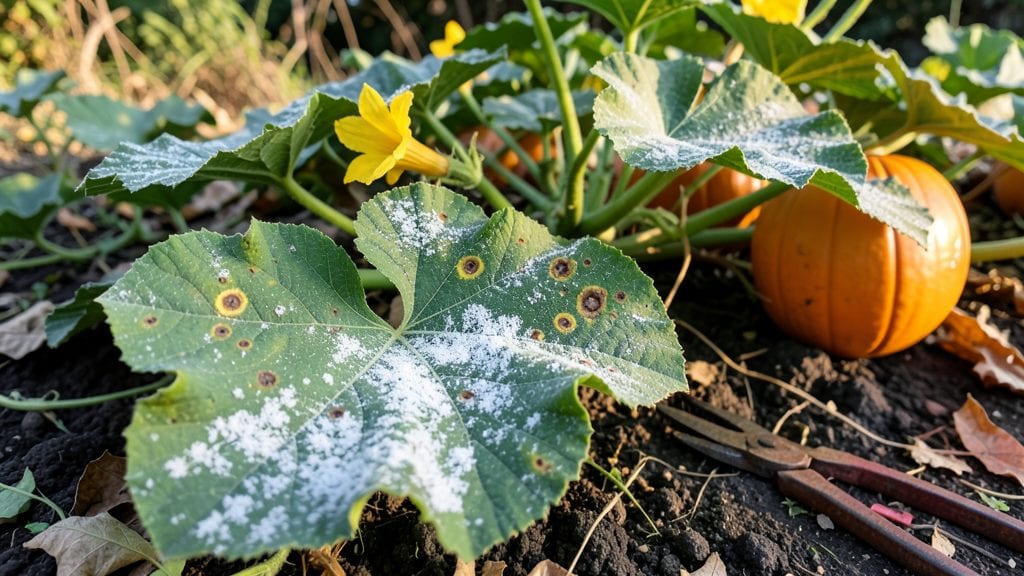
Pumpkin plant diseases can turn your thriving vines into a sad, spotted mess if you don’t catch them early. I’ve seen powdery mildew turn lush leaves into dusty white sheets and bacterial wilt collapse plants overnight—both heartbreaking and preventable.
The key is knowing what to watch for and acting fast with organic fixes before the disease spreads.
Most pumpkin diseases start with poor air circulation, overwatering, or crowded vines—problems I fixed by spacing plants wider and watering at the base. Powdery mildew loves humid mornings, while downy mildew thrives in wet foliage.
Bacterial wilt? That’s a silent killer until yellowing leaves and wilting vines give it away. Once you spot these signs, you’ve got a fighting chance with baking soda sprays, neem oil, or copper fungicides.
With the right mix of prevention and quick action, you’ll save your pumpkins—and your sanity. I’ve revived plants that looked doomed just by adjusting watering, adding mulch, and spraying preventatively every two weeks.
The goal isn’t perfection; it’s catching issues before they take over. Let’s get your pumpkins back to their full, healthy glory.
This works for both backyard patches and container-grown pumpkins, though larger gardens may need more frequent monitoring. If your plants keep failing despite your efforts, it might be time to consult a local extension service—they’ve got tools to diagnose stubborn cases. Trust me, your future jack-o’-lanterns will thank you.
Root Causes Behind Pumpkin Ailments
Pumpkin plants, like all living organisms, are vulnerable to diseases—but understanding why these issues arise is half the battle. Environmental stress, microbial invaders, and even poor gardening habits create the perfect storm for problems.
Below, we break down the key triggers behind pumpkin plant diseases, so you can address them before they spread.
Fungi thrive in damp, stagnant conditions, making them the #1 culprit behind pumpkin diseases like powdery mildew and downy mildew. Here’s why they strike:
- Poor Air Circulation: Crowded pumpkin vines or thick foliage trap humidity, creating a fungal paradise. Fungi release spores that latch onto leaves, blocking sunlight and choking the plant.
- Overwatering or Irrigation Mistakes: Watering from above (especially late in the day) splashes spores onto leaves. Even "light" soil can stay soggy at the roots, inviting Phytophthora (a water mold) to take hold.
- Cool, Humid Nights: Temperatures between 60–75°F (15–24°C) with high humidity? Fungi party time. Alternaria and Fusarium love these conditions to infect stems and fruit.
💡 Pro Tip: Space vines 3–4 feet apart, water at the base early in the day, and use drip irrigation to keep leaves dry.
Bacteria like Erwinia (soft rot) and Pseudomonas (leaf spot) don’t just appear—they hitch a ride through injuries or weak defenses. Here’s how:
- Physical Damage: Pruning with dirty tools, hail, or even squash bugs chewing leaves create open doors for bacteria. Bacterial wilt can enter through root wounds and clog xylem vessels, starving the plant.
- Contaminated Soil or Compost: Old crop debris, unsterilized potting mix, or manure not fully composted can harbor Xanthomonas, causing bacterial blight.
- Stress from Other Issues: A pumpkin already battling nutrient deficiencies or fungal infections has a weaker immune system, making it easier for bacteria to colonize.
🔥 Action Step: Disinfect pruners with 70% rubbing alcohol between cuts, and rotate crops yearly to break bacterial cycles.
Pumpkins need a balanced diet—when they’re starved or overfed, diseases move in like vultures. Key deficiencies to watch:
| Deficiency | Disease Risk | Why It Happens |
|---|---|---|
| Nitrogen (N) | Powdery mildew, weak stems | Lush growth attracts fungi, but stems can’t support fruit weight, leading to rot. |
| Potassium (K) | Fusarium wilt, fruit rot | Low K weakens cell walls, making plants susceptible to vascular diseases. |
| Calcium (Ca) | Blossom-end rot, bacterial soft rot | Poor Ca uptake (common in cool soils) causes tissue breakdown, inviting microbes. |
| Magnesium (Mg) | Yellowing leaves (chlorosis) → stress | Chlorotic leaves can’t photosynthesize efficiently, reducing the plant’s ability to fight pathogens. |
✨ Fix It: Test soil pH (aim for 6.0–6.8) and amend with compost or balanced organic fertilizer (e.g., 5-5-5). For Ca, side-dress with crushed eggshells or gypsum.
Pests don’t just eat pumpkin leaves—they create entry points for diseases. For example:
- Squash Vine Borers: Their larvae tunnel into stems, creating wounds where Fusarium or Verticillium wilt can invade.
- Aphids & Whiteflies: These sap-suckers weaken plants and excrete honeydew, which fosters sooty mold (a secondary fungal infection).
- Cucumber Beetles: They transmit bacterial wilt while feeding, turning a pest problem into a bacterial epidemic.
🎯 Prevention: Use row covers early in the season, handpick pests, and introduce beneficial insects like ladybugs or lacewings.
By tackling these root causes—moisture, bacteria, nutrients, and pests—you’ll give your pumpkins the fighting chance they deserve. Next up: How to Spot These Issues Early.
Fixing Pumpkin Plant Problems Naturally
Now that you’ve identified the culprit behind your pumpkin plant’s woes, it’s time to roll up your sleeves and restore those vines to their healthy, thriving glory! 🌱 The good news? Most pumpkin diseases and pests can be tackled with organic, garden-friendly solutions—no harsh chemicals required.
Below, we’ve mapped out practical fixes for common issues, along with prevention tips to keep your pumpkin patch disease-free next season.
Cause: Fungal spores love humid conditions and crowded plants. Fix:
- 🍳 Remove infected leaves immediately—don’t compost them! Toss in the trash to prevent spread.
- 👨🍳 Spray with a baking soda solution (1 tsp baking soda + 1 quart water + a drop of dish soap) every 7–10 days.
- ⏰ Prune for airflow—thin out vines to improve circulation and reduce humidity.
- 🌡️ Prevent recurrence: Water early in the day so leaves dry quickly. Avoid overhead irrigation.
Cause: This fungal foe thrives in wet, shady conditions. Fix:
- 🔪 Apply organic copper fungicide (like copper sulfate or copper soap) at the first sign of yellowing leaves.
- 🌱 Rotate crops—don’t plant pumpkins in the same spot for 3 years to break the fungus’s life cycle.
- ✨ Boost plant health with compost or fish emulsion to strengthen natural defenses.
Cause: These sneaky larvae chew through stems, killing plants from the inside. Fix:
- 💡 Plant trap crops like radishes or nasturtiums nearby to lure borers away.
- 🔪 Check stems daily—look for sawdust-like frass (borer poop). If you find eggs or larvae, squish them with your fingers or drown them in soapy water.
- 🎯 Use collars—wrap stems with cardboard or aluminum foil to deter egg-laying adults.
Cause: Spread by infected seeds or contaminated tools, this disease is fatal—no cure exists. Fix:
- 🔪 Pull and destroy infected plants (burn or bag them) to prevent spread.
- 🌡️ Sterilize tools with rubbing alcohol between uses.
- 💡 Prevent future outbreaks: Buy disease-resistant seed varieties (like ‘Howden’ or ‘Waltham Butternut’).
Cause: These tiny pests suck sap, weakening vines and spreading viruses. Fix:
- 🍳 Blast off pests with a strong spray of water (early morning works best).
- 👨🍳 Apply insecticidal soap (1 tbsp mild soap + 1 quart water) every 3–5 days.
- 🐞 Introduce predators—ladybugs, lacewings, or predatory mites will devour them naturally.
- 🌱 Grow companion plants like marigolds or basil to repel pests.
- 🌱 Start with resistant seeds—many varieties are bred to fight common diseases.
- 🌡️ Monitor soil pH—most pumpkins thrive in slightly acidic soil (pH 6.0–6.8).
- ⏰ Plant at the right time—avoid late springs when frost and warmth mix, creating fungal hotspots.
- 🔄 Practice crop rotation—don’t plant cucurbits (pumpkins, squash, melons) in the same bed yearly.
Remember: The key to a bountiful pumpkin harvest is early action and prevention. Once you spot trouble, act fast—your future jack-o’-lanterns (or pies!) will thank you. 🎃✨
Frequently asked questions about pumpkin plant diseases
What are the first signs of powdery mildew on pumpkin leaves?
Look for white, powdery spots on the upper leaf surfaces that resemble dust or flour. These spots will spread quickly in humid conditions, eventually covering entire leaves and reducing photosynthesis. Check undersides too—early signs often appear there first.
Can I still save my pumpkins if bacterial wilt appears?
Unfortunately, bacterial wilt has no cure once symptoms (sudden wilting, yellowing leaves, and oozing stems) appear. Remove infected plants immediately to prevent spread, then sterilize tools and rotate crops. For next season, choose resistant varieties like 'Howden' or 'Waltham Butternut'.
How often should I spray preventative fungicides on pumpkin plants?
Apply organic fungicides like neem oil or copper spray every 7-10 days during humid seasons, starting when plants are young. For baking soda sprays (1 tsp baking soda + 1 quart water), use every 10-14 days. Always spray early in the morning for best results.
Why do my pumpkin plants get diseases even with good care?
Even with proper care, diseases can strike due to weather conditions (like sudden rain), contaminated soil, or pests creating entry points. Rotate crops yearly, avoid overhead watering, and use row covers early to block spores. Some diseases are airborne—there's only so much prevention you can control.
What's the difference between downy mildew and powdery mildew?
Powdery mildew appears as white, powdery coatings on leaf surfaces, while downy mildew shows as yellow spots on top with fuzzy gray growth on undersides. Powdery mildew thrives in dry heat, while downy mildew needs wet leaves. Both require different prevention strategies—powdery mildew responds to sulfur sprays, while downy mildew needs copper treatments.