Planting
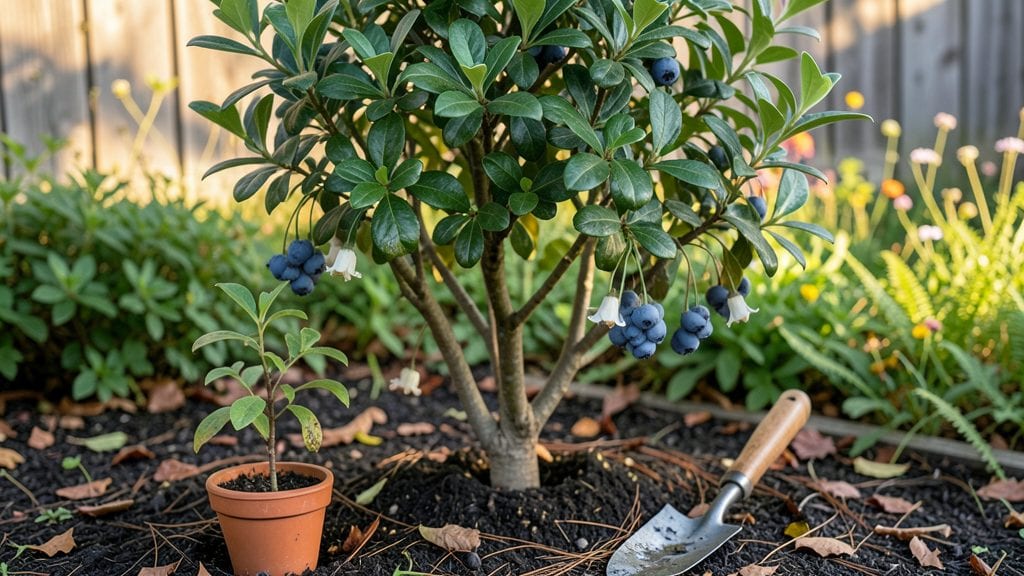
Here are some blueberry planting tips to avoid my mistake—crowded bushes mean tiny berries and unhappy plants, and I learned this the hard way when my first batch produced underwhelming harvests because I packed them too close.
The secret isn’t just the distance between plants; it’s matching variety, soil, and sunlight to create a thriving blueberry patch that needs almost no extra fuss once established.
Start with the right type for your climate—highbush for warm zones, rabbiteye for the South, or lowbush for cooler areas—and prepare acidic, well-draining soil with compost. Plant in early spring or fall, spacing bushes 6 feet apart for highbush and rabbiteye, 3–4 feet for lowbush.
Water deeply after planting, then mulch to keep roots cool and moist. Within a year, you’ll see strong growth and—eventually—plump, juicy berries that put store-bought to shame.
📚 In This Guide
- What you need
- Instructions
- Tips and common mistakes
- Wrapping up and next steps
What you need
- ● Blueberry plants: 2–5 dwarf or semi-dwarf bushes (depending on space). Choose southern highbush (zones 5–9) or northern highbush (zones 3–7).
- ● Well-draining soil: Test your soil’s pH (ideal: 4.5–5.5). Amend with peat moss or sulfur if needed.
- ● Organic mulch: 2–3 inches of pine needles, wood chips, or straw (acid-loving plants thrive here!).
- ● Fertilizer: Acid-loving plant fertilizer (e.g., 10-10-10 with sulfur or cottonseed meal).
- ● Watering system: Drip irrigation or soaker hose (blueberries hate soggy roots!).
- ● Garden gloves & pruners: Sharp, clean pruners (sterilize with rubbing alcohol).
- ○ Stakes & twine (optional but helpful): For young plants in windy areas.
- ● Blueberry plant food: Slow-release granules (e.g., Osmocote for acid-loving plants).
- ● Row cover: Frost cloth to protect young bushes in early spring.
- ● pH test kit: For precise monitoring (digital kits are easiest!).
- ● Compost: Mix in 1–2 inches annually to boost soil health.
- ● Bird netting: If wildlife loves your berries too much!
Step-by-Step instructions for planting blueberry bushes
Here's how to plant blueberries with minimal effort but maximum reward—no crowded rows or complicated spacing required.
Choose the Right Location and Soil
Blueberries thrive in acidic soil with a pH between 4.5 and 5.5. Test your soil before planting—most garden centers sell affordable test kits. If your soil isn’t naturally acidic, mix in 2-3 pounds of peat moss per square foot of planting area. This ensures the roots get the environment they need right from the start.
Pick a spot with full sun exposure—at least 6-8 hours of direct sunlight daily. Morning sun is ideal, but afternoon light works too. Avoid low-lying areas where water pools after rain, as soggy soil can rot roots. If your yard has heavy clay, amending the soil with 1 part sand to 3 parts soil improves drainage without sacrificing acidity.
Dig Holes and Prepare the Planting Site
Dig holes twice as wide as the root ball and no deeper than the container’s height. This prevents burying the stem too deeply, which can suffocate the plant. For 4 plants, you’ll need 4 holes spaced 4-6 feet apart—this spacing gives bushes room to grow without competing for nutrients or light.
Gently remove each blueberry bush from its container and loosen the roots if they’re circling. Place the plant in the hole so the top of the root ball sits 1 inch above soil level. This small elevation helps prevent water from pooling around the stem. Fill the hole with the amended soil, pressing lightly to remove air pockets but not compacting too tightly.
Mulch and Water Immediately After Planting
Spread 2-3 inches of pine bark mulch around each bush, keeping it 6 inches away from the stem to prevent rot. Mulch retains moisture, regulates soil temperature, and slowly adds organic matter as it breaks down. Avoid wood chips or cedar mulch—they can raise soil pH over time.
Water deeply right after planting—soak the soil until it’s 6 inches down, then let it drain. Blueberries hate soggy roots but also can’t handle drought. Water once a week for the first month, then every 10-14 days afterward, adjusting for rain. You’ll know you’ve watered enough when the soil feels damp but not waterlogged at the root level.
Fertilize and Monitor for First Growth
Skip regular fertilizer for the first year—blueberries need time to establish roots. Instead, apply 1 pound of ammonium sulfate in early spring and again in late summer. This provides nitrogen without raising soil pH. In the first growing season, focus on leaf growth, not fruit. Healthy leaves mean strong roots and better harvests next year.
Watch for new shoots in 4-6 weeks. These indicate the plant is settling in. If leaves appear pale or yellow, your soil may need more acidity. Add 1 cup of sulfur per plant in early spring to adjust pH gradually. Prune any dead or crossing branches with clean, sharp shears to encourage airflow and fruit production.
Protect and Prune for Long-Term Health
Blueberries are self-pollinating, but planting multiple varieties ensures better yields. If birds or squirrels raid your bushes, cover them with fine netting once flowers appear in spring. This protects fruit without harming pollinators. Harvest when berries are deep blue and plump, usually in late summer or early fall, depending on your climate.
Every 2-3 years, thin out older branches to maintain an open center. Remove any wood older than 5 years—this keeps the bush productive. In winter, add 4-6 inches of mulch to insulate roots from freezing temperatures. With minimal effort, your bushes will produce pounds of fruit for decades.
Tips & tricks for perfect blueberry planting
Planting blueberries doesn't have to be complicated—these simple tricks will help you avoid common mistakes and set your bushes up for long-term success.
Soil pH Matters: Testing your soil before planting is absolutely critical. I learned this the hard way after planting bushes in regular garden soil with a pH of 7.0—my plants struggled for years before I finally adjusted the acidity. Aim for that 4.5-5.5 range right from the start. If you're unsure about your soil's pH, most garden centers sell affordable test kits that give you precise readings. Remember, blueberries are picky about acidity, and this one factor makes all the difference in their health and fruit production.
Spacing is Everything: The 4-6 foot spacing mentioned in Step 2 might seem generous, but trust me on this—it's worth it. I've seen too many gardeners cram bushes too close together, leading to crowded canopies, poor air circulation, and increased disease risk. This spacing gives each plant room to develop strong root systems and branches. You'll also find harvesting much easier when the bushes aren't competing for sunlight or nutrients. Think of it as an investment in your future harvests.
Watering Wisdom: That first deep watering after planting is crucial, but don't stop there. In the first month, I water my blueberries once a week to help establish those roots. After that, every 10-14 days becomes my rhythm. The key is consistency—blueberries hate both drought and soggy conditions. I check moisture by sticking my finger 2 inches into the soil; if it feels dry, it's time to water. And remember, morning watering is best as it gives leaves time to dry before evening, reducing disease risk.
Mulch Like a Pro: The 2-3 inches of pine bark mulch you'll spread isn't just decoration—it's working hard for you. I've found that maintaining this mulch layer helps regulate soil temperature, keeps moisture in, and slowly adds organic matter. The important part is keeping it 6 inches away from the stem to prevent rot. I also add a fresh layer in winter (up to 4-6 inches) to protect those roots from freezing temperatures. Just avoid cedar or wood chips—they can actually raise your soil's pH over time.
Pro Tips for Blueberry Planting Tips
- Planting blueberries doesn't have to be complicated—these simple tricks will help you avoid common mistakes and set your bushes up for long-term success.
- Soil pH Matters: Testing your soil before planting is absolutely critical.
- Spacing is Everything: The 4-6 foot spacing mentioned in Step 2 might seem generous, but trust me on this—it's worth it.
Frequently asked questions
Got questions about growing blueberries? You’re not alone! Here are some of the most common concerns—plus straightforward answers to help you plant with confidence.
When is the best time to plant blueberry bushes?
The ideal window is late fall to early spring (before buds swell), when the soil is workable but not frozen. For warmer climates, fall planting (October–November) gives roots time to establish before summer heat. Avoid planting in extreme heat—roots can dry out or struggle to adapt.
Can I plant blueberries in winter?
Yes, but with caution! If you must plant in winter (December–February), choose a mild day (above 40°F) and protect the roots with mulch. Bare-root bushes planted in frozen ground won’t thrive—wait for soil to thaw. Container-grown plants can handle winter better but still need shelter from wind.
What if my yard doesn’t have acidic soil?
Blueberries need acidic soil (pH 4.5–5.5). If yours is neutral or alkaline, amend it with peat moss, pine needles, or sulfur (follow package rates). For quick fixes, plant in containers with acidic potting mix. Test soil pH annually—lime or wood ash can accidentally raise pH over time!
Why are my blueberry leaves turning yellow?
Yellow leaves often signal nutrient deficiency, overwatering, or fungal issues. Check soil pH first—low iron (in alkaline soil) causes “chlorosis.” Yellowing edges? Likely overwatering or poor drainage. Fungal spots? Prune affected areas and apply copper fungicide. Always improve airflow between bushes to prevent disease.
How long does it take for blueberry bushes to bear fruit?
Patience pays off! Dwarf varieties may fruit in 1–2 years, while standard bushes take 2–3 years. Ensure proper spacing (3–6 feet apart), acidic soil, and consistent watering. Male and female plants (or self-pollinating types) are needed for fruit—check labels! First harvests are often small but grow bigger yearly.
Wrapping up and next steps
Growing blueberries is a rewarding journey that combines patience, a little know-how, and the joy of harvesting your own sweet treats! 🌱 With the right spacing, soil prep, and care, you’ll soon be enjoying plump, juicy berries with minimal fuss.
Remember, healthy bushes mean bountiful harvests—so don’t hesitate to experiment and adapt as you go.
Now that you’re armed with these blueberry planting tips, why not take the next step? Start small with a few plants, observe what works best in your space, and soon, you’ll be sharing your harvest with friends and family. Happy planting—and may your bushes thrive! 🍇✨