
Planting
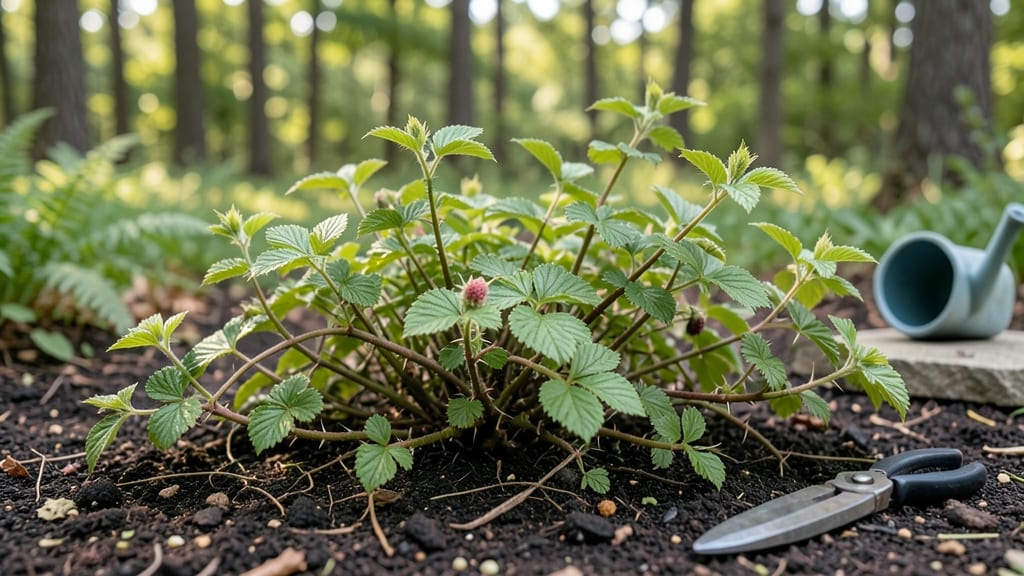
To grow a raspberry plant sprout, begin by choosing vigorous canes, then cut 4-6 inch sections with at least one bud, and root them in damp perlite or water until roots appear—usually within 2-3 weeks before moving to nutrient-rich soil.
Raspberry propagation relies on the plant's natural ability to regenerate from stem cuttings, a process called layering. 🌱 The key is selecting healthy, disease-free canes from the current season's growth—they contain the growth hormones needed to spur root development.
Perlite or water creates the ideal low-stress environment for roots to form without competing with soil-borne pathogens. Once roots appear, these young plants are ready for their permanent home in well-draining soil with a slightly acidic pH (5.5-6.5), which mimics their natural forest understory conditions.
What sets raspberry cuttings apart is their fast rooting time compared to many other fruit plants. Most gardeners see visible roots within 10-14 days when kept in warm (70-75°F) conditions with high humidity.
This rapid growth makes them perfect for late-winter or early-spring propagation, giving you a head start on the growing season. The trickiest part? Maintaining consistent moisture without drowning the cuttings—too much water can cause rot before roots establish.
💡 In This Article
- Optimal Conditions for Raspberry Cuttings to Root
- Step-by-Step Raspberry Plant Sprout Transplanting Guide
Optimal conditions for raspberry cuttings to root
Here's what's actually happening when your raspberry cuttings develop roots: the plant's natural auxin hormones (produced in the tips of stems) trigger cell division in the cambium layer, where roots will form.
These hormones create a 1-2 inch zone below the bud where adventitious roots emerge—this is why cutting just below a node (the bump where leaves attach) is critical. The process relies on two key factors: moisture consistency and oxygen availability, both of which perlite or water provides perfectly.
The science behind perlite's superiority lies in its porous volcanic glass structure, which holds 30-50% air by volume while maintaining moisture. This mimics the airy, well-drained conditions raspberries prefer in their native habitats.
In water rooting, the cuttings develop roots in just 7-10 days because water provides immediate hydration, but requires daily changes to prevent bacterial growth. Temperature matters too—optimal rooting occurs at 70-75°F, where enzymatic activity in the cutting peaks for maximum cell growth.
Humidity plays a surprising role: raspberry cuttings need 80-90% relative humidity to prevent desiccation while roots form. This is why covering cuttings with plastic domes or placing them in sealed containers works so well. The high humidity reduces transpiration (water loss through leaves) by 40-50% compared to dry conditions.
Light requirements are minimal—bright, indirect light is ideal, but direct sun can overheat the cuttings and cause wilting before roots establish.
What most gardeners don't realize is that raspberry cuttings contain pre-formed root initials—tiny root cells that exist in a dormant state until stimulated by moisture and warmth.
These initials can remain viable for 2-3 weeks if stored properly in a cool, dry place, which explains why you can propagate raspberries even in late winter.
The rooting process itself is remarkably efficient: successful cuttings develop 2-5 primary roots within 2-3 weeks, each capable of supporting the new plant.
For best results, maintain 1/4 inch of water above the cutting's base when using water propagation—this creates an oxygen-rich environment while keeping roots submerged. In perlite, keep it moist like a wrung-out sponge.
The key difference is that perlite allows for better gas exchange, reducing the risk of anaerobic conditions that can cause rot. Both methods work, but perlite gives you more control over moisture levels and prevents the bacterial growth that's common in stagnant water.
Pro tip: Add a rooting hormone (containing indole-3-butyric acid or IBA) to increase success rates by 20-30%. This synthetic auxin mimics the plant's natural hormones, supercharging root development. The hormone works by stimulating cell elongation in the root initials, creating longer, more robust roots that establish faster.
Just dip the cut end for 1-2 seconds before planting—no need to overdo it!