
Pests
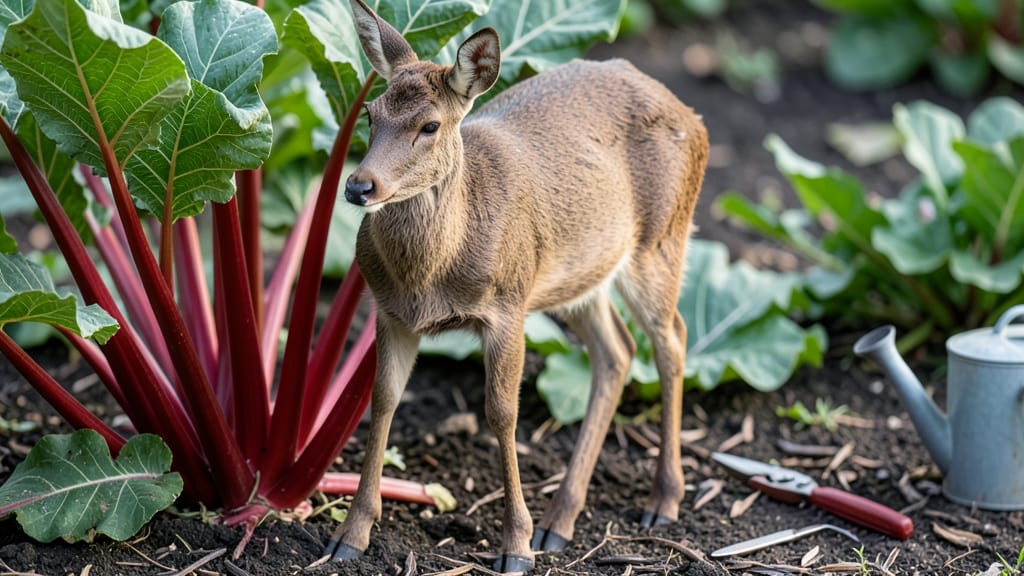
Rhubarb plants and deer go hand-in-hand because deer adore their tender leaves and sweet stalks, but you can keep them away naturally using strong-smelling deterrents like garlic, cayenne pepper, or commercial sprays. Physical barriers such as fencing or plant guards also work well.
Deer are drawn to rhubarb gardens primarily because the plant's young shoots and stalks offer a high-moisture, nutrient-rich snack that's easy to digest. 🌱 The mild, slightly tangy flavor appeals to their natural grazing instincts, especially during late spring and summer when rhubarb is most tender.
What's interesting is how deer behavior shifts—young shoots get munched first, while mature stalks become a secondary target as the season progresses.
For gardeners dealing with persistent deer activity, combining natural repellents with physical barriers creates the most effective defense. A homemade garlic spray (blended garlic mixed with water and dish soap) works wonders when reapplied every few weeks, while predator urine alternatives provide a temporary scare tactic.
Planting companion herbs like rosemary or lavender around your rhubarb beds also helps mask the scent that attracts deer in the first place.
💡 In This Article
- Why Deer Love Rhubarb Plants
- Natural Deer Repellent Methods for Rhubarb Gardens
Why deer love rhubarb plants
Deer have an innate preference for rhubarb because it offers a perfect combination of nutrition and accessibility. The plant's tender leaves and stalks contain 89-95% moisture, making them incredibly hydrating—a critical factor for deer, especially during dry summer months when natural water sources may be scarce.
Additionally, rhubarb stalks contain natural sugars (about 2-4% by weight) that provide quick energy, while the mild tanginess appeals to their palate without being overpowering like some other garden plants.
The key lies in rhubarb's growth stages. Deer prioritize young shoots in early spring because they're softer and more digestible, with a higher concentration of nutrients like calcium and potassium. As the season progresses, mature stalks become their secondary target, particularly when other food sources dwindle.
What's fascinating is how deer use their Jacobson's organ (a specialized scent detector in their mouth) to identify the plant's chemical profile—rhubarb's volatile organic compounds signal both safety and sustenance to them. 🌿
Seasonal availability plays a crucial role in deer behavior. In late spring and early summer (May-June), when rhubarb is most tender, deer will actively seek out gardens. The plant's height of 3-4 feet makes it easily accessible, and its broad leaves provide ample surface area for grazing.
Unlike some plants that develop bitter compounds as they mature, rhubarb maintains its palatability, which is why deer return repeatedly. This persistent attraction explains why gardeners often see 80-90% damage to unprotected rhubarb beds during peak growing seasons.
What most gardeners don't realize is how deer's feeding patterns change with rhubarb's growth cycle. Early in the season, they'll browse the leaves first, leaving the stalks intact.
But as the stalks thicken and become more fibrous, deer will snap them off at the base—a behavior that can completely decimate a plant if left unchecked.
The plant's high oxalic acid content (though not toxic to deer) actually makes it more appealing to them compared to other garden vegetables that might be less palatable.
Here's why the timing matters so much: Deer have a crepuscular feeding pattern, meaning they're most active at dawn and dusk. This coincides with when rhubarb is most vulnerable—when its leaves are still dew-covered and most tender.
The combination of high moisture content, easy accessibility, and seasonal timing creates a perfect storm that explains why rhubarb becomes a deer magnet in most regions. 🦌
The plant's visual characteristics also play a role. Rhubarb's large, vibrant leaves create a visual contrast that deer can detect from a distance, while its upright growth habit makes it stand out in garden landscapes.
Unlike ground-cover plants that blend into surroundings, rhubarb's 3-5 foot height makes it an obvious target for browsing deer. This visual prominence, combined with its nutritional benefits, creates a double attraction that's hard to resist for hungry deer populations.