Pruning
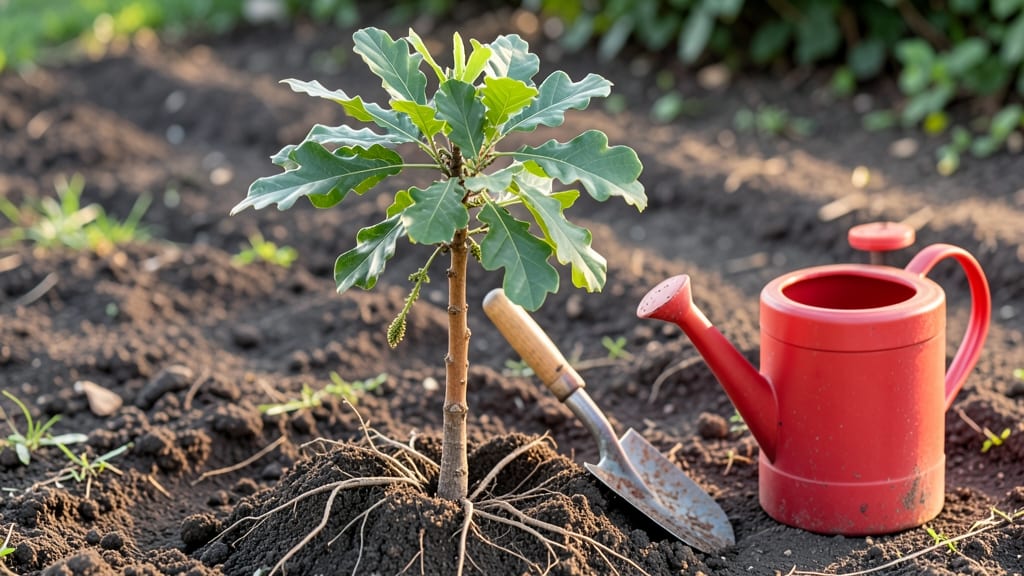
Here are some tree planting tips that’ll save you from my summer oak disaster—timing is everything. ✨ heat, and now its roots are shallow. The best seasons for most trees are early spring or fall, when soil stays cool and moisture lingers.
Start by digging a hole twice as wide as the root ball but no deeper—roots need room to spread, not to sink. Loosen the sides of the hole with a shovel so roots can explore fresh soil naturally.
For container-grown trees, tease the roots gently if they’re circling the pot, but don’t force them. The goal is to mimic how a tree would grow in the wild, not cram it into a hole.
After placing the tree, backfill with the original soil (no fancy amendments yet!) and water deeply to settle everything. A 5-gallon bucket of water around the base is a good start, but young trees need 1-2 inches of water per week for the first year.
Mulch lightly—2-3 inches—to keep moisture in, but avoid piling it against the trunk. This simple routine turns a fragile sapling into a sturdy anchor.
Deciduous trees like maples and oaks thrive with these basics, while conifers (think pines or spruces) prefer slightly acidic soil and cooler roots. Adjust watering in winter—less is often more when the ground freezes.
With the right timing and care, your tree will grow stronger roots and stand tall for generations. Let’s get those shovels in the ground!
📚 In This Guide
- What you need
- Instructions
- Tips and common mistakes
- Wrapping up and next steps
What you need
- ● Young tree: Choose a bare-root or container-grown sapling (size depends on species—small trees: 1-3 ft tall; large trees: 6+ ft with root ball).
- ● Shovel: A round-point shovel (12–18 inches wide) for digging holes and a flat-edged spade for backfilling.
- ● Garden gloves: Heavy-duty, waterproof gloves to protect your hands from dirt and thorns.
- ● Watering can or hose: With a gentle spray nozzle (5+ gallons capacity) for thorough watering.
- ● Mulch: Organic mulch (3–4 inches thick): shredded bark, wood chips, or pine straw. Avoid fresh wood chips near the trunk.
- ● Stakes & ties: 2–3 bamboo stakes (4–6 ft tall) and soft tree ties (for trees over 6 ft tall).
- ● Pruners: Bypass pruners (for clean cuts) and a hand saw (for thicker branches).
- ● Soil amendments: Compost or peat moss (mix 20–30% into native soil for nutrient boost).
- ● Tree guard: A plastic or metal collar (6–12 inches tall) to protect the trunk from rodents.
- ● Post-hole digger: For staking holes in hard or rocky soil.
- ● Soil pH test kit: To check and adjust soil acidity (ideal pH: 6.0–7.0 for most trees).
- ● Slow-release fertilizer: Balanced 10-10-10 or organic granular fertilizer (sprinkle lightly around edges of hole).
Instructions for planting trees with perfect timing
Here's how I plant trees for maximum survival—seasonal timing makes all the difference.
🌱 Step 1: Choose the Right Season for Your Climate
Most trees thrive when planted in early spring or fall, when soil is workable but not frozen. In warmer zones, late fall planting works best—roots establish before summer heat arrives. I always check my local frost dates: plant 4-6 weeks before first frost to give roots time to settle.
Spring planting should happen as soon as soil thaws—don't wait for perfect weather. You'll see new leaves emerging within weeks if timed right. For container-grown trees, you can plant year-round in mild climates, but avoid extreme heat or cold snaps.
🌿 Step 2: Dig the Hole Properly
Make the hole twice as wide as the root ball but no deeper—planting too deep suffocates roots. Loosen the sides of the hole with a shovel to prevent compaction. I always dig a soil saucer around the edges to catch water during irrigation.
Test the hole depth by placing the tree in—roots shouldn't be buried deeper than they were in the nursery. If the hole feels too dry, add a bucket of water and let it soak in before planting. You'll know the soil is ready when it holds together when squeezed but isn't muddy.
💧 Step 3: Plant and Water Deeply
Place the tree in the hole so the top of the root ball sits level with the surrounding soil—never mound soil against the trunk. Spread roots gently if they're circling, then fill the hole with native soil (no amendments needed). Press lightly around the edges to eliminate air pockets.
Water deeply right after planting—about 10 gallons for small trees, more for larger ones. The soil should settle 2-3 inches—add more if needed. Mulch with 2-3 inches of organic material (like wood chips) and keep it 6 inches away from the trunk to prevent rot.
☀️ Step 4: Protect and Monitor
Stake only if necessary—most young trees stabilize on their own. If staking, use soft ties and remove them after 1 year. Water once a week for the first month, then every 2 weeks once established. You'll know it's thriving when new growth appears in spring.
Watch for wilting leaves (overwatering) or yellowing (underwatering). Trees planted in fall should have no new growth by winter—this means roots are dormant and safe. In spring, fertilize lightly with balanced 10-10-10 once leaves appear.
⏰ Step 5: Plan for Long-Term Care
Mulch annually to retain moisture and regulate soil temperature. Prune only to remove dead or crossing branches—never "thin" a young tree for shape. I mark the tree's location with a stake and string to avoid damaging roots with lawn equipment.
After 3 years, trees usually need no extra care beyond regular watering. The key is consistent moisture—deep watering every 2 weeks in dry spells keeps roots strong. You'll see the difference in thicker stems and fuller canopies within a season.
Tips & tricks for perfect tree planting
Timing and technique make all the difference when planting trees—these secrets will help your trees thrive from day one.
Seasonal Timing: The 4-6 week window before first frost is critical for fall planting. Check your local frost dates and mark your calendar—this gives roots time to establish before winter dormancy. In spring, don't wait for perfect weather; plant as soon as soil thaws. I've seen trees planted in late fall survive just fine, but early spring planting often shows faster growth in the first season.
Hole Preparation: That twice-as-wide hole isn't just about space—it prevents root circling and compaction. Use your shovel to loosen the sides of the hole, almost like you're creating a root-friendly nest. The soil saucer you create around the edges becomes a natural water reservoir. I've planted dozens of trees and never seen better water retention than with this simple technique.
Watering Wisdom: Those 10 gallons of water right after planting aren't just for show—they help settle the soil and eliminate air pockets. After planting, check for soil settling every 15 minutes until it stops. The 2-3 inch mulch layer works like insulation, keeping roots cool in summer and warm in winter. Just remember to keep mulch 6 inches away from the trunk to prevent rot.
Long-Term Care: The 3-year mark is when trees really start showing their potential with proper care. That annual mulching keeps soil temperature stable, and the 2-week watering schedule maintains consistent moisture. I've noticed trees with regular care develop thicker stems and fuller canopies within just one season—it's amazing what proper timing and attention can do!
Pro Tips for Tree Planting Tips
- Timing and technique make all the difference when planting trees—these secrets will help your trees thrive from day one.
- Seasonal Timing: The 4-6 week window before first frost is critical for fall planting. Check your local frost dates a...
- Hole Preparation: That twice-as-wide hole isn't just about space—it prevents root circling and compaction. Use your s...
Frequently asked questions
Got questions about planting trees? You’re not alone! Here are some of the most common queries—plus clear, actionable answers to help you grow a thriving tree.
When is the best time to plant a tree?
The ideal window is late fall (after leaf drop) or early spring (before buds swell). These seasons give roots time to establish before extreme heat or cold. Avoid planting in summer—drought stress can stunt growth. Pro tip: If you must plant in summer, water deeply 2–3 times per week!
How often should I water a newly planted tree?
Water deeply 2–3 times per week for the first year (or daily in extreme heat). Aim for 1–1.5 gallons per inch of trunk diameter. After that, taper to weekly deep waterings. Mulch (2–4 inches) helps retain moisture and regulate soil temperature. Watch for: Wilting leaves or dry soil 2 inches below the surface.
Can I plant a tree in a small yard or container?
Yes! Choose dwarf varieties (like Japanese maples or columnar fruit trees) or fast-growing species with shallow roots (e.g., redbuds). For containers, use a 5-gallon pot minimum with drainage holes and repot every 2–3 years. Bonus: Potted trees let you move them if needed—just avoid roots circling the pot!
My tree’s leaves are yellowing—did I kill it?
Not necessarily! Yellow leaves often signal overwatering (check soil moisture) or nutrient deficiency (try a balanced fertilizer). If leaves are crispy, it’s likely underwatered. First aid: Trim damaged leaves, adjust watering, and test soil pH (ideal: 6.0–7.0). Most trees bounce back with proper care!
Should I stake my newly planted tree?
Only if your tree is top-heavy (e.g., young pines or willows) or in a windy area. Use flexible ties (not wire) and remove stakes after 1–2 years to encourage natural stability. Rule of thumb: If the tree sways slightly in the breeze, it’s likely fine without stakes.
Wrapping up and next steps
Planting trees at the right time and with the right care can make all the difference in their growth and resilience. Whether you’re a seasoned gardener or just starting out, timing, soil prep, and proper technique are your best allies for thriving trees. 🌱
Now that you’ve got the seasonal secrets and practical tips, it’s time to roll up your sleeves and get planting!
Start small—even one tree can make a big impact—and watch your green space transform over time. Need inspiration? Check out local tree species that thrive in your climate, or join a community planting project to multiply your effort!