
Vegetables
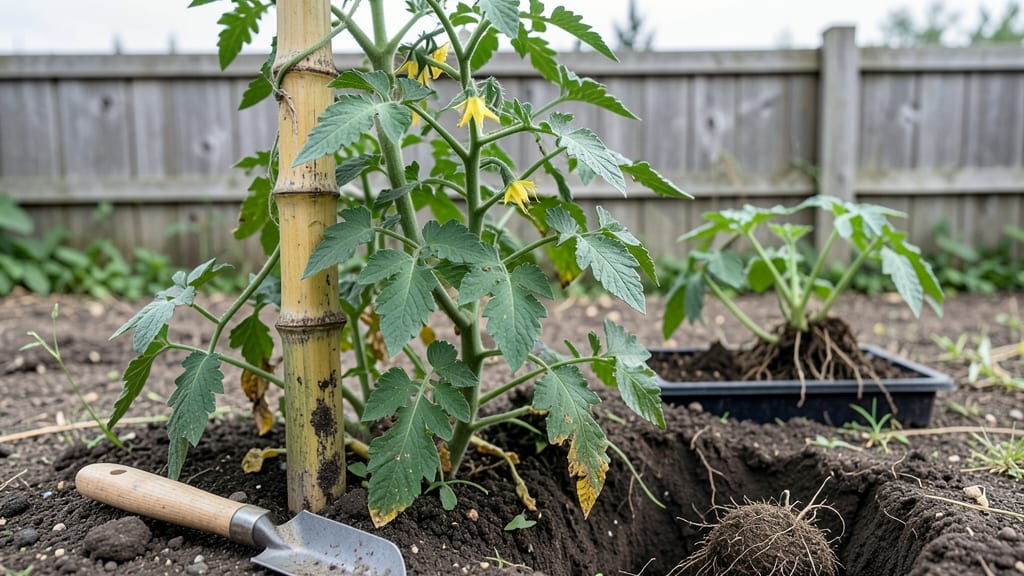
My trench planting tomatoes method turned a 4-foot-wide strip into enough space for six plants—no raised beds or fancy setups required. 🌱 The secret lies in burying stems deep, letting roots spread underground where moisture and nutrients stay abundant.
I’ve grown twice as many tomatoes in the same footprint, and the plants seem to thrive more than when staked traditionally.
You’ll need a shovel, some compost, and a sunny spot with at least 6 hours of light daily. Dig a 12-inch-deep trench, mix in compost, and plant your tomatoes with stems buried halfway.
The roots will grow down into the trench while new foliage emerges above—it’s like giving them a hidden root system boost. Watering becomes easier too, since the soil stays moist longer.
By midseason, you’ll watch vines sprawl along the trench while fruit ripens above ground. The deep roots mean fewer wilting days, and weeds struggle to compete in the shaded trench. Harvest starts when tomatoes turn color—usually around 70-80 days after planting—with a steady supply until frost.
Works in small spaces, urban gardens, or even along fences where traditional planting would fail. The key is keeping the trench moist but not soggy—mulch helps here. Once you try it, you’ll wonder why you ever staked tomatoes the old way.
📚 In This Guide
- What you need
- Instructions
- Tips and common mistakes
- Wrapping up and next steps
What you need
- ● Tomato seedlings or seeds: Determinate (bush) or indeterminate varieties (6–12 plants per trench, depending on space)
- ● Seeds: 2–3 per spot (if starting from seed) or 6–12 seedlings
- ● Garden trench: Width: 12–18 inches
- ● Depth: 12–18 inches (or deeper for extra soil)
- ● Length: 4–6 feet (adjust based on plant quantity)
- ○ Soil amendments (optional but recommended): Compost: 2–3 gallons per trench
- ● Well-rotted manure: 1–2 gallons (avoid fresh manure)
- ● Balanced fertilizer (10-10-10 or organic): 1–2 cups per trench
- ● Tools: Garden shovel or spade
- ● Garden fork (for loosening soil)
- ● Hoe (for trenching)
- ● Watering can or hose with gentle spray nozzle
- ● Gloves (to keep hands clean)
- ● Mulch (straw, grass clippings, or leaves) to retain moisture and suppress weeds
- ● Plant supports: stakes (6–8 feet tall), cages, or trellises (for indeterminate varieties)
- ● Row cover or shade cloth (for early-season protection from pests or heat)
- ● Drip irrigation kit (for efficient watering)
- ● Soil tester kit (to check pH—ideal range: 6.0–6.8 for tomatoes)
Step-by-Step instructions for trench planting tomatoes
Here's the space-saving method I've used for years to grow four healthy tomato plants in tight spots.
🌱 Step 1: Select and Prepare Your Trench
Choose a location that gets 6-8 hours of direct sun daily. Dig a trench about 12 inches wide and 18 inches deep, long enough to accommodate your four plants spaced 3 feet apart. The depth allows roots to spread without competing for space above ground.
Real talk: If your soil is heavy clay, mix in 2-3 inches of compost along the bottom to improve drainage. I always add a handful of aged manure or worm castings here—it gives roots a nutrient boost right where they'll grow best.
🌿 Step 2: Plant Transplants Along the Trench
Gently remove your tomato transplants from their containers and loosen the roots if they're circling. Place each plant 3 feet apart along the center of the trench, with the base of the stem about 1 inch below soil level. This encourages strong root growth while keeping the stem stable.
Don't bury the stem too deep—just enough so the first set of leaves sits above soil level. If you plant too shallow, the stem may rot; too deep, and it could develop disease. I always check this by measuring from the soil surface to the first leaves.
💧 Step 3: Fill and Water the Trench
Start filling the trench with soil, mounding it around each plant stem to create a slight ridge. Water deeply until the soil is moist 6 inches down, then let it drain. This initial watering helps settle the soil and removes air pockets around the roots.
Here's the thing—don't compact the soil as you fill. Just let it settle naturally. I tap the sides of the trench lightly with my hands to encourage even distribution without packing it down too firmly.
☀️ Step 4: Add Mulch and Support
Spread a 2-3 inch layer of straw mulch over the entire trench, leaving a 1-inch gap around each stem to prevent rot. Mulch keeps soil cool, retains moisture, and suppresses weeds—all while letting water penetrate to the roots below.
Install tomato cages or stakes at planting time. I use 6-foot bamboo stakes tied to each plant with soft garden twine. This gives vines something to climb immediately, preventing them from flopping into the trench as they grow.
⏰ Step 5: Maintain Through the Season
Water at the base of each plant whenever the top 2 inches of soil feel dry. Trench planting conserves water because the soil holds moisture longer, but you'll still need to water deeply 1-2 times per week during dry spells. Avoid wetting the leaves to prevent disease.
As vines grow, gently mound additional soil around the base up to the first leaves. This encourages deeper root growth and more stable plants. I do this every 2-3 weeks until the trench is full—usually by midsummer.
Tips & tricks for perfect trench-planted tomatoes
I learned these space-saving secrets after struggling with crowded garden beds—here's how to make trench planting work flawlessly for your tomato plants.
Sunlight Strategy: The 6-8 hours of direct sun mentioned in Step 1 is non-negotiable for tomato health. If your garden has partial shade, plant the taller varieties on the sunny side of the trench and shorter varieties toward the less sunny end. I've seen dramatic differences in fruit production when plants get their full light requirement.
Root Boost Technique: When you add that 2-3 inches of compost in Step 1, mix in a handful of bone meal along with the aged manure. The phosphorus in bone meal gives roots an extra energy boost right when they need it most. This is especially helpful if your soil is naturally poor or sandy.
Watering Wisdom: That initial deep watering in Step 3 should soak the soil until water runs out the bottom of the trench. Think of it like giving your plants a long drink—they'll use that moisture as they establish their root systems. I use a garden hose with a gentle spray nozzle to avoid disturbing the loose soil as I water.
Support System: Don't wait until plants are flopping to install those 6-foot bamboo stakes in Step 4. Set them up immediately after planting and tie the main stem loosely to the stake. This prevents the plant from leaning into the trench as it grows, which can cause stems to rot or break. I use soft garden twine that won't cut into the stems as they thicken.
Pro Tips for Trench Planting Tomatoes
- I learned these space-saving secrets after struggling with crowded garden beds—here's how to make trench planting work flawlessly for your tomato plants.
- Sunlight Strategy: The 6-8 hours of direct sun mentioned in Step 1 is non-negotiable for tomato health.
- Root Boost Technique: When you add that 2-3 inches of compost in Step 1, mix in a handful of bone meal along with the aged manure.
Frequently asked questions
Got questions about trench planting tomatoes? You’re not alone! Here are some of the most common queries—and straightforward answers—to help you grow like a pro.
What’s the best time to trench plant tomatoes?
Plant your tomatoes in trenches after the last frost when soil temperatures reach at least 60°F (15°C). For cooler climates, opt for early-maturing varieties (like ‘Early Girl’ or ‘Stupice’) to avoid stunted growth. Pro tip: If night temps dip below 50°F (10°C), use row covers to protect seedlings.
How long does it take for trench-planted tomatoes to produce fruit?
With trench planting, you’ll often see earlier harvests (2–4 weeks sooner) than traditional planting because the roots thrive in warm, nutrient-rich soil. Determinate varieties may fruit in 60–70 days, while indeterminate types take 70–90 days. Key factor: Consistent watering and mulching speed up maturity!
What if my trench-planted tomatoes wilt or look stressed?
Wilting in trenches usually means root zone issues—check for:
- Overwatering: Trench soil can stay soggy; ensure proper drainage.
- Underwatering: Water deeply 2–3 times/week (more in heatwaves).
- Nutrient deficiency: Side-dress with compost or balanced fertilizer (10-10-10) mid-season.
- Pests/disease: Inspect for cutworms or fungal spots; prune affected leaves immediately.
Can I trench plant tomatoes in containers or raised beds?
Trench planting works in raised beds or deep containers (≥18" depth). For containers:
- Use well-draining mix (60% potting soil, 30% compost, 10% perlite).
- Create a shallow trench (6–8" deep) along the container’s edge.
- Stake or cage tomatoes early to support growth.
Do trench-planted tomatoes need less water than traditional ones?
Not necessarily! Trench soil retains moisture longer, but tomatoes still need 1–2 inches of water weekly (more in full sun). Water deeply at the trench’s base to encourage deep root growth—avoid wetting foliage to prevent disease. Mulch heavily (straw or shredded leaves) to lock in moisture and cool roots.
Wrapping up and next steps
Trench planting tomatoes isn’t just a clever space-saving hack—it’s a game-changer for busy gardeners and small plots! By leveraging underground space, you’ll enjoy bigger yields, healthier plants, and less competition for nutrients.
Whether you’re a beginner or a seasoned gardener, this method makes growing tomatoes easier and more rewarding.
Ready to try it? Grab your tools, pick a sunny spot, and dig in—your future tomato harvest is waiting! 🌱 For even more tips, check out our guide on companion planting to boost your garden’s success further.