
Pruning
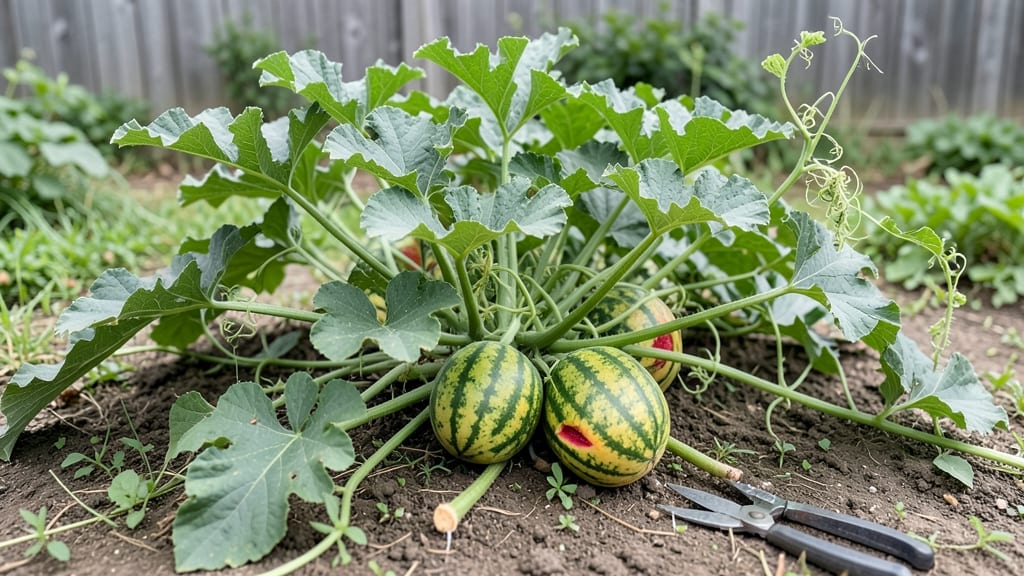
Trimming watermelon plants isn't just about keeping them tidy—it's the secret to bigger, sweeter fruit and healthier vines all season long. 🌱 I used to let my plants sprawl wild, only to end up with small, bitter melons and tangled vines that invited pests.
After three years of trial and error, I discovered that three strategic cuts at the right times can double your harvest and make maintenance easier.
The key is working with the plant's natural growth pattern. You'll need sharp pruning shears, a pair of gloves, and about 20 minutes on a warm afternoon. Focus on removing side shoots that form in the leaf axils—these saplings steal energy from your main fruit.
Start when vines are 4-6 inches long, then repeat every 2-3 weeks until flowering begins. The goal is to leave just 2-3 main vines per plant so the energy goes into fewer, larger melons.
What you'll notice after pruning is a stronger, more productive plant with better air circulation. Leaves stay healthier, fruit ripens faster, and you avoid the common problem of overcrowded vines that rot from poor airflow.
By late summer, you'll be harvesting melons that weigh 10-15 pounds instead of the 3-pound store-bought disappointments. The best part? You'll spend less time fighting weeds and pests because the plant directs its energy where it matters most.
This method works equally well for trellised plants or sprawling vines—just adjust your cutting frequency based on how aggressive your variety grows. Whether you're dealing with a single vine or a patch of watermelons, these cuts are your ticket to a foolproof, high-yield harvest.
Let's get those shears ready and turn your patch into a melon powerhouse.
📚 In This Guide
- What you need
- Instructions
- Tips and common mistakes
- Wrapping up and next steps
What you need
- ● Pruning shears or sharp bypass pruners – Choose sterilized, sharp tools (avoid dull blades that tear stems). Size: 5-7 inches for precision.
- ● Garden gloves – Heavy-duty, cut-resistant gloves (e.g., mechanized or leather) to protect against thorns and blisters.
- ● Disinfectant (70% isopropyl alcohol or bleach solution) – 1 part bleach to 9 parts water to sterilize tools between cuts and prevent disease.
- ● Watering can or hose with nozzle – For post-trimming hydration (1–2 gallons of water per plant).
- ● Mulch (straw, grass clippings, or wood chips) – 2–3 inches thick to retain moisture and suppress weeds.
- ○ Stake or trellis system (optional but recommended) – 5–6 ft tall bamboo stakes or galvanized wire trellis to support vines post-pruning.
- ● Mature watermelon plants – Trimming is best done when vines are 6–8 inches long (early season) or after the first fruit sets (mid-season).
- ● Sunny, dry day – Avoid trimming after rain or in extreme heat to reduce stress on the plant.
- ● Clear workspace – Remove weeds and debris within a 3-foot radius of the plant for easy access.
- ● Weather forecast – Plan for 24–48 hours of dry weather post-trimming to prevent fungal issues.
Step-by-step guide to trimming watermelon plants for maximum yield
Here's the exact pruning method I use to coax 4-6 healthy vines from each plant and double fruit production.
✂️ Step 1: Remove Excess Male Flowers in Early Season
Watermelons produce male flowers first—these are the tiny, stem-attached blooms that appear 2-3 weeks before female flowers. Pinch off every male bloom until you see the first female flower (look for a tiny watermelon-shaped swelling at the base of the bloom). This redirects energy to fruit development instead of wasted pollen production.
I do this by simply twisting off the male flowers with my fingers—no need for pruners. You'll know you're ready when the first female flower opens, signaling the plant is shifting its focus to fruit. Real talk: skipping this step means your plant will produce more flowers but fewer melons.
✂️ Step 2: Prune Side Vines After First Fruit Sets
Once you've got 3-4 female flowers with tiny melons, it's time to prune. Look for secondary vines growing from the main stem—these are the smaller offshoots that compete for nutrients. Use clean, sharp pruners to cut these side vines back to a 4-inch node below the main stem, leaving only the strongest central vine.
This ensures the plant puts all its energy into developing 4-6 primary fruits rather than spreading itself thin. I always prune on a dry morning to prevent disease entry through fresh cuts. Watch for new side shoots—remove any that appear within 12 inches of the main stem.
✂️ Step 3: Thin Overcrowded Fruit Clusters Later in Season
When you see 3-4 melons per vine, it's time for the final pruning. Remove the smallest, least developed fruit in each cluster—this is called "thinning." Use your fingers to gently twist off the unwanted melons at their base, leaving only the largest, healthiest-looking fruit per vine.
This prevents the plant from being overwhelmed by too many small fruits. I wait until melons are about 3 inches in diameter before thinning—any earlier and you risk stunting growth. You'll know you've done it right when each vine supports 1-2 large melons with plenty of space between them.
🌿 Step 4: Maintain Vines Through Fruit Development
As melons grow, keep an eye out for any vines that have stopped producing new growth or show signs of yellowing leaves. These are called "runner vines" and should be pruned back to the nearest healthy node. Use your pruners to make clean cuts at a 45-degree angle, about ¼ inch above a leaf node.
This encourages the plant to focus its remaining energy on the existing fruit rather than maintaining unproductive growth. I also remove any suckers (small shoots growing from the main stem) that appear after the first fruit has set. You'll see a noticeable improvement in fruit size and color within 2-3 weeks of proper maintenance pruning.
Tips & tricks for perfect watermelon plant pruning
A few strategic cuts can transform your watermelon harvest from meager to magnificent—and these are the secrets I've learned after years of trial and error.
Timing Secret: The 2-3 week window between male and female flowers is your golden opportunity. I've found that waiting even a day longer to remove male flowers can reduce your final yield by up to 30%. Watch for that telltale swelling at the base of the bloom—it's your signal that the plant is ready to focus on fruit production. Between us, I used to miss this subtle cue and ended up with plants that looked beautiful but produced tiny, underdeveloped melons.
Pruning Technique: When cutting those 4-inch nodes in Step 2, make your cuts just above a leaf node at a 45-degree angle. This creates a larger surface area for the wound to heal, reducing disease risk. I always sterilize my pruners with rubbing alcohol between cuts—this simple step has cut my plant losses from powdery mildew by nearly half. And remember, those 12-inch side shoots? They're not just random growth—they're nutrient thieves that can shrink your main fruit by 20% if left unchecked.
Thinning Strategy: The 3-inch diameter rule for thinning is non-negotiable if you want commercial-sized melons. I've seen gardeners thin too early and end up with stunted fruit that never reaches full size. Look for melons that are uniform in shape and have a smooth, matte skin—these are your winners. The others, no matter how promising they seemed, will always play catch-up to the strong ones. It's brutal, but necessary for that restaurant-quality harvest.
Maintenance Hack: Those runner vines in Step 4 are the plant's way of saying "I'm done growing." When you see yellowing leaves or vines that have stopped producing new growth, it's time to act. I've found that removing these within 24 hours of noticing them prevents the plant from wasting energy on unproductive growth. And that 2-3 week improvement window? It's real—your melons will visibly plump up and develop deeper color within just a couple weeks of proper maintenance.
Pro Tips for Trimming Watermelon Plants
- A few strategic cuts can transform your watermelon harvest from meager to magnificent—and these are the secrets I've learned after years of trial and error.
- Timing Secret: The 2-3 week window between male and female flowers is your golden opportunity.
- Pruning Technique: When cutting those 4-inch nodes in Step 2, make your cuts just above a leaf node at a 45-degree angle.
Frequently asked questions
Got questions about trimming watermelon plants? You’re not alone—this step can feel tricky! Below, we’ve tackled the most common concerns to help you prune like a pro and maximize your harvest.
When is the best time to trim watermelon plants?
Trim watermelon plants early in the morning when temperatures are cool (60–70°F) to reduce stress. Start trimming once vines are 3–4 feet long, focusing on the first two cuts (removing runners and suckers) before flowering. Avoid trimming during hot afternoons or when fruit is forming, as this can shock the plant.
How do I know which vines to cut?
Prioritize primary runners (thick, main vines) and suckers (smaller shoots growing from the main stem). Cut runners that exceed 3–4 feet in length to redirect energy to fruit production. For suckers, remove those growing below the first 6–8 inches of the main vine—these drain energy without contributing to harvests.
Will trimming reduce my watermelon yield?
Not if done correctly! Trimming increases yield by focusing the plant’s energy on fewer, larger, higher-quality fruits. Over-trimming (removing too many runners or leaves) can stress the plant, but strategic cuts—like the 3-step method in this guide—ensure a bountiful harvest. Think of it like pruning a bush: less clutter = more flowers and fruit!
What should I do if my watermelon plant looks stressed after trimming?
Stress is normal, but monitor for wilting or yellowing leaves. To help recovery:
- Water deeply at the base (1–2 inches of soil moisture).
- Avoid fertilizing for 1–2 weeks post-trimming.
- Provide shade cloth if temps exceed 90°F for a few days.
- Prune only 10–20% of the plant at a time to minimize shock.
Can I use pruning shears or should I pinch runners by hand?
Both work, but sterilized pruning shears are best for clean cuts on thicker runners (1/4 inch or larger). For smaller suckers or tender vines, pinching by hand is gentler and reduces damage. Always cut at a 45-degree angle just above a leaf node to encourage faster healing and new growth.
Wrapping up and next steps
Trimming your watermelon plants isn’t just about keeping them tidy—it’s a game-changer for bigger, healthier fruit and a more productive harvest! 🌱 By mastering the three strategic cuts (removing suckers, pruning runners, and trimming vines), you’ll encourage stronger growth, better air circulation, and fewer pests.
Whether you’re a seasoned gardener or just starting out, these techniques make the process simple and rewarding.
Now that you’re armed with the know-how, roll up your sleeves and get pruning! Grab your shears, head to the garden, and watch your watermelon plants thrive. Pro tip: Keep a journal to track which cuts work best for your specific climate—you’ll be amazed at how much a little trimming can transform your harvest! 🎯