Watering
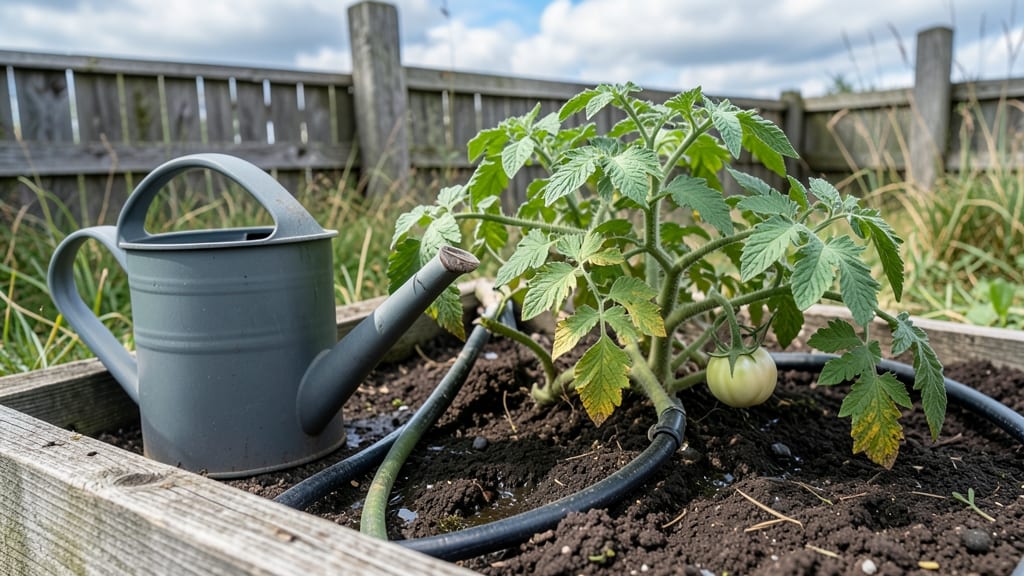
Your tomato plant’s limp leaves and dry soil are screaming for help—this is how to revive it in three simple steps before it’s too late. 🌱 I’ve saved more tomato plants from underwatering than I can count, and the key isn’t just watering more—it’s watering right.
The first sign you’ve missed the mark? Leaves that droop even after watering, crispy edges, or soil that pulls away from the pot. Tomatoes hate inconsistency—they want deep, even moisture, not sporadic drinks.
Most gardeners overwater at first, then undercorrect by cutting back too much, which stresses the plant even more.
Within 48 hours of fixing the routine, you’ll see new vigor: leaves perking up, stems firming, and flowers setting for those juicy tomatoes you’re craving. The secret is a morning watering schedule, mulch to lock in moisture, and checking soil depth—not just the surface.
This works for container-grown tomatoes, raised beds, or in-ground plants—just adjust the volume to your setup. Let’s get those vines back on track before the heat sets in for good.
Root Causes Of Thirsty Tomato Vines
Underwatered tomato plants are a common but frustrating issue—especially when you’ve poured your heart (and time) into nurturing them. 🌱💦 The problem often stems from a mix of environmental factors, human habits, and plant biology.
Understanding these root causes is the first step to reviving your vines and preventing future stress.
---
Tomatoes thrive on consistency—their roots crave steady moisture, not sporadic bursts. When watering is erratic, plants develop a shallow root system that struggles to absorb enough water during dry spells. Here’s why this happens:
- Shallow Root Development: Young tomato roots grow rapidly in search of moisture.
If they’re only watered at the surface, they stay close to the topsoil, making them vulnerable to evaporation and drought. - Soil Moisture Fluctuations: Alternating between deep soaks and dry spells confuses the plant’s water regulation system.
Cells in the leaves (especially the older ones) wilt as they lose turgor pressure—think of them as deflating balloons. - Human Error: Forgetting to water after a busy week, relying on rain that never comes, or assuming "a little water is enough" all contribute.
Tomatoes need 1–2 inches of water per week, delivered uniformly.
Pro Tip: 💡 Use a moisture meter or the "finger test" (stick your finger 2 inches deep—if dry, it’s time to water). Early morning is the best time to water, as it reduces evaporation.
---
Not all soil is created equal—and some holds onto water like a sponge, while others let it drain too quickly. Tomatoes despise waterlogged roots and bone-dry soil, but the latter is more common in sandy or rocky soils.
- Sandy Soil: Particles are large, leaving big air pockets.
Water drains through too fast, and roots can’t retain moisture. - Clay Soil: While it holds water, it can become compacted, suffocating roots and blocking oxygen flow—leading to root rot or drought stress. - Lack Of Organic Matter: Soil without compost or mulch heats up faster, increasing evaporation rates.
Organic matter (like decomposed leaves or straw) acts like a moisture sponge.
Fix It: Amend your soil with compost or peat moss to improve water retention. For sandy soil, add coco coir; for clay, mix in perlite for aeration.
---
Tomatoes don’t just suffer from neglect—they’re also at the mercy of their surroundings. Heat, wind, and even container size can accelerate water loss.
- High Temperatures: In scorching weather (above 90°F), tomato leaves transpire (release water vapor) at a faster rate.
If roots can’t keep up, wilting follows. - Strong Winds: Gusts increase evaporation from leaves and soil, drying out plants quicker than usual. - Container Limitations: Potted tomatoes dry out 3x faster than in-ground plants. Small pots restrict root growth, so the plant can’t access enough water reserves.
Quick Solutions: ✔ Mulch heavily (2–3 inches of straw or wood chips) to lock in moisture. ✔ Use shade cloth (30–50%) during peak heat to reduce transpiration. ✔ Upgrade containers: Choose 5-gallon pots or larger with drainage holes, and use self-watering systems if possible.
--- When tomato plants compete for water (and nutrients), the weakest vines suffer first. Overcrowding forces roots to spread thin, leaving them unable to hydrate the plant efficiently.
- Too Many Plants Per Square Foot: Tomatoes need 18–24 inches of space between plants.
Cramped roots struggle to explore soil deeply. - Weeds Stealing Resources: Unwanted plants (like grass or clover) absorb moisture and nutrients meant for your tomatoes. - Root Bound Containers: If roots circle the pot (a sign of being root-bound), they can’t expand to find water.
Action Step: 🌿 Thin out seedlings early, and mulch between plants to suppress weeds. For containers, repot if roots are circling or prune lower leaves to encourage deeper root growth.
--- Sometimes, the real culprit isn’t water at all—it’s hidden damage that disrupts the plant’s ability to absorb moisture.
- Root Rot (Fungal/Bacterial): Overwatering can kill roots, but underwatering weakens them, making plants more susceptible to pathogens.
Look for mushy, dark roots or wilting despite wet soil. - Pests (Aphids, Spider Mites): These sap-suckers damage leaves, reducing the plant’s ability to photosynthesize and regulate water efficiently. - Blossom End Rot: While caused by calcium deficiency, this condition often appears when plants experience moisture stress, confusing gardeners into thinking it’s purely a watering issue.
Check For: 🔍 Yellowing leaves (nutrient deficiency or pest damage). 🔍 Sticky residue on leaves (aphids or scale insects). 🔍 Soft, foul-smelling roots (root rot).
--- Tomatoes are master communicators—they show stress long before it’s too late. Missing these signs leads to chronic underwatering.
- Wilting Leaves (Even at Night): Healthy tomatoes stay turgid (firm) overnight.
If leaves droop after dark, the roots aren’t getting enough water. - Curling or Crispy Edges: Older leaves may curl or develop brown, papery edges—a classic sign of dehydration. - Slow Growth or Flower Drop: When a plant is thirsty, it prioritizes survival over fruit production, causing buds to fall off.
Don’t Wait Until It’s Severe: 🚨 If you see one of these signs, act immediately with a deep watering (1–2 gallons per plant) and monitor closely.
Revive Your Tomato Plants Fast
Now that you know the signs and causes of an underwatered tomato plant, it’s time to take action! With the right steps, your vines can bounce back stronger than ever—ready to produce juicy, flavorful tomatoes.
Below, we’ve mapped out practical fixes for each common cause, plus prevention tips to keep your plants thriving long-term.
---
Problem: Skipping watering days or giving inconsistent amounts leaves roots thirsty and stressed.
How to Fix It: ✅ Deep Watering Sessions 🌱 - Water slowly and deeply (1–1.5 inches per week, including rain) to encourage roots to grow downward. - Use a soaker hose or drip irrigation to deliver water directly to the soil—avoid overhead sprinklers, which waste water and can spread disease. - Best time to water: Early morning (6–10 AM) so foliage dries quickly, reducing fungal risks.
✅ Check Soil Moisture 🧑🔬 - Stick your finger 2 inches into the soil—if it’s dry, it’s time to water. If it’s damp, wait another day. - Pro tip: Use a moisture meter for accuracy, especially in hot climates.
✅ Mulch to Retain Moisture 🌿 - Apply 2–3 inches of organic mulch (straw, grass clippings, or wood chips) around the base (but not touching the stem). - Mulch acts like a blanket, slowing evaporation and keeping roots cool.
Prevention: 🔹 Set a watering schedule (e.g., 3x/week in summer, 2x/week in spring/fall). 🔹 Group plants together to create a microclimate that retains moisture longer. 🔹 Upgrade to self-watering pots if container gardening.
---
Problem: High temperatures + low humidity = rapid water loss and wilting.
How to Fix It: 🔥 Shade Cloth to the Rescue 🛡️ - If temps hit 90°F+ (32°C+), drape lightweight shade cloth (30–50%) over plants for 2–4 hours/day. - Avoid full shade—tomatoes still need 6–8 hours of sunlight daily.
💦 Frequent, Shallow Watering 💧 - In extreme heat, water every 1–2 days (morning only) to prevent sunburn on leaves. - Mist leaves lightly in the evening (but avoid wet foliage overnight).
🌱 Boost Humidity Naturally 🌧️ - Place a tray of water near plants or use a pebble tray under pots to increase local humidity. - Avoid pruning during heatwaves—less foliage = less water demand.
Prevention: 🔹 Grow heat-tolerant varieties like ‘Solar Fire’ or ‘Heatmaster’ tomatoes. 🔹 Plant in late spring/early summer to avoid peak heat. 🔹 Use black plastic mulch to warm soil faster in cool climates (but remove if overheating).
---
Problem: Compacted, sandy, or rocky soil drains too fast, while clay soil holds water but suffocates roots.
How to Fix It: 🔧 Amend the Soil 🌱 - For sandy soil: Mix in compost or coconut coir to improve water retention. - For clay soil: Add perlite, vermiculite, or compost to loosen texture. - For containers: Use a well-draining potting mix (50% potting soil + 50% compost/perlite).
💧 Adjust Watering for Soil Type ⚖️ | Soil Type | Watering Frequency | Amount per Session | |--------------|----------------------|----------------------| | Sandy | Every 1–2 days | Less (soaks in fast) | | Loamy | Every 2–3 days | Moderate | | Clay | Every 3–4 days | More (holds water) | | Containers | Daily (small pots) | Until water drains |
🌿 Upgrade Containers 🏺 - If using pots, choose larger containers (5+ gallons per plant) for better root growth. - Drill drainage holes if missing—waterlogged roots = root rot.
Prevention: 🔹 Test soil pH (6.0–6.8 is ideal for tomatoes) and amend with lime or sulfur if needed. 🔹 Add organic matter annually (compost or worm castings) to improve structure. 🔹 Use raised beds for better drainage control.
---
Problem: Too many plants in one spot compete for water, leading to stunted growth.
How to Fix It: 🌿 Thin Out Plants ✂️ - Tomatoes need space! Thin seedlings to 18–24 inches apart (or follow variety-specific spacing). - If transplanting, dig a hole twice as wide as the root ball to encourage root spread.
💧 Water Deeply After Transplanting 🌊 - Water thoroughly after moving plants to help roots establish. - Avoid overhead watering for 2–3 days post-transplant to prevent shock.
Prevention: 🔹 Start with the right spacing—check seed packets for mature plant size. 🔹 Use trellises or cages to save space (vertical gardening = less competition). 🔹 Rotate crops yearly to prevent soil depletion.
--- Need a fast fix? Follow this 3-step emergency plan: 1. Water deeply (1–2 inches) at the base—right now. 2. Trim any crispy leaves (but leave healthy foliage for photosynthesis). 3. Apply mulch to lock in moisture and cool roots.
--- 💡 Monitor daily—wilting in the afternoon is normal, but morning wilting = thirsty plant. 🌡️ Adjust for weather—double watering during heatwaves, reduce in rain. 📅 Keep a garden journal to track watering patterns and plant responses.
With these fixes, your tomato plants should perk up within 3–7 days. Stay consistent, and you’ll be rewarded with juicy, vine-ripened tomatoes in no time! 🍅🔥
Frequently asked questions about reviving thirsty tomato plants
Why do my tomato leaves wilt even after watering?
Wilting after watering often means your plant has developed shallow roots from inconsistent moisture. When roots stay near the surface, they dry out quickly. Try a deep watering session (1–2 inches of water) at the base, and check soil 2 inches down—if it's dry, roots aren't reaching deep enough. Mulching with straw helps retain moisture longer.
How often should I water tomato plants in containers vs. garden beds?
Container-grown tomatoes need water daily in hot weather (small pots dry out fastest), while garden beds require 2–3 times per week (1–1.5 inches total). Use your finger test: if the top 2 inches of soil feel dry, it's time to water. Containers benefit from self-watering systems or larger pots (5+ gallons) to reduce frequency.
Can I save a tomato plant that's completely wilted and crispy?
Act fast! First, give it a deep soak (1–2 gallons) at the base, then trim any crispy leaves (healthy foliage keeps photosynthesizing). Apply 2–3 inches of mulch to lock in moisture. If roots are still alive (check by gently tugging—roots should resist), the plant can recover in 3–7 days. If stems feel mushy, it's likely too late.
What's the best time of day to water tomatoes?
Early morning (6–10 AM) is ideal—it reduces evaporation and gives foliage time to dry before nightfall, lowering fungal risks. Avoid evening watering, as wet leaves overnight invite blight. For extreme heat (90°F+), water twice daily (morning + late afternoon) to prevent leaf scorch, but focus on soil moisture, not foliage.
Will pruning help my underwatered tomato plant recover?
Pruning can help, but focus on strategic cuts first. Remove only crispy or yellowed leaves—never more than 20% of foliage at once. This reduces water demand while keeping the plant photosynthesizing. Avoid pruning during heatwaves, as less foliage means less shade for roots. After recovery, light pruning improves airflow and fruit production.