
Diseases
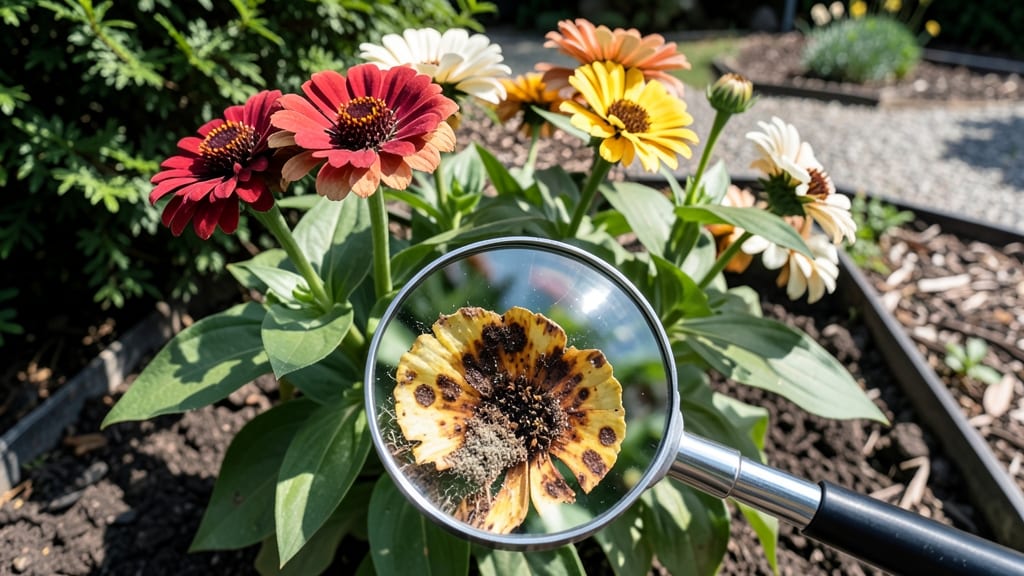
Zinnia plant diseases can turn vibrant blooms into a sad, spotted mess faster than you’d think. 🌻 I’ve watched my brightest zinnias go from showstopper to sad in just a week—powdery white fuzz, blackened stems, or leaves that crumple like paper.
The good news? Most issues have simple fixes if you catch them early.
Powdery mildew, bacterial wilt, and leaf spot are the top villains, but they all leave telltale signs. Mildew starts as white dust on leaves, wilt happens when stems turn black and droop, and spots look like greasy brown splotches.
The key? Water at the base, not overhead, and space plants so air circulates—crowding invites trouble.
Organic solutions work wonders: neem oil spray for mildew, copper fungicide for spots, and pulling infected plants before they spread. I’ve saved entire beds just by acting fast—once you spot the problem, you’ve already won half the battle. The rest is just elbow grease and patience.
Prevention is easier than cleanup, so rotate crops yearly, sanitize tools, and pick resistant varieties like ‘Benary’s Giant’ or ‘Profusion.’ Your zinnias will bounce back stronger—and next season, they’ll stay healthy longer. Let’s get those blooms back to their best.
The hidden triggers behind zinnia struggles
Zinnias may seem resilient, but their vibrant blooms can quickly fade when hidden stressors take hold. Understanding why these diseases strike is the first step toward prevention—and healthier plants.
Below, we break down the root causes, from microbial invaders to environmental missteps, so you can protect your zinnias before problems arise.
🌡️ Overcrowded Roots & Poor Airflow
Zinnias thrive in spacious, well-aerated soil, but when plants are packed too tightly, disaster follows. Here’s why:
- Fungal Feasts: Dense foliage traps moisture, creating a humid microclimate perfect for Alternaria and powdery mildew. Fungal spores spread 10x faster in stagnant air compared to open conditions.
- Root Rot Risks: Compacted soil restricts drainage, leaving roots waterlogged. Phytophthora and Pythium thrive in oxygen-deprived zones, rotting roots within 3–5 days of poor airflow.
- Nutrient Competition: Overcrowding starves plants of nitrogen and phosphorus, weakening their immune response. Weakened zinnias are 3x more susceptible to bacterial infections like Xanthomonas.
Actionable Fix: Space zinnias 12–18 inches apart and thin seedlings early. Use mulch sparingly (max 1–2 inches) to allow airflow to roots.
💧 Watering Woes: Too Much or Too Little
Zinnias despise soggy feet but also wilting stress from drought. Both extremes disrupt their natural defenses:
| Issue | Disease Trigger | Science Behind It |
|---|---|---|
| Overwatering | Downy Mildew, Root Rot | Excess moisture softens plant tissue, making it easier for Peronospora spores to penetrate. Roots drown when oxygen drops below 5% in soil. |
| Underwatering | Leaf Spot, Bacterial Wilt | Stressed plants produce less chlorophyll, weakening their cuticle. Pseudomonas bacteria exploit tiny cracks, entering through stomata (leaf pores). |
| Inconsistent Watering | Powdery Mildew, Fusarium Wilt | Fluctuating moisture confuses the plant’s osmotic balance, causing cell wall collapse and inviting fungal spores to latch on. |
Actionable Fix:
- Water deeply 2–3x per week (early morning) to encourage deep roots.
- Use drip irrigation or soaker hoses to avoid wetting foliage.
- Add perlite or sand to heavy clay soil to improve drainage.
🌿 Pest Damage Opens the Door
Insects aren’t just thieves—they’re disease delivery systems. Here’s how they pave the way for zinnias’ worst enemies:
- Aphids & Whiteflies: Their honeydew secretions create a sticky film that blocks sunlight and fosters sooty mold. The mold smothers leaves, reducing photosynthesis by up to 40%.
- Japanese Beetles: Their chewing tears open leaf tissue, giving Erwinia bacteria a direct entry point. A single beetle can destroy a leaf in 24 hours.
- Spider Mites: Their feeding weakens cell walls, making zinnias vulnerable to powdery mildew. Infested plants show silver stippling—a red flag for fungal invasion.
Actionable Fix:
- Inspect undersides of leaves daily for pests. Knock off aphids with a sharp stream of water.
- Introduce beneficial predators like ladybugs or lacewings (they eat 50+ aphids/day each!).
- Apply neem oil (1 tsp per quart of water) to disrupt insect life cycles.
🌡️ Extreme Temperatures & Humidity
Zinnias are heat-loving, but sweltering nights or cold snaps throw their defenses into chaos:
- High Humidity (>75%): Ideal for Botrytis blight (gray mold). Spores germinate in 6–12 hours when leaves stay damp overnight.
- Sudden Temperature Drops: Causes chilling injury, which disrupts cell membranes and invites Pythium to infect roots.
- Heat Stress (>95°F): Overheated leaves lose moisture rapidly, making them 3x more prone to leaf spot from Cercospora.
Actionable Fix:
- Space plants for maximum airflow (reduces humidity near foliage).
- Use shade cloth (30–50%) during heatwaves to prevent wilting.
- Avoid late-day watering—wet leaves + evening heat = perfect fungal storm.
🌱 Soil Imbalances & Poor Nutrition
Zinnias need balanced nutrition, but too much (or too little) of certain elements creates vulnerabilities:
- Excess Nitrogen: Produces soft, lush growth that’s highly susceptible to fungal diseases. Think of it like feeding weeds—weak structure = easy entry for pathogens.
- Phosphorus Deficiency: Delays root development, leaving plants starved for energy to fight off root-knot nematodes.
- Compacted or Salty Soil: Restricts water uptake, causing osmotic stress that weakens the plant’s immune response.
Actionable Fix:
- Test soil pH (aim for 6.0–7.0)—zinnias hate acidic or alkaline extremes.
- Use a balanced fertilizer (1
Fixing Zinnia Diseases Naturally
Now that you’ve identified the issue plaguing your zinnias, let’s roll up our sleeves and restore your garden’s vibrant beauty—without harsh chemicals. Below are targeted, organic solutions for each common zinnia disease, along with preventive steps to keep your flowers thriving.
Cause: Fungal spores thrive in humid, crowded conditions, coating leaves in white powder.
How to Fix It: 🔥 Remove Infected Leaves – Snip off heavily mildewed foliage (wear gloves!) and compost away from the garden to prevent spread. 🍳 DIY Baking Soda Spray – Mix 1 tsp baking soda + 1 quart water + a drop of dish soap (as a surfactant). Spray underneath leaves every 7–10 days. Why it works: Baking soda raises the leaf pH, making it inhospitable to fungi. 👨🍳 Neem Oil Treatment – Combine 1 tbsp neem oil + 1 tsp mild castile soap + 1 quart water. Spray at dusk (avoid direct sun) to suffocate spores. Reapply after rain. ⏰ Improve Airflow – Prune zinnias to open up the plant, and space them 12–18 inches apart for better circulation.
Prevent It: ✨ Water wisely – Use drip irrigation or early-morning watering to keep foliage dry. 🌡️ Avoid overhead sprinklers – Fungal spores love moisture on leaves.
Cause: Orange pustules on undersides of leaves signal rust fungus, which weakens plants over time.
How to Fix It: 🔥 Prune Rusty Leaves – Cut off all infected leaves (don’t compost them—burn or trash). 🍳 Homemade Copper Fungicide – Mix 1 tbsp copper sulfate (or copper fungicide) + 1 gallon water. Spray every 2 weeks until new growth appears. 👨🍳 Garlic Spray – Blend 1 cup garlic cloves + 1 quart water, strain, and add 1 tsp soap. Spray weekly—garlic’s sulfur compounds inhibit fungi. 🔪 Sterilize Tools – Clean pruners with rubbing alcohol between cuts to avoid spreading spores.
Prevent It: 💡 Rotate crops – Don’t plant zinnias in the same spot year after year. 🌱 Remove debris – Clear fallen leaves and stems after the first frost to eliminate overwintering spores.
Cause: Dark concentric rings on leaves = early blight, a soil-borne fungus that thrives in wet conditions.
How to Fix It: 🔥 Pull and Replace – If >30% of leaves are affected, remove the plant (don’t compost) and replant with resistant varieties like ‘Benary’s Giant’. 🍳 Milk Spray (Yes, Really!) – Mix 1 part milk + 9 parts water and spray every 5–7 days. Science says: Milk’s proteins disrupt fungal growth. 👨🍳 Compost Tea Fertilizer – Brew well-aged compost tea (1:5 compost-to-water ratio) and foliar-feed to boost plant immunity. ⏰ Side-Dress with Compost – Add 1–2 inches of compost around the base to improve soil health and drainage.
Prevent It: 🎯 Plant in full sun – Zinnias need 6+ hours of sunlight to dry quickly and resist moisture-loving fungi. 🔥 Avoid wet feet – Ensure well-draining soil (amend with perlite if needed) and raise beds if your garden floods.
Cause: Tiny pests suck sap, causing yellowing, curled leaves, and sticky residue (aphids) or fine webbing (mites).
How to Fix It: 🔥 Blast Off with Water – Use a strong hose spray to knock off aphids (repeat daily for 3 days). 🍳 Insecticidal Soap – Mix 2 tbsp castile soap + 1 quart water. Spray directly on pests (avoid hot sun—soap can burn leaves). 👨🍳 Ladybugs & Lacewings – Release beneficial insects (buy online or attract with dill or fennel plants). 🔪 Neem Oil Barrier – Spray neem oil weekly to repel and starve mites.
Prevent It: 💡 Interplant with herbs – Basil, mint, or marigolds deter pests naturally. 🌡️ Check undersides daily – Early detection = easier control!
For All Diseases:
- Strengthen plants with balanced organic fertilizer (5-5-5 or compost tea) every 4–6 weeks.
- Mulch with straw to reduce soil splashing onto leaves.
- Harvest regularly – Deadheading promotes airflow and new growth.
Pro Tip: 🌟 Rotate treatments—don’t rely on just one method. Fungi and pests adapt, so switch between baking soda, neem, and copper for best results!
By acting fast and staying consistent, your zinnias will bounce back brighter than ever—and next season, they’ll be disease-resistant superstars. 🚀
Frequently asked questions
Why do my zinnia leaves develop white powdery spots?
That’s likely powdery mildew, a fungal disease thriving in humid, crowded conditions. The white coating blocks sunlight and weakens your plants. Start by spacing zinnias 12–18 inches apart and watering at the base in the morning. A mix of 1 tsp baking soda + 1 quart water + dish soap sprayed every 7–10 days will help too.
Can I still save zinnias with blackened stems?
Probably not—blackened stems usually mean bacterial wilt, which spreads quickly. Remove the entire plant immediately (don’t compost it) and disinfect your tools with rubbing alcohol. For nearby zinnias, apply copper fungicide every 2 weeks to prevent spread.
How do I tell if my zinnias have rust disease?
Look for orange pustules on leaf undersides—those are rust spores. Prune infected leaves (burn or trash them), then spray with a garlic solution (1 cup garlic + 1 quart water + 1 tsp soap) weekly. Improve airflow by thinning plants and avoiding overhead watering.
Are there zinnia varieties that resist diseases better?
Yes! Try ‘Profusion’ or ‘Benary’s Giant’—both are bred for disease resistance. These varieties handle humidity better and recover faster from fungal issues. Pair them with drip irrigation and mulch to boost their natural defenses.
What’s the fastest way to stop leaf spots from spreading?
Remove all spotted leaves immediately and apply a milk spray (1:9 milk-to-water ratio) every 5–7 days. Milk’s proteins disrupt fungal growth, and this method works in 3–5 days if caught early. Also, ensure your garden has 6+ hours of sunlight daily to dry leaves quickly.