
Diseases
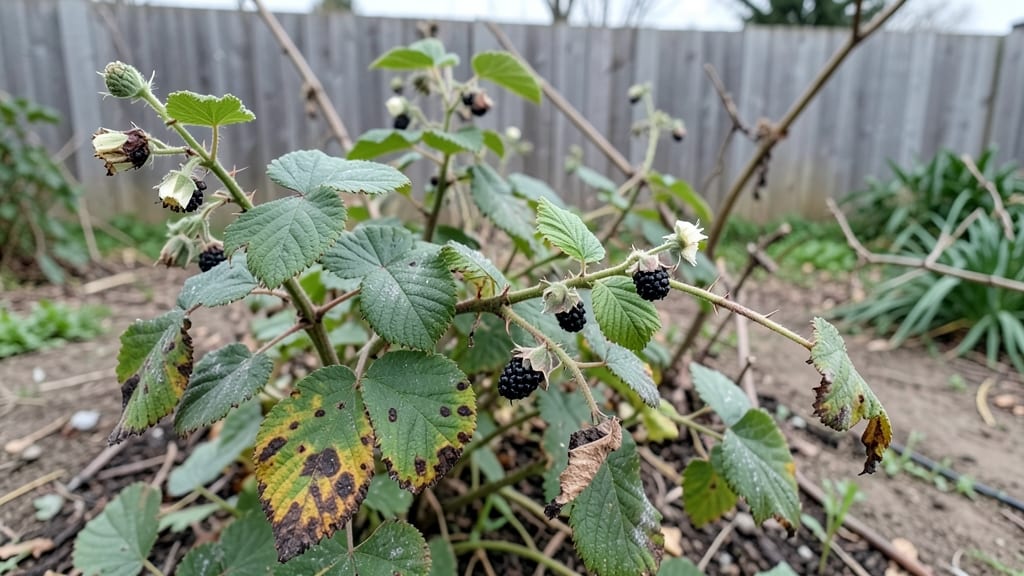
Blackberry plant diseases can turn your thriving bramble into a sad, spotted mess if you don't catch them early. 🌿 I've lost entire canes to fungal infections that spread faster than weeds in a rainstorm, but I've also saved plants by spotting symptoms before they took hold.
The key is knowing what to watch for—those dark spots, rusty patches, or weird growths aren't just bad luck.
Most of these fungal threats love warm, damp conditions, which means your blackberries are at risk from late spring through summer. Anthracnose, rust, and botrytis are the usual suspects, but bacterial issues can sneak in too.
The good news? Once you recognize the patterns—like yellowing leaves, blackened canes, or powdery coatings—you can act fast with pruning, fungicides, or even homemade sprays like neem oil.
By the time you finish reading, you'll spot problems before they spread and know exactly how to treat them—whether that means cutting out infected canes or giving your plants a protective spray.
Your berries will stay sweeter, your canes stronger, and your garden less frustrating. Let's get those plants back in fighting shape.
This works for both primocanes (new growth) and floricanes (last year's canes), so no matter what type of blackberry you grow, you'll have the tools to keep them healthy. The secret is staying one step ahead of the fungi—just like I did after my first major outbreak.
Root Causes of Blackberry Ailments
Blackberry plants, like any living organism, are vulnerable to diseases when their natural defenses weaken or environmental conditions tip the balance against them. Understanding why these fungal threats take hold is the first step to prevention—and recovery.
Below, we break down the key factors that invite blackberry plant diseases into your garden, backed by science and actionable insights.
Fungal spores thrive in humid, stagnant air—like a damp, enclosed space where moisture lingers. Blackberries grown too closely together create a perfect breeding ground for pathogens like Botrytis (gray mold) or Anthracnose. Poor airflow also delays drying after rain or irrigation, leaving foliage and canes constantly wet.
- Why it happens: Dense plantings block sunlight and airflow, raising humidity near the plant surface. Fungal spores land on damp leaves or fruit, germinate, and infect tissues within 24–48 hours.
- Science behind it: Most fungal pathogens require free moisture (like dew or rain) to activate. Without airflow, this moisture evaporates slowly, prolonging the infection window.
- Actionable fix:
- Space canes 4–6 feet apart (depending on variety) to improve circulation.
- Prune old, dead, or crossing canes to reduce shade and congestion.
- Use drip irrigation (instead of overhead sprinklers) to keep foliage dry.
Blackberries are not waterlogged plants—yet many gardeners drown them with good intentions. Overwatering saturates the soil, weakening roots and creating ideal conditions for root rot (caused by Phytophthora or Fusarium) and foliar diseases like Rust.
- Why it happens: Waterlogged soil cuts off oxygen to roots, stressing the plant and making it 3x more susceptible to fungal invasion. Excess surface moisture also splashes spores from the soil onto leaves.
- Science behind it: Fungi like Phytophthora release zoospores—swimming spores—that infect roots in waterlogged conditions. Once established, they block nutrient uptake, leading to wilting and dieback.
- Actionable fix:
- Water deeply but infrequently—aim for 1–1.5 inches per week (including rain).
- Improve drainage by amending soil with compost or sand (if clay-heavy).
- Avoid watering in the evening—wet foliage overnight = fungal feast.
Your pruners, shears, and even gloves might be silently spreading disease. Fungal spores hitchhike on dirty tools, transferring from infected plants to healthy ones with every cut.
- Why it happens: Pathogens like Botrytis or Powdery Mildew produce millions of spores on infected tissue. When you prune without cleaning tools, you unwittingly inoculate other plants.
- Science behind it: Spores can survive weeks to months on metal or fabric surfaces. A single contaminated cut introduces the pathogen into fresh wounds, bypassing the plant’s natural defenses.
- Actionable fix:
- Sanitize tools between uses with 70% isopropyl alcohol or a 10% bleach solution.
- Disinfect pruning wounds on the plant with copper fungicide or hydrogen peroxide (3%).
- Never reuse rags or towels for cleaning—spores linger!
Blackberries are hardy but not invincible. Sudden shifts—like hot days followed by cold nights—stress plants, lowering their resistance to fungal invaders like Anthracnose or Leaf Spot.
- Why it happens: Temperature fluctuations disrupt cellular processes, weakening the plant’s cuticle (its protective skin). Fungal spores exploit these micro-wounds, entering tissues more easily.
- Science behind it: Ideal fungal growth occurs between 60–85°F. When nights dip below 50°F after a scorching day, the plant’s photosynthesis slows, reducing energy for defense mechanisms.
- Actionable fix:
- Mulch with straw or wood chips (3–4 inches deep) to stabilize soil temps.
- Use shade cloth (30–50%) during peak summer heat to prevent heat stress.
- Avoid planting in low-lying areas where cold air pools.
A blackberry plant starving for key nutrients is like a person with a weakened immune system—any pathogen can strike. Deficiencies in potassium, phosphorus, or nitrogen leave plants vulnerable to diseases like Rust or Crown Gall.
| Nutrient Deficiency | Symptoms | Fungal Risk |
|---|---|---|
| Potassium (K) | Yellowing leaf edges, weak stems, poor fruit set | ↑ Anthracnose, Root Rot (weakened cell walls) |
| Phosphorus (P) | Purple stems/leaves, stunted growth, delayed flowering | ↑ Powdery Mildew (stressed plants can’t produce antifungal compounds) |
| Nitrogen (N) | Pale yellow leaves, slow growth, sparse foliage | ↑ Botrytis (thin, weak canes snap easily, creating entry points) |
Why it happens: Nutrients are the building blocks of cellulose and lignin—the structural components that repel fungi. When deficient, plants produce thinner cell walls, making them easier targets.
Actionable fix:
- Test soil annually and amend with balanced fertilizer (e.g., 10-10-10) or
Quick Fixes for Blackberry Fungal Woes
When your blackberry plants start showing signs of stress—whether it’s anthracnose spots, botrytis blight, or rusty leaves—acting fast is key. Below, we break down targeted solutions for each common fungal threat, along with prevention tips to keep your berries thriving.
Think of this as your emergency repair guide, packed with practical steps to save your harvest.
If your blackberry leaves are developing sunken, dark spots with yellow halos, Colletotrichum (anthracnose) is likely the culprit. This fungus thrives in wet conditions, so drainage and pruning are your first lines of defense.
🍳 Step 1: Remove Infected Growth
- 🔪 Snip it out: Cut off and dispose of (do not compost) any canes or leaves with lesions. Use sterilized pruners to avoid spreading spores.
- 🌱 Thin the canopy: Improve airflow by pruning crowded branches—fungi love damp, shaded areas.
👨🍳 Step 2: Apply Fungicide
- 💡 Organic option: Spray with a copper fungicide (like copper sulfate) or a baking soda mix (1 tbsp baking soda + 1 tsp dish soap + 1 gallon water). Reapply every 7–10 days during wet spells.
- 🌡️ Chemical boost: For severe cases, use chlorothalonil (follow label rates) at the first sign of symptoms.
✨ Prevention Tips
- 🌧️ Water wisely: Irrigate early in the day so foliage dries quickly. Avoid overhead watering.
- 🌱 Mulch properly: Use straw or wood chips (not thick layers) to keep soil moist but not soggy.
- 🔄 Rotate crops: If possible, avoid planting blackberries in the same spot year after year.
Gray, fuzzy mold on flowers or fruit? Botrytis cinerea (botrytis blight) is a sneaky invader that thrives in humidity. The good news? It’s easy to outsmart with proper hygiene and airflow.
🥘 Step 1: Clean Up Debris
- 🧹 Rake and remove: Clear away fallen leaves, mummified fruit, and old canes—these are spore hotels.
- 🌿 Prune for sunlight: Thin canes to let light penetrate the center of the plant (fungi hate dry, sunny conditions).
🔪 Step 2: Spray Preventively
- 💡 Early intervention: Apply a fungicidal spray (like myclobutanil or potassium bicarbonate) before flowering begins.
- 🌡️ Post-bloom: If you see gray mold on fruit, spray immediately and remove infected berries to stop spread.
🎯 Prevention Tips
- 🌧️ Space plants properly: Ensure 4–5 feet between rows for better airflow.
- 🌱 Avoid overhead watering: Use drip irrigation or soaker hoses to keep foliage dry.
- 🍇 Harvest promptly: Pick ripe berries as soon as they’re ready—overripe fruit invites botrytis.
Orange pustules on leaves? Phragmidium rust is a classic blackberry pest. While it rarely kills plants, it weakens them and reduces yields. Copper-based treatments are your best bet.
🍳 Step 1: Prune Rusty Leaves
- 🔪 Cut and burn: Remove all infected leaves and canes (do not compost). Rust spores can survive winter in plant debris.
- 🌿 Thin canes: Promote airflow to dry leaves faster.
👨🍳 Step 2: Treat with Copper
- 💡 Organic fix: Spray with copper fungicide (e.g., copper hydroxide) at the first sign of pustules. Reapply every 2–3 weeks until new growth is rust-free.
- 🌡️ Timing matters: Apply in early spring before rust appears, then again after harvest.
✨ Prevention Tips
- 🌱 Choose resistant varieties: If rust is recurrent, opt for cultivars like ‘Natchez’ or ‘Triple Crown’, which tolerate rust better.
- 🌧️ Mulch lightly: Use gravel or pine needles to improve drainage and reduce soil moisture.
- 🔄 Crop rotation: Avoid planting blackberries in the same spot for 3+ years.
No matter the fungus, healthy plants fight back better. These universal tips will strengthen your blackberries’ resilience:
💡 Nutrient Boost
- 📊 Soil test first: Ensure your soil has balanced nitrogen, phosphorus, and potassium. Fungal diseases often strike when plants are nutrient-deficient.
- 🌱 Compost tea: Brew a compost tea (steep compost in water for 24–48 hours, strain) and foliar-spray it weekly during growing season.
🌿 Watering Hacks
- 💧 Deep and infrequent: Water deeply 1–2 times per week (early morning) instead of daily shallow watering.
- 🚰 Drip irrigation: The best way to avoid wetting leaves—fungi hate dry foliage.
🔄 Seasonal Care
- 🍂 Fall cleanup: After harvest, prune and remove all debris. Burn or trash it—do not compost if fungal diseases were present.
- 🌱 Spring prep: Apply a layer of mulch (2–3 inches) to protect roots and regulate soil temperature.
Pro Tip: 🎯 Monitor your plants weekly during rainy seasons. Early detection = easier fixes! Keep a small notebook to track symptoms and treatments—it’ll help you spot patterns and adjust your strategy.
Frequently asked questions
What are the first signs of fungal infections on blackberry plants?
Look for dark, sunken spots with yellow halos (anthracnose), gray fuzzy mold (botrytis), or orange pustules (rust) on leaves. These appear during warm, damp weather when spores thrive. Check undersides of leaves and canes first—fungi often hide there before spreading.
Can I use homemade sprays instead of chemical fungicides?
Mix 1 tablespoon baking soda + 1 teaspoon dish soap in 1 gallon water for a mild fungicide. For rust, use copper fungicide (organic versions available). Reapply every 7-10 days during wet spells, and always spray in early morning for best results.
Why do my blackberries keep getting infected even after treatment?
Fungal spores often survive in old plant debris or soil. Always remove and burn or trash infected leaves/canes (don't compost them). Improve airflow by spacing canes 4-6 feet apart and prune crowded branches to prevent moisture buildup.
Is there a best time of year to prevent blackberry diseases?
Focus on early spring (before new growth) and fall cleanup (after harvest). Apply preventive sprays in spring, and remove all plant debris in fall to eliminate overwintering spores. Mulching with straw also helps regulate soil moisture year-round.
How do I know if my blackberry plant is dying from disease or something else?
Check for wilting leaves, blackened canes, or unusual growths—these are classic disease signs. If roots are mushy (root rot) or leaves show nutrient deficiencies (yellowing, purple stems), it might be environmental. Compare symptoms to photos of common blackberry diseases for confirmation.