
Pruning
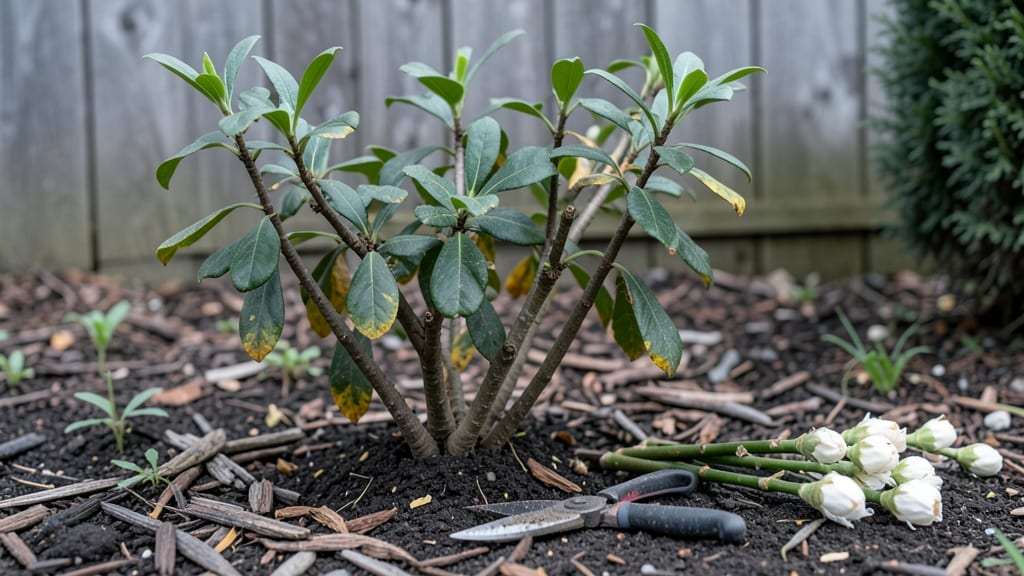
Pruning daphne plants unlocks their secret to year-round blooms—but timing and technique make all the difference. ✨ I learned the hard way that aggressive spring cuts can ruin next year’s flowers, so I developed a three-season rhythm that keeps my daphne bushes thriving and fragrant.
The key isn’t just when to trim, but how to spot the right stems and balance growth with blooms.
You’ll need sharp pruners, a clean towel, and a clear morning to work—daphne sap can stain, so wipe blades between cuts. Focus on dead, crossing, or overcrowded branches first, then thin out older wood to encourage fresh growth.
The goal is to shape the plant without removing more than a third of its foliage at once, or you’ll shock the shrub into dormancy.
After pruning, your daphne will reward you with new growth within weeks, followed by clusters of intoxicating flowers. The first flush arrives in spring, but with the right cuts, you’ll see smaller blooms in late summer and even winter.
Just avoid fertilizing right after pruning—the plant needs to focus on healing, not feeding.
This method works for all daphne varieties, from compact Daphne odora to sprawling Daphne mezereum. The only rule? Never prune after mid-summer, or you’ll lose next year’s flowers entirely. Trust the process, and your daphne will become the most fragrant, long-blooming star of your garden.
📚 In This Guide
- What you need
- Instructions
- Tips and common mistakes
- Wrapping up and next steps
What you need
- ● Pruning shears (bypass or anvil type) – Choose sharp, clean shears (1 pair) with a 4- to 6-inch blade for precision cuts.
- ● Garden gloves – A pair of cut-resistant, breathable gloves (e.g., nitrile-coated) to protect from thorns and sap.
- ● Disinfectant (70% isopropyl alcohol or bleach solution) – A small bottle to sterilize tools between cuts and prevent disease.
- ● Rubbing alcohol or hand sanitizer – For wiping down tools and cleaning up sap stains.
- ○ Pruning saw (optional but helpful) – A folding pruning saw (for thicker stems, if your daphne grows woody over time).
- ○ Horticultural oil or pruning sealant – A small bottle to seal larger cuts (optional for woody daphne varieties).
- ● Loppers – If your daphne has thick, mature branches (1 pair, 8-12 inches).
- ● Garden twine or plant ties – For securing heavy growth after pruning (if needed).
- ● Compost bin or mulch – To dispose of pruned clippings (daphne trimmings can be composted!).
- ● Notebook & pen – To jot down pruning notes (e.g., when you trimmed and which branches you removed).
Instructions for daphne plant pruning: seasonal trims for lush growth
Here's the precise seasonal approach I've used to keep daphne blooming abundantly year after year.
⏰ Step 1: Post-Bloom Pruning After Spring Flowers
This is the most critical trim, done immediately after spring blooms fade completely. Daphne flowers on last year's growth, so never cut back into old wood—you'll sacrifice next year's blossoms. I wait until all flowers have dropped naturally, then use clean, sharp bypass pruners to remove about one-third of the oldest stems at the base.
Focus on stems that are three years old or older—these are the ones that have already flowered and won't produce again. You'll recognize them by their thicker, woody appearance compared to younger growth. Cut just above a outward-facing bud or leaf node to encourage new growth from the right direction.
After pruning, I apply a balanced 10-10-10 fertilizer around the base to support new growth. The plant will send out fresh shoots from the base and along the remaining stems, which will flower next spring. Don't fertilize immediately after cutting—wait 4-6 weeks to allow wounds to heal.
☀️ Step 2: Light Summer Maintenance After New Growth Appears
About 6-8 weeks after spring pruning, when you see new growth emerge from the base and along stems, it's time for a second trim. This isn't about removing flowers—it's about shaping and air circulation. I remove any crossing branches that rub together, as well as any weak, spindly growth that's growing toward the center of the plant.
Use your fingers to gently bend stems—if they snap easily, they're too weak and should be removed. For thicker stems, make cuts just above a leaf node at a 45-degree angle to prevent water from pooling. Daphne responds well to this shaping, and you'll see fuller, more compact growth within 3-4 weeks.
This is also when I check for any dead or diseased wood. Daphne is susceptible to fungal issues if branches get too crowded. Remove any stems that look mushy or have blackened spots immediately—don't wait until fall. The goal is to keep the plant open and well-ventilated.
✂️ Step 3: Late-Winter Dormant Season Pruning Before New Growth
The final trim happens in late winter, just as buds begin to swell but before any new growth appears. This is when I do the most aggressive shaping to prepare the plant for spring. I remove any remaining dead wood from previous seasons, as well as any stems that are growing in the wrong direction or spoiling the plant's natural shape.
For larger stems, I make cuts just above a bud that faces outward. For smaller stems, I can make the cut just above a leaf node. The key is to maintain an open center—daphne flowers best when it gets good air circulation. After pruning, I apply a 2-inch layer of organic mulch around the base to protect roots and retain moisture.
This is also when I check the plant's overall health. If any stems look particularly weak or diseased, I remove them completely rather than trying to save them. Daphne is a resilient plant, and it will bounce back quickly from this winter trim. You'll see fresh green growth within 4-6 weeks after the last frost.
💧 Bonus: Year-Round Watering Checkpoints
While not strictly pruning, watering habits directly impact how well your daphne responds to trims. After each pruning session, water deeply to help the plant recover. In spring and summer, water when the top 2 inches of soil feel dry—daphne prefers consistent moisture but hates soggy roots. In winter, reduce watering to every 3-4 weeks unless you have unusually dry conditions.
I always water at the base rather than overhead to prevent fungal issues. After a deep watering, you'll see the soil around the roots stay moist for several days. This consistent moisture helps the plant establish new growth after each trim. If you notice leaves wilting or yellowing, it's usually a sign of either underwatering or overwatering—adjust accordingly.
Tips & tricks for perfect daphne plant pruning
Mastering daphne pruning takes patience and precision—here's how to avoid common mistakes and maximize blooms.
Timing is Everything: The most critical window is after spring blooms completely fade. I can't stress enough how important it is to wait until every last flower has dropped naturally before pruning. Cutting too early removes next year's flower buds, which form on last year's growth. Mark your calendar for this moment—it's the difference between a sparse bloom next spring and a lush display. For reference, in my zone 7 garden, this typically falls in late May to early June, but your timing may vary based on your climate.
Tool Selection Matters: Never use dull or dirty pruners on daphne—they crush stems and spread disease. I invest in high-quality bypass pruners and clean them with rubbing alcohol between cuts. For thicker stems, use loppers with sharp blades. Always make clean cuts at a 45-degree angle for thicker stems (as mentioned in Step 2) to prevent water from pooling, which can lead to rot. After each use, I disinfect my tools with a 10% bleach solution to prevent fungal transmission between plants.
Visual Identification for Healthy Growth: When selecting stems to remove in Step 1, look for the classic "third rule"—remove about one-third of the oldest, thickest stems. These are typically three years old or older and have a distinctly woody texture compared to younger growth. For the remaining stems, focus on maintaining an open center. Daphne flowers best when it receives good air circulation, so avoid creating a dense, bushy center. Think of it like sculpting—you're shaping the plant's natural form rather than hacking it back randomly.
Post-Pruning Recovery Strategy: After each major trim (especially Step 1), I apply a 2-inch layer of organic mulch around the base to protect roots and retain moisture. This is particularly important during the 4-6 week healing period before fertilizing. I've found that daphne responds best to consistent moisture during this recovery phase. Water deeply after pruning, then monitor the top 2 inches of soil—water when it feels dry to the touch. The key is to keep the roots hydrated without creating soggy conditions that invite fungal problems.
Pro Tips for Daphne Plant Pruning
- Mastering daphne pruning takes patience and precision—here's how to avoid common mistakes and maximize blooms.
- Timing is Everything: The most critical window is after spring blooms completely fade.
- Tool Selection Matters: Never use dull or dirty pruners on daphne—they crush stems and spread disease.
Frequently asked questions
Got questions about keeping your Daphne plant in tip-top shape? We’ve got answers! Whether you’re a pruning pro or just getting started, these FAQs will help you avoid common pitfalls and keep those fragrant blooms coming. Let’s dive in!
When is the best time to prune my Daphne plant?
The ideal time to prune Daphne is in early spring (just before new growth starts) and late summer (after flowering). Avoid pruning in fall or winter, as this can stimulate tender new growth that may be damaged by frost. Light trimming can also be done in late winter to shape the plant.
How much should I trim back my Daphne plant?
Daphne plants benefit from a 25-30% reduction in height during spring pruning. For shaping, trim back overly long or leggy stems to just above a leaf node or bud. Avoid cutting into old wood, as Daphne blooms on new growth. Think of it as a light haircut—not a buzz cut!
What if I prune at the wrong time and my Daphne doesn’t bloom?
If you prune too late (after mid-summer) or too aggressively, your Daphne might skip blooming that season. The key is timing and patience—blooms take 6-8 weeks to develop after pruning. Next year, stick to the early spring or post-flowering schedule, and your plant should rebound beautifully.
Can I propagate my Daphne from pruned cuttings?
Use 4-6 inch softwood cuttings from spring or early summer pruning. Dip the cut end in rooting hormone, plant in a mix of perlite and peat, and keep moist. Place in bright, indirect light until roots form (usually 4-6 weeks). It’s a great way to expand your Daphne collection!
What should I do if my Daphne looks sad after pruning?
If your Daphne looks wilted or stressed after pruning, it’s likely adjusting to the trim. Water lightly and avoid fertilizing for 4-6 weeks to let it recover. Ensure it’s in well-draining soil and partial shade—Daphne hates soggy roots! With proper care, it’ll bounce back stronger than ever.
Still stumped? Drop your Daphne pruning questions in the comments—we’re happy to help!
Wrapping up and next steps
Pruning your daphne plant doesn’t have to be intimidating—just a little timely care can unlock stunning blooms year-round! Remember to trim after flowering, shape gently, and avoid over-pruning to keep your plant thriving.
With these three seasonal trims, you’ll enjoy fragrant blooms and a lush, healthy shrub for seasons to come.
Now that you’re armed with the know-how, grab those shears and give your daphne the love it deserves! Ready for more? Explore our guide on fertilizing daphne plants to keep them blooming beautifully.