
Fertilization
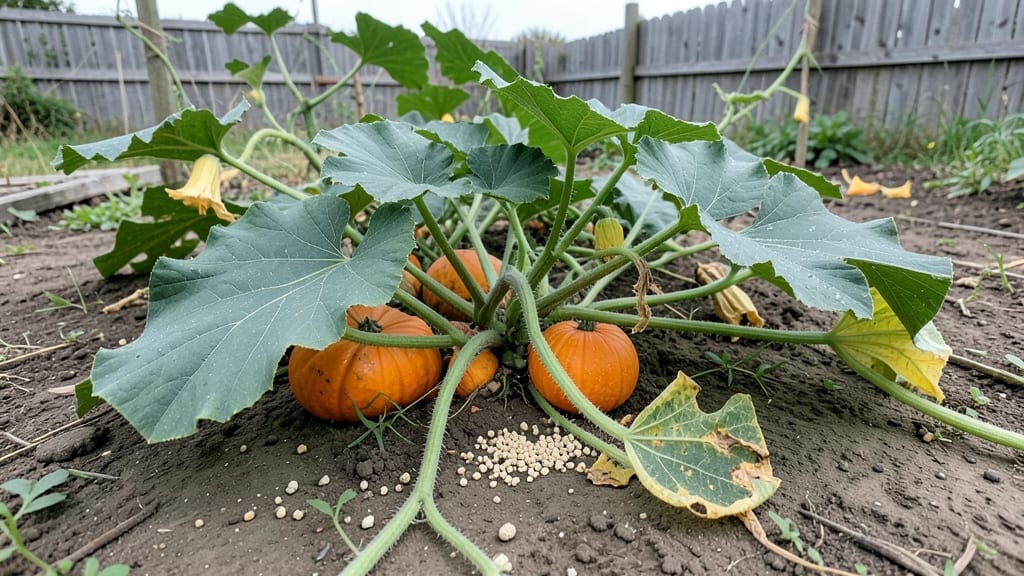
Fertilizing pumpkin plants 🎃 is the secret weapon behind those monster-sized gourds you’ve always wanted—without it, your vines might just give up before they ever produce.
Picture this: you’ve planted your seeds in USDA Zone 6a during that sweet April-May window, and the vines are sprawling—but the fruit stays small or never sets. The issue isn’t just water or sun; it’s the nutrients your pumpkins are starving for.
Too little, and they’ll struggle to grow; too much, and you’ll end up with leafy monsters instead of fruit.
Here’s the good news: with the right N-P-K ratios and timing, you can turn those vines into a harvest-worthy powerhouse. We’ll walk you through organic vs. synthetic options, when to feed (hint: it’s not just once), and how to spot when you’ve gone overboard.
By the end, you’ll know exactly how to feed your pumpkins for maximum growth, whether you’re a seasoned gardener or just starting out. Let’s get those vines producing!
Understanding N-P-K ratios for pumpkin growth stages
Pumpkins are heavy feeders, and their nutritional needs shift dramatically from seedling to fruiting stages. The N-P-K ratio—nitrogen, phosphorus, and potassium—must align with each growth phase to maximize yields.
Too much nitrogen too late can delay fruiting, while insufficient potassium weakens vines during harvest. Let’s break down the science behind fertilizing pumpkins at every stage.
Nitrogen (N) fuels leafy vine growth, phosphorus (P) supports root and flower development, and potassium (K) strengthens disease resistance and fruit quality. The key is balancing these nutrients like a chef adjusting spices—too much of one ingredient ruins the dish.
For pumpkins, this means adjusting ratios from 3-1-2 for seedlings to 1-2-3 during fruiting.
Here’s how to tailor your fertilization strategy to each growth phase, ensuring your pumpkins grow strong vines, abundant flowers, and massive fruits. The table below provides expert-recommended blends for every stage, along with application tips to avoid common mistakes.
Before diving into ratios, test your soil’s pH—pumpkins thrive in 6.0-7.0 range. Amend acidic soil with lime and overly alkaline soil with sulfur. Organic matter like compost also improves nutrient uptake, reducing the need for synthetic fertilizers.
Now, let’s explore the three critical stages of pumpkin growth and the ideal N-P-K ratios for each. Understanding these phases will help you avoid over-fertilizing young plants or starving mature vines of the nutrients they need to produce heavy fruits.
🌱
The seedling stage (0-4 weeks) is all about building a strong foundation. Young pumpkin plants need high nitrogen to develop lush, sprawling vines. A ratio like 3-1-2 (e.g., 10-5-10 fertilizer) encourages rapid leaf growth while providing just enough phosphorus and potassium for early root development.
Organic options like fish emulsion or compost tea are excellent choices here—they release nutrients slowly, preventing root burn.
At this stage, avoid granular fertilizers near seeds or young sprouts. Instead, apply a light side-dressing 2 inches away from the stem when plants are 2-3 inches tall.
Repeat at 4 weeks to sustain growth without overwhelming the delicate seedlings. Over-fertilizing now can lead to leafy vines with no flowers, a common mistake among beginners.
🌿
By the time your pumpkins reach the vegetative stage (4-8 weeks), they should be establishing a robust root system and producing male and female flowers. This is where you shift to a balanced N-P-K ratio like 2-2-1.
Phosphorus becomes critical for flower and fruit set, while nitrogen levels decrease slightly to prevent excessive vine growth at the expense of fruiting. Organic amendments like bone meal or kelp meal provide phosphorus without the risk of salt buildup from synthetic fertilizers.
During this phase, pay close attention to flower production. If you notice mostly male flowers (long stems with no bulb at the base), your plants may need more phosphorus. Female flowers (small bulges at the stem base) signal readiness for fruiting.
Apply fertilizer every 3 weeks to maintain steady nutrient availability. Pair this with a mulch layer of straw or grass clippings to retain moisture and regulate soil temperature.
☀️
The fruiting stage (8+ weeks) is where pumpkins demand the most careful fertilization. As fruits begin to
Organic vs. synthetic fertilizers: best options for pumpkins
Choosing the right fertilizer for your pumpkin plants can make the difference between small, underdeveloped fruits and monster-sized pumpkins you’ll brag about at harvest. Both organic and synthetic fertilizers have their strengths, but understanding their unique benefits helps you decide which aligns best with your gardening goals and pumpkin variety.
Pumpkins are heavy feeders, requiring a steady supply of nitrogen for vine growth, phosphorus for root development, and potassium for fruit production. Organic options like compost and manure provide slow-release nutrients, while synthetic fertilizers offer precise NPK ratios tailored to specific growth stages.
Let’s break down the pros and cons to help you fertilize like a pro.
- Improves soil health long-term
- Slow-release nutrients reduce burn risk
- Cost-effective for large gardens
- Enhances microbial activity in soil
- Slower results compared to synthetic
- Requires pre-planning (composting time)
- Odor issues with manure-based options
- Precise NPK ratios for targeted growth
- Fast-acting for quick vine/fruit development
- Easy to measure and apply
- Compact storage (no bulk compost needed)
- Can cause nutrient burn if overapplied
- Depletes soil organic matter over time
- Higher upfront cost for premium brands
- Sustainable gardens and organic growers
- Long-term soil improvement
- Large-scale plantings (e.g., pumpkin patches)
- Quick results in competitive growing
- Container gardening with controlled feeding
- Precise nutrient control (e.g., 10-10-10 blends)
For organic fertilization, I recommend starting with a 5-5-5 compost or aged manure (like cow or horse) mixed into the soil before planting. During the growing season, top-dress with fish emulsion (5-1-1 NPK) every 4-6 weeks to boost growth.
Organic options like worm castings or kelp meal also provide micronutrients pumpkins crave, especially during flowering.
If you prefer synthetic fertilizers, opt for a balanced 10-10-10 blend during early vine growth, then switch to a 5-10-10 ratio once flowers appear to encourage fruiting. Slow-release granules (like Osmocote) are ideal for container-grown pumpkins, as they minimize the risk of nutrient leaching from frequent watering.
Always follow package instructions to avoid over-fertilization, which can stunt growth.
My personal favorite for pumpkins? A hybrid approach: Use organic matter (compost) as a base, then supplement with synthetic fertilizers during critical growth stages. This gives you the soil benefits of organics while ensuring your vines get the quick nutrients they need for monster pumpkins.
Just remember—less is often more when it comes to fertilizing these heavy feeders!
🎃