Watering
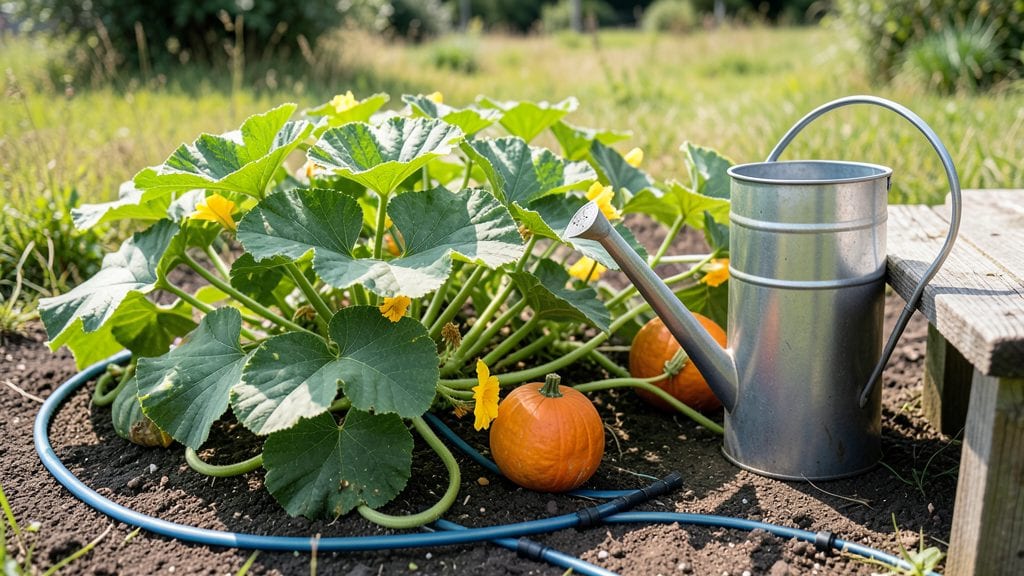
Watering pumpkin plants 🎃 correctly is the secret to turning sprawling vines into a bounty of plump, sweet fruit—yet even experienced gardeners struggle with the balance.
Too little water and your pumpkins shrivel; too much and you risk rot or mildew. I’ve lost entire patches to both mistakes, which is why I now follow a strict morning routine that keeps my plants thriving from seedling to harvest.
Here’s the exact schedule I use—when to water, how deep, and how to spot trouble before it starts—so you can avoid my early-season disasters and end up with a garden full of healthy, productive vines.
You’ll learn the optimal timing, seasonal adjustments, and telltale signs that your pumpkins are either thirsty or drowning, plus the one trick that saves my harvest every year.
Optimal watering schedule for pumpkin plants by growth stage
Pumpkin plants are thirsty creatures, especially during their rapid growth phases. Watering too much or too little can stunt vines or cause blossom-end rot in fruit. My secret to bountiful pumpkins?
Following a stage-specific watering schedule that adapts to your plant's needs—from delicate seedlings to heavy fruit-bearing vines. Let’s break it down by week and growth phase so you never guess again.
First, understand that pumpkins need 1-2 inches of water per week during active growth, but this changes dramatically as they mature. Soil type matters too: sandy soil dries faster than clay, so adjust accordingly.
In hot climates, you may need to water daily during peak summer months, while cooler regions can stretch watering to every 5-7 days once fruit sets. The key is deep, consistent moisture at the root zone.
During the seedling stage (weeks 1-3), focus on keeping the soil consistently moist but never waterlogged. Young pumpkin roots are shallow, so a light misting every 2-3 days works best. Use a spray bottle or fine rose attachment to avoid disturbing tender sprouts.
If your seedlings look wilted by midday, they’re thirsty—give them a quick drink. Overhead watering here can spread disease, so aim for the base.
As vines establish in weeks 4-6, increase water depth to 1 inch per session and space sessions to every 3-4 days. This phase is about building strong roots to support future fruit.
I like to use a soaker hose buried 2 inches deep to deliver water directly to roots while keeping foliage dry. Morning watering is non-negotiable—it gives leaves time to dry, reducing fungal risks like powdery mildew.
When flowers appear (weeks 7-9), your watering game changes. Pumpkins need 1.5 inches of water every 3-5 days to support heavy blossoms. Skimping now means fewer pollinated flowers and smaller fruit. Water at the vine’s base, not the leaves, to protect delicate blooms.
Pro tip: If your pumpkin plants drop flowers, they’re thirsty—boost water immediately. Consistency is key during this phase.
Once fruit forms (weeks 10-14), ramp up to 2 inches of water every 2-3 days. This is when pumpkins demand the most hydration to prevent blossom-end rot (a common issue from uneven moisture).
I’ve found that drip irrigation works wonders here—it delivers water slowly and directly to roots while keeping the soil evenly moist. Avoid wetting fruit surfaces, as this can lead to rot or sun scald.
In the final 2 weeks before harvest, reduce watering to 1 inch every 5-7 days. This helps the pumpkin’s rind harden and sweetens the flesh. If you’re growing for storage pumpkins, this step is crucial—wet rinds won’t cure properly.
Watch for yellowing vines, a sign your pumpkins are nearly ready. Harvest on a dry day to extend shelf life.
Climate plays a huge role in your schedule. In hot, dry climates, you may need to water daily during summer, while cooler regions can stretch watering to every 7 days.
Always check soil moisture by sticking your finger 2 inches deep—if it’s dry, it’s time to water. Mulch heavily with straw to retain moisture and suppress weeds, which compete for water. With this stage-by-stage approach, you’ll grow pumpkins that are plump, disease-free, and ready for harvest.
Remember, every garden is unique. Adjust based on your soil type, rainfall, and pumpkin variety. Smaller varieties like ‘Jack Be Little’ need less water than giant ‘Atlantic Giants.’ Keep a watering journal to track what works best in your space—your future harvests will thank you! 🎃
Signs of overwatering vs underwatering in pumpkin plants
Pumpkins need consistent moisture but struggle with water extremes. Yellowing leaves or wilting vines often signal trouble—but is it too much or too little? Let’s decode the visual clues and physical symptoms so you can rescue your crop before it’s too late.
First, check the soil moisture. Stick your finger 2 inches deep—if it’s soggy, you’re overwatering. If dry, it’s time to hydrate. Leaf texture and vine growth also reveal the truth, helping you adjust before blossoms drop or fruit cracks.
Overwatering vs Underwatering: Quick Fixes
Overwatering 🌧️
- Yellow leaves (especially lower)
- Mushy stems or blackened roots
- Slow growth despite wet soil
- Fungal spots on leaves
Underwatering 💦
- Wilted leaves (even in morning)
- Dry, crispy edges on leaves
- Drooping vines that don’t bounce back
- Blossoms fall off without pollinating
Overwatered pumpkins show yellowing leaves first, often with mushy stems or blackened roots. If you see fungal spots or slow growth despite wet soil, stop watering immediately and amend the soil with compost or perlite to improve drainage. Root rot can kill plants in days, so act fast!
Underwatered pumpkins wilt dramatically, with crispy leaf edges and drooping vines. If leaves stay wilted even after watering, your plant is severely stressed.
Water deeply at the soil base (not just the surface) and apply 2-3 inches of mulch to retain moisture. Morning watering is key—it gives roots time to absorb before evening evaporation.
Watch for blossom drop, a classic sign of water stress. Whether from over- or underwatering, dropped flowers mean lost fruit. Adjust your watering gradually—pumpkins hate sudden changes. Use a moisture meter or the finger test to monitor soil conditions daily during hot, dry spells.
Pro tip: Mulch heavily (straw or shredded leaves) to lock in moisture and prevent temperature swings that stress roots. If your pumpkins are cracking or deforming, inconsistent watering is likely the culprit. Keep soil evenly moist (not soggy or bone-dry) for plump, healthy fruit.