
Watering
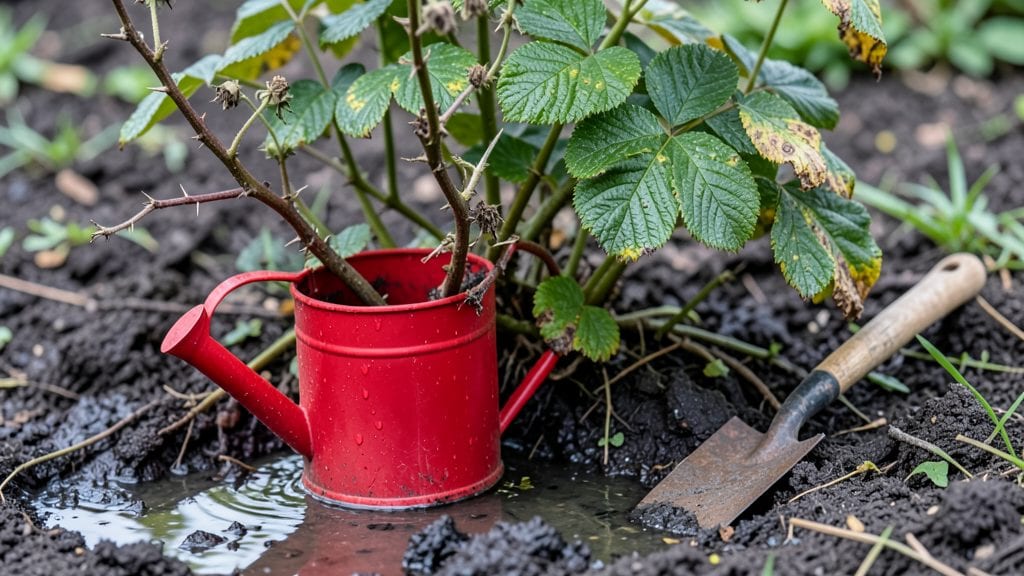
That overwatered raspberry plant might be drowning in water, not thriving—yellow leaves and mushy stems are classic overwatering red flags. 🌱 I’ve nursed back more soggy raspberry canes than I’d like to admit, and the fix is simpler than you’d think.
The key? Stopping the water first, then giving roots room to breathe.
Most gardeners overdo it because raspberries love moisture—but their roots need oxygen too. Start by cutting back watering to once a week (or less in rain), then loosen the soil around the base to improve drainage. If the stems feel soft, prune those sections immediately—they’re already rotting.
Within two weeks, you’ll see fresh green growth as the plant recovers. The real secret is checking soil moisture with your finger before watering—if it’s still damp an inch down, wait another day. This simple habit keeps raspberries productive for years.
Works for backyard patches, raised beds, or even container-grown bushes. Once you’ve saved one, you’ll spot the signs early next time—no more soggy disasters. Let’s get those canes back in shape!
Root Causes Of Excess Moisture
Overwatering raspberry plants is rarely accidental—it’s usually the result of well-intentioned but misinformed care. Understanding the root causes helps you adjust your approach before your bush turns into a soggy, disease-prone mess. Let’s break down why this happens, so you can fix it fast.
Raspberries thrive in well-draining soil, but many gardeners unknowingly create a swampy environment. Here’s why:
- Clay-heavy or compacted soil: Clay retains water like a sponge, suffocating roots. If your soil feels sticky when damp or forms hard clumps, it’s a red flag.
- No raised beds or mounds: Raspberry roots need oxygen. Planting in flat ground or low spots traps water, leading to rot.
- Lack of organic matter: Soil rich in compost or sand improves drainage, but if your mix is too dense (e.g., pure peat or heavy mulch), water pools instead of draining.
✨ Pro Tip: Test your soil’s drainage by digging a 6-inch hole, filling it with water, and timing how long it takes to drain. If it’s still wet after 4 hours, amend with perlite or coarse sand.
Even with good soil, watering too much or too often drowns raspberries. Common mistakes include:
- Watering on a schedule, not by need: Raspberries need 1–1.5 inches of water per week (including rain). If you’re watering daily, you’re likely overdoing it.
- Ignoring weather conditions: Heavy rain + your watering routine = double the moisture. Use a rain gauge or check soil moisture before watering.
- Shallow watering: A light sprinkle wets only the top inch of soil. Roots need deep, infrequent watering to encourage growth downward.
💡 Quick Fix: Stick your finger 2 inches into the soil. If it’s damp, wait. If it’s dry, water deeply until moisture reaches 6 inches down.
Healthy roots breathe, but when they’re smothered, they suffocate. Causes include:
- Thick mulch piles: Mulch should be 2–3 inches deep, not a mountain. Too much blocks airflow and traps moisture.
- Root-bound pots: If your raspberry is in a container, roots may circle and compact, reducing drainage. Repot if roots are visible above the soil.
- Weeds or debris: A tangled mess of grass or leaves around the base can block water evaporation and encourage fungal growth.
🔥 Action Step: Fluff mulch away from the stem (keep it 6 inches from the base) and clear debris to improve airflow.
Sometimes, the problem isn’t you—it’s the weather or your garden’s setup. Watch for:
- Low-lying planting spots: Raspberries hate "wet feet." If your garden has natural depressions, create a slight mound or install a French drain.
- High humidity + poor airflow: Raspberries need circulation. Crowded plants or dense foliage trap moisture, inviting diseases like botrytis.
- Cold, wet springs: If your area gets frequent rain in early growth stages, consider a drip irrigation system for controlled watering.
🎯 Prevention Tip: Space raspberry canes 18–24 inches apart and prune for airflow. A small fan on a timer (yes, really!) can help in humid climates.
An overwatered plant is a magnet for trouble. Check for:
- Slugs/snails: They thrive in damp soil and chew young canes, weakening the plant’s ability to handle stress.
- Fungal infections (e.g., powdery mildew): Excess moisture creates the perfect breeding ground. Look for white fuzzy patches on leaves.
- Root rot: Soft, mushy roots with a foul smell? That’s a sign of Phytophthora, a waterlogged soil pathogen.
🔪 Emergency Move: If root rot is suspected, trim affected roots with sterilized scissors, repot in fresh, dry soil, and avoid watering for 3–5 days.
Revive & Prevent Over-Soaked Plants
Now that you know the signs and causes of an overwatered raspberry plant, it’s time to take action! The good news? With the right steps, you can nurse your bush back to health and keep future watering woes at bay.
Below are practical, step-by-step solutions tailored to the most common causes—plus prevention tips to avoid repeating the mistake.
Cause: Continuous moisture without drying periods Fix: Let the soil dry out before watering again.
- Check soil moisture by sticking your finger 1–2 inches deep into the soil. If it’s damp, wait another 24–48 hours before watering. - Avoid overhead watering (like sprinklers), which can lead to fungal issues.
Instead, use a drip irrigation system or soaker hose to deliver water directly to the roots. - Pro tip: 💡 If your plant is severely waterlogged, hold off on watering for 3–5 days to allow excess moisture to evaporate.
Cause: Compacted or poorly draining soil Fix: Amend the soil and create better airflow.
- Test your soil’s drainage by digging a small hole (6 inches deep) and filling it with water. If it takes longer than 1 hour to drain, your soil is too dense. - Add organic matter like compost, perlite, or coarse sand to improve drainage.
Mix in 1–2 inches of amendments around the base of the plant. - Raise the plant bed (if possible) by mounding soil or using raised garden beds to prevent water pooling. - Pro tip: 🌡️ If your raspberries are in containers, ensure pots have drainage holes and use a well-draining potting mix (like a 50/50 blend of peat moss and perlite).
Cause: Excess moisture promoting mold or rot Fix: Fungicide and airflow adjustments.
- Prune affected leaves (yellow, mushy, or spotted) with sterilized scissors to prevent spread. - Apply a fungicide (copper-based or neem oil) to stop fungal growth.
Follow label instructions for best results. - Thin out foliage to improve air circulation—remove 10–20% of the bush to allow sunlight and airflow. - Pro tip: ✨ Prevent future fungal issues by watering early in the morning (so leaves dry quickly) and avoiding mulch too close to the stem.
Cause: Inconsistent or excessive watering routines Fix: Smart watering strategies for raspberry health.
| Situation | Solution | Frequency |
|---|---|---|
| Newly planted raspberries | Water deeply 2–3 times per week (1–1.5 gallons per plant). | Every 2–3 days |
| Established plants | Water 1–2 times per week (depending on climate). | Every 5–7 days (check soil) |
| Hot/dry weather | Increase watering to every 2–3 days, but ensure soil dries between sessions. | Adjust as needed |
| Rainy season | Reduce watering—raspberries can handle natural rainfall if soil drains well. | Skip if soil is soggy |
- Pro tip: 🎯 Use a moisture meter ($10–$20) to track soil dampness accurately—no more guesswork!
Now that your plant is on the mend, lock in these habits to avoid future overwatering:
- ⏰ Water in the morning (6–9 AM) to allow foliage to dry before evening.
- 🌡️ Monitor weather—adjust watering during heatwaves or heavy rains.
- 🔍 Inspect soil weekly—stick your finger in the dirt to gauge moisture.
- 🌱 Mulch correctly—use 2–3 inches of straw or wood chips, but keep it 3–4 inches away from the stem to prevent rot.
- 🌿 Choose the right location—raspberries need 6+ hours of sunlight and well-draining soil (avoid low spots where water pools).
Final Thought: 🔥 Overwatering is fixable—act fast, adjust drainage, and tweak your routine. With these steps, your raspberry bush will bounce back stronger, and you’ll enjoy juicy berries for seasons to come! 🍓
Frequently asked questions
How do I tell if my raspberry bush is overwatered vs. underwatered?
Check the leaves and stems: overwatered plants have yellowing lower leaves, mushy stems, and possibly mold. Underwatered plants show crispy brown edges and drooping foliage. The key difference? Overwatered soil stays damp for days, while underwatered soil is bone-dry.
Can I save a raspberry plant with root rot from overwatering?
Yes, but act fast! Trim all mushy, black roots with clean scissors, repot in fresh, dry soil with perlite, and stop watering for 3-5 days. Move to a sunnier spot and water only when soil is completely dry. Recovery takes 2-3 weeks if you catch it early.
What's the best way to test soil moisture for raspberries?
Use the finger test: Stick your index finger 1-2 inches deep into the soil. If it feels damp, wait. If dry, water deeply until moisture reaches 6 inches down. For containers, lift the pot—if it's light, water; if heavy, wait. A moisture meter ($10) gives precise readings.
Why do my raspberry leaves turn yellow after watering?
Yellow leaves usually mean root suffocation from poor drainage or overwatering. Check for soggy soil and stems. If the yellowing spreads upward, it's likely fungal from excess moisture. Prune affected leaves, improve airflow, and reduce watering immediately.
How often should I water raspberries in containers vs. garden beds?
Containers dry faster: water every 2-3 days in summer, checking soil daily. Garden beds need 1-1.5 inches per week (including rain). In winter, reduce to once every 10-14 days unless it's extremely dry. Always prioritize drainage—containers must have holes!