
Fertilization
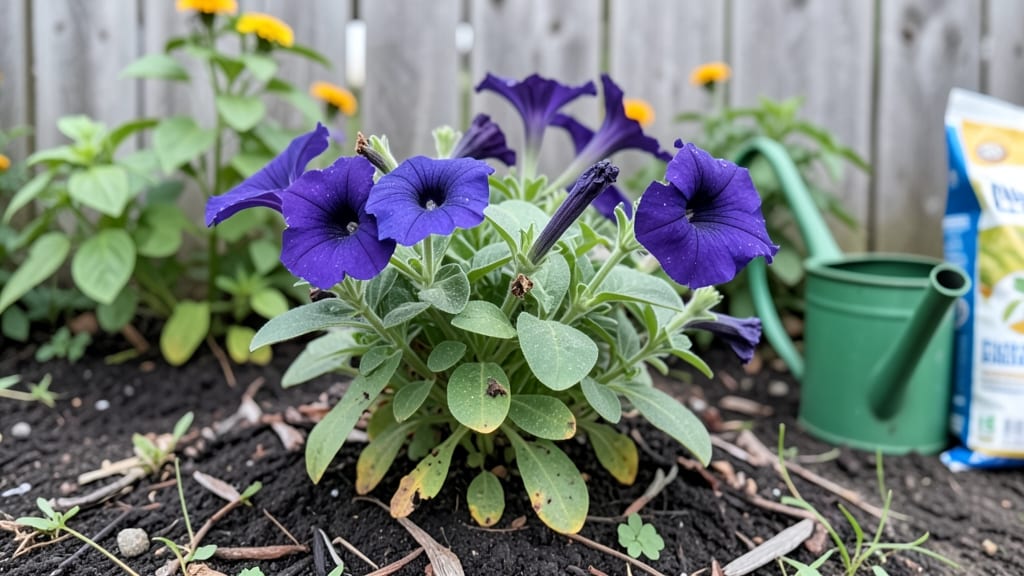
My petunia plant food formula is all about turning those underwhelming blooms into a nonstop floral explosion—the kind that makes neighbors stop and stare. 🌸 I’ve wasted money on generic fertilizers that promised "big blooms" but delivered half-hearted flowers and leaf burn instead.
The secret isn’t just any plant food—it’s the right balance of nutrients, timing, and a few DIY tricks that keep petunias thriving without the chemical crash.
Start with a balanced, water-soluble fertilizer (10-10-10 or 20-20-20) for initial growth, then switch to a high-phosphorus feed (like 5-10-5) once buds form. Organic options like compost tea or worm castings work too—just dilute them to avoid shocking roots.
The key is feeding every 2 weeks during the growing season, but cutting back in late summer to let plants harden off before frost. Overdo it, and you’ll get leafy monsters with no flowers; skip it, and blooms fizzle fast.
By mid-summer, your petunias will be bursting with vibrant blooms that last for weeks, not days. The flowers stay lush and colorful, and you’ll actually use the plants instead of tossing them when they look sad by August.
This isn’t rocket science—just smart feeding that matches petunias’ natural hunger for nutrients. Ready to turn your garden into a petunia paradise?
Works for container gardens, hanging baskets, or in-ground beds—just adjust watering to avoid runoff. The same principles apply whether you’re growing trailing varieties or bush types. Let’s get those blooms popping!
📚 In This Guide
- What you need
- Instructions
- Tips and common mistakes
- Wrapping up and next steps
What you need
- ● Balanced liquid fertilizer (e.g., 10-10-10 or 20-20-20 NPK ratio) – 1-2 tbsp per gallon of water
- ● Slow-release granular fertilizer (10-10-10 or 14-14-14) – 1 cup per 10 sq ft of soil
- ● Compost or organic matter (e.g., worm castings, aged manure) – 1-2 inches mixed into soil
- ○ Phosphorus-rich fertilizer (e.g., bone meal) – 1 tbsp per plant (optional for blooming boost)
- ● Watering can or hose with a gentle spray nozzle
- ● Garden gloves (to protect hands from soil and fertilizers)
- ● Measuring scoop or spoon (for precise fertilizer doses)
- ● pH test kit (ideal soil pH: 6.0–7.0)
- ● Pruning shears (for deadheading spent blooms)
- ● Sunlight access (petunias thrive in full sun, 6+ hours daily)
- ● Fish emulsion or seaweed extract (for extra micronutrients)
- ● Mulch (straw or shredded leaves) (to retain moisture)
- ● Epsom salt (magnesium sulfate) (1 tbsp per gallon, monthly for greener leaves)
- ● Automatic drip irrigation system (for consistent hydration)
Step-by-Step instructions for feeding petunias for maximum blooms
Here's how I keep my petunias flowering nonstop with this simple, science-backed feeding routine.
🌿 Step 1: Test Soil pH Before Feeding
Petunias thrive in slightly acidic soil with a pH between 6.0 and 7.0. Grab a small soil sample from around your plants and test it using a digital pH meter or soil test kit. If the reading is below 5.5 or above 7.5, amend the soil first—petunias won't absorb nutrients properly outside this range.
I like to test in the morning when soil is cooler and moisture levels are stable. If your soil is too acidic, sprinkle garden lime lightly and mix it into the top 4 inches of soil. For alkaline soil, work in sulfur granules according to package instructions. Wait 2 weeks after amending before feeding to let the pH stabilize.
💧 Step 2: Apply Liquid Bloom Booster Weekly
Use a balanced liquid fertilizer (like 10-10-10) mixed at half-strength—this prevents root burn while delivering consistent nutrients. Fill your watering can with 1 gallon of water and add 1 tablespoon of fertilizer. Stir well until fully dissolved.
Water the soil around your petunias until it's evenly moist to a depth of 6 inches. Avoid wetting the leaves directly—this can cause fungal issues. I feed every Monday morning so it's part of my routine, but any consistent schedule works. Stop fertilizing 6 weeks before first frost to let plants harden off naturally.
☀️ Step 3: Supplement with Phosphorus for Heavy Blooming
For extra-vibrant flowers, switch to a phosphate-rich fertilizer (like 5-10-5) every 4th feeding. Mix 1 teaspoon per gallon of water and apply as a soil drench. Phosphorus triggers more abundant blooming, but don't overdo it—excess phosphorus can harm roots.
Watch for dark green foliage and abundant buds—this is your sign the phosphorus is working. If you notice purple tinges on leaves, that's a classic phosphorus deficiency. In that case, increase the frequency of your phosphate-rich feedings to every 2 weeks until new growth shows healthy color.
✂️ Step 4: Deadhead and Feed After Each Pruning
After removing spent blooms, give your petunias a light feeding with fish emulsion (mixed at 1 tablespoon per gallon). This provides organic nutrients that encourage rapid regrowth. Deadheading stimulates new flower production, but the plant needs extra energy to support those fresh buds.
I prune in the late afternoon when temperatures are cooler, then feed immediately. The combination of fresh cuts and nutrients prevents leggy growth while keeping the plant compact. If you see yellowing leaves after pruning, that's normal—just reduce feeding temporarily and focus on watering deeply instead.
🪴 Step 5: Adjust Feeding for Container-Grown Petunias
Petunias in pots need more frequent feeding because nutrients leach out faster. Use the same half-strength liquid fertilizer but apply it every 5-7 days during peak blooming season. Water thoroughly after each feeding to help dissolve and distribute nutrients.
Check the soil moisture daily—container soil dries out quicker. If the top 1 inch feels dry, water first, then feed. Overwatering in pots causes root rot, so always let the top ½ inch dry out between waterings. In hot, dry weather, I add mulch rings around container edges to slow moisture loss and keep roots cool.
Tips & tricks for perfect petunia plant food application
A few strategic adjustments can transform your petunias from merely blooming to bursting with vibrant, long-lasting flowers.
Soil pH Precision: In Step 1, when testing soil pH, I recommend using a digital pH meter over test kits for its immediate, precise readings. The ideal 6.0-7.0 range is critical—petunias won't absorb nutrients properly outside this window. If your soil tests at 5.5 or below, don't rush to amend! Garden lime takes 2 weeks to stabilize, and applying it too soon can actually lock out nutrients. Mark your calendar and be patient.
Fertilizer Mixing Technique: For Step 2, when mixing your half-strength 10-10-10 fertilizer, use a clean watering can exclusively for this purpose. Leftover fertilizer residue can build up and alter future mixes. Stir vigorously for 30 seconds to ensure complete dissolution—undissolved granules can burn roots. I also recommend mixing fresh each week rather than storing pre-mixed solution, as nutrients degrade over time.
Phosphorus Timing Strategy: The 4th feeding phosphorus boost in Step 3 is where petunias show their most dramatic response. Watch for dark green foliage with purple undersides—this indicates phosphorus is working. If you notice purple tinges on upper leaves instead, that's a deficiency signal. At this point, switch to the every 2-week schedule until you see new growth with healthy green color throughout, not just on the undersides.
Container Care Nuances: For container-grown petunias in Step 5, the 5-7 day feeding frequency is non-negotiable during peak season. I've found that adding ½ inch of mulch around container edges creates a microclimate that reduces watering needs by 20-30%. This mulch layer also insulates roots, preventing temperature swings that stress plants. Always check moisture by inserting your finger 1 inch deep—surface dryness doesn't tell the full story.
Pro Tips for Petunia Plant Food
- A few strategic adjustments can transform your petunias from merely blooming to bursting with vibrant, long-lasting flowers.
- Soil pH Precision: In Step 1, when testing soil pH, I recommend using a digital pH meter over test kits for its immediate, precise readings.
- Fertilizer Mixing Technique: For Step 2, when mixing your half-strength 10-10-10 fertilizer, use a clean watering can exclusively for this purpose.
Frequently asked questions
Got questions about keeping your petunias blooming like crazy? We’ve got answers!
Whether you’re a first-time gardener or a seasoned green thumb, these FAQs will help you avoid common pitfalls and maximize those vibrant blooms.
How often should I feed petunias?
Feed petunias every 2–4 weeks during the growing season (spring to fall). Once blooms start fading, switch to a low-nitrogen, high-phosphorus fertilizer to encourage more flowers. Overfeeding can burn roots—always follow label instructions!
Can I use petunia plant food too early?
Yes, but wait until seedlings have 4–6 true leaves (about 3–4 weeks after sowing). Feeding too soon can stress young plants. For transplants, start fertilizing 1–2 weeks after planting to avoid shock.
What’s a good alternative if I don’t have petunia-specific food?
Use a balanced liquid fertilizer (10-10-10 or 20-20-20) diluted to half-strength, or a tomato/flower fertilizer. Avoid high-nitrogen lawn foods—they’ll give you lush leaves but fewer blooms!
Why are my petunias not blooming after fertilizing?
Check these fixes:
- Deadhead spent blooms regularly to encourage new flowers.
- Ensure they get 6+ hours of sunlight daily—shady spots reduce blooming.
- If leaves are yellow, you might be overwatering or using too much nitrogen.
Can I fertilize petunias in extreme heat?
In temperatures above 90°F (32°C), reduce feeding to every 6–8 weeks or use a slow-release fertilizer. Heat stress can burn roots—water deeply in the morning to help.
| Issue | Quick Fix |
|---|---|
| Leggy stems | Switch to low-nitrogen food + prune tips to encourage bushiness. |
| Brown edges on leaves | Flush soil with water to remove excess salts from fertilizer. |
Wrapping up and next steps
Choosing the right petunia plant food is your secret weapon for a garden bursting with color! Whether you opt for organic compost, balanced synthetic fertilizers, or DIY blends like banana peels and eggshells, consistency is key.
A little extra care now means months of stunning blooms—so get excited for those Instagram-worthy petunias! 🌸
Ready to take action? Start by testing your soil this weekend, then pick your fertilizer and feed your petunias every 2-4 weeks for non-stop beauty. Happy gardening!