
Pruning
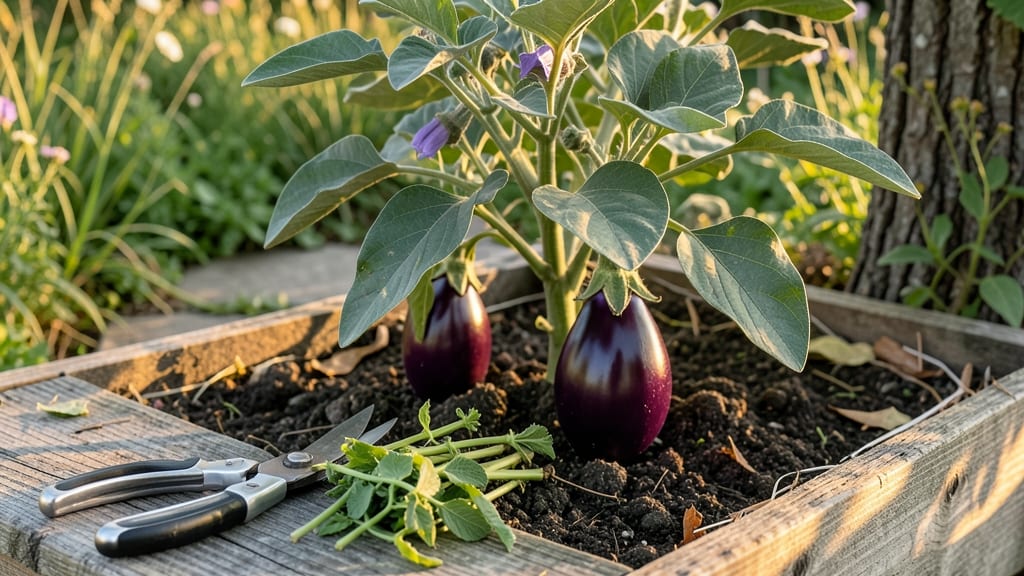
Pruning aubergine plants might seem intimidating, but it’s the secret to year-round harvests—and I’ve learned the hard way that skipping it means fewer, smaller fruits. My first eggplant season produced just six sad, undersized fruits because I ignored the pruning step.
Now, I get dozens by shaping the plant right from the start. The key is timing: three strategic cuts at the right moments transform a wild, sprawling bush into a productive machine.
You’ll need sharp pruning shears, a clean cutting surface, and about 20 minutes to tackle each plant. Focus on three areas: removing suckers (those little shoots between stems and branches), thinning crowded leaves to improve airflow, and cutting back any leggy or damaged growth.
Most gardeners mess up by pruning too late in the season—wait until the plant has 4-5 main stems before making your first cuts, and always leave at least two leaves above any cut to keep the plant fed.
After pruning, your plants will rebound with bold new growth within days, and the remaining flowers will set fruit faster. The first trim happens when plants hit 12-18 inches tall, the second just before flowering to encourage stronger branches, and the third after harvest to prep for another round.
The payoff? Fruits stay larger, firmer, and more abundant—and you’ll extend your harvest by 3-4 weeks into cooler months.
This works for both container-grown and in-ground eggplants, though dwarf varieties need lighter pruning. Fair warning: over-pruning stresses the plant, so start conservative if you’re new to this. Once you master the rhythm, you’ll wonder how you ever grew them without shaping them first.
📚 In This Guide
- What you need
- Instructions
- Tips and common mistakes
- Wrapping up and next steps
What you need
- ● Pruning shears: Bypass pruners (sharp, clean, and sterilized with rubbing alcohol or bleach) to avoid disease spread. Quantity: 1 pair.
- ● Garden gloves: Nitrile or leather (thick enough to protect against thorns and sap). Quantity: 1 pair.
- ● Disposable pruning bags: Plastic or paper bags (for collecting trimmings). Quantity: 2–3 bags.
- ● Hose or water spray bottle: For rinsing tools and cleaning wounds on plants.
- ○ Pruning sealant (optional): Bee’s wax or tree wound paint (to protect large cuts).
- ● Hand pruners: For smaller branches (if bypass shears are too bulky).
- ● Loppers: For thicker stems (if your aubergine plants are mature).
- ● Spray bottle with neem oil: To disinfect tools and deter pests post-pruning.
- ● Notebook & pen: To track pruning dates and plant responses.
- ● Compost bin or pile: For recycling healthy trimmings.
Instructions for pruning aubergine plants to maximize fruit production
Here’s the precise, three-phase approach I’ve used to coax aubergines into producing fruit continuously throughout the growing season.
Perform the Initial Pruning to Establish a Strong Framework
Begin pruning when your aubergine plants reach 12-18 inches tall and have developed 4-6 true leaves. At this stage, focus on removing any weak or leggy growth—these are stems that stretch toward light but lack thickness. Use clean, sharp pruning shears to make cuts just above a leaf node or branch junction, ensuring you leave a small bump of tissue to prevent disease entry.
Remove any suckers (small shoots growing between the main stem and branches) that appear in the lower third of the plant. These compete for energy with fruit production, and eliminating them early directs nutrients toward stronger, higher-yielding branches. If you see any yellowing or diseased leaves, remove them immediately to prevent the spread of pathogens.
Maintain the Plant Through Mid-Season with Strategic Trimming
Once flowering begins, shift your focus to balancing growth and fruit load. Prune any branches that grow toward the center of the plant, as these create dense foliage that blocks airflow and encourages fungal diseases like powdery mildew. Aim to keep the plant open and airy, with sunlight reaching all sides. Cut back any branches that angle downward, as these rarely produce fruit and drain energy from the plant.
When you notice fruit beginning to form, prioritize removing any flowers or small fruits that develop on the lower third of the plant. This ensures the plant focuses its energy on the upper branches, where larger, more productive fruit will develop. Limit yourself to 3-4 large fruits per branch—overloading a single branch weakens the plant and reduces overall yield.
Implement Late-Season Pruning to Extend the Harvest Window
As the growing season progresses and you notice fruit production slowing, perform a final pruning to stimulate new growth. Cut back any branches that have finished fruiting by one-third of their length, making the cut just above a leaf node. This encourages the plant to produce new shoots, which can then be guided to bear additional fruit. Avoid pruning too late in the season—stop at least 4-6 weeks before your first expected frost to allow new growth enough time to mature.
In late summer, if your aubergine plant still looks vigorous, you can lightly trim any overly long or unproductive branches to redirect energy toward remaining flowers. This is especially useful if you’re growing in a warm climate where the season extends well into fall. Always prune in the early morning or late afternoon to reduce stress on the plant from heat and sun exposure.
Post-Pruning Care to Ensure Plant Recovery
After each pruning session, water the plant deeply to help it recover. Aubergines are sensitive to sudden changes, so avoid heavy pruning during periods of drought or extreme heat. Apply a balanced, water-soluble fertilizer (such as a 10-10-10 mix) 3-5 days after pruning to support new growth. Monitor the plant closely for signs of stress, such as wilting or yellowing leaves, and adjust your care routine accordingly.
Finally, keep an eye out for any new suckers or weak growth that may develop after pruning. These should be removed promptly to maintain the plant’s energy focus on fruit production. With consistent pruning and care, your aubergine plant will continue producing high-quality fruit well into the late season.
Tips & tricks for pruning aubergine plants
Mastering the art of pruning aubergine plants transforms a single harvest into a year-round bounty. The key lies in understanding when to intervene and how to redirect the plant's energy for maximum productivity.
Timing is Everything: The initial pruning at the 12-18 inch mark establishes your plant's framework, but don't rush this step. Aubergines need time to develop their structural strength before aggressive pruning. I've found that waiting until you see 4-6 true leaves ensures the plant has enough energy reserves to recover. In cooler climates, this might take slightly longer—watch for leaves unfolding rather than relying strictly on height measurements.
Branch Architecture Matters: During mid-season trimming, focus on creating an open, airy structure by removing inward-growing branches. This isn't just about aesthetics—proper airflow dramatically reduces fungal diseases like powdery mildew, which can devastate your harvest. When limiting fruits to 3-4 per branch, prioritize the largest, healthiest flowers first. Smaller fruits may look abundant, but they'll drain the plant's resources and result in smaller, less flavorful aubergines.
Late-Season Stimulation: The one-third cut on finished branches in Step 3 works because it mimics natural pruning while stimulating new growth. Make these cuts just above a leaf node to encourage strong regrowth rather than weak, leggy shoots. In warm climates, this late-season pruning can extend your harvest window by several weeks—sometimes until the first frost. The key is balance: you're not creating new fruit-bearing branches, but rather redirecting the plant's remaining energy toward existing flowers.
Tool Maintenance: Your pruning shears are more important than you might realize. Always use clean, sharp tools to make precise cuts that heal quickly. I sterilize my shears with rubbing alcohol between plants to prevent disease transmission. Dull blades tear tissue rather than cutting cleanly, creating larger wounds that invite pathogens. Consider carrying a small pair of shears specifically for your aubergine plants to maintain their sharpness between uses.
Pro Tips for Pruning Aubergine Plants
- Mastering the art of pruning aubergine plants transforms a single harvest into a year-round bounty.
- Timing is Everything: The initial pruning at the 12-18 inch mark establishes your plant's framework, but don't rush this step.
- Branch Architecture Matters: During mid-season trimming, focus on creating an open, airy structure by removing inward-growing branches.
Frequently asked questions
Got questions about pruning aubergine plants? You’re not alone! Here are answers to the most common concerns—so you can keep your plants thriving and your harvests bountiful.
When is the best time to prune aubergine plants?
Prune your aubergine plants 3 times a year: early spring (to shape the plant), mid-summer (to encourage fruiting), and late summer/early fall (to prepare for winter). Avoid pruning during flowering or fruiting unless necessary—this can stress the plant and reduce yield. Always prune on a dry, sunny day to help wounds heal faster.
How do I know which branches to cut?
Focus on removing these branches first:
- Suckers (small shoots growing from the main stem’s joints).
- Yellowing or diseased leaves/branches (prune at the base to prevent spread).
- Overcrowded growth (aim for 3-4 main stems with 2-3 branches each).
- Leggy or weak branches (they won’t support fruit well).
Will pruning reduce my aubergine harvest?
Not if done correctly! Pruning increases yield by directing energy to fewer, healthier branches and fruits. Over-pruning (cutting more than 1/3 of the plant at once) can stress it, but strategic trims—like removing suckers—actually boost fruit size and quantity. Think of it like giving your plant a haircut: less bulk, more focus!
Can I prune aubergine plants in winter?
In mild climates, light pruning (removing dead/diseased growth) is fine in winter. But in cold zones, wait until spring. If your plant is dormant, prune sparingly—focus on shaping rather than heavy trimming. Avoid winter pruning if frost is expected, as exposed cuts can invite pests or rot.
What if I skip pruning entirely?
Your aubergine plant may still produce fruit, but you’ll likely see:
- Smaller, misshapen aubergines.
- Overcrowded branches (increasing disease risk).
- Less airflow (leading to fungal issues like powdery mildew).
- Weaker structural support (fruits may drop).
Wrapping up and next steps
Pruning your aubergine plants is a game-changer for bigger yields and healthier growth—and you’ve got this! 🌱 By mastering the three strategic trims (early shaping, mid-season maintenance, and late-season cleanup), you’re well on your way to a year-round harvest of juicy, flavorful fruits.
Remember, consistency is key, so stay patient and observe your plants’ needs.
Now that you’re armed with the know-how, roll up your sleeves and give it a try! Start with one plant, practice your technique, and soon you’ll be a pruning pro. Happy gardening—and enjoy those delicious aubergines! 🍆✨