
Flowers
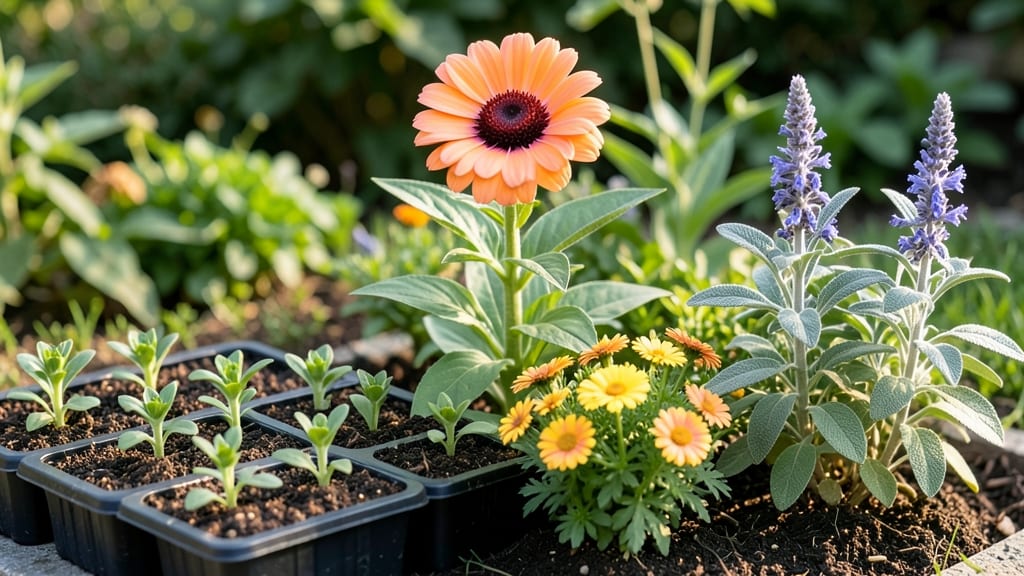
Succession planting flowers isn't just smart—it's the secret to a garden that never looks tired. 🌸 I remember my first summer with just one wave of color, then a sad, bare patch until fall.
Now my beds bloom from spring through frost, with zero gaps. The trick is pairing flowers that love the same conditions but bloom at different times, so while one fades, another takes over.
Start with a simple color palette—think pink, purple, and white—and choose flowers that naturally stagger their blooming times. For example, early spring tulips give way to sweet alyssum, which transitions into cosmos by midsummer.
All three thrive in full sun and need minimal fuss. Containers work too: mix snapdragons (cool weather) with zinnias (hot weather) in the same pot for a foolproof display.
By late summer, you'll have a garden that looks like it was designed by a pro, not just luck. The key is overlapping bloom times by 2-3 weeks, so there's always something popping with color.
Even my black thumb can't kill these combinations—once you see how effortlessly they work together, you'll never plant all at once again.
Works in any space, from city balconies to country backyards. The only rule? Plan ahead and keep notes on what thrives in your climate. Next, let's pick your first succession trio—here's how to choose the right partners for your sunniest spot.
📚 In This Guide
- What you need
- Instructions
- Tips and common mistakes
- Wrapping up and next steps
What you need
- ● Seed packets or young plants: Choose fast-growing annuals (e.g., marigolds, zinnias, cosmos) and cool-season flowers (e.g., pansies, snapdragons, calendula). Aim for 3–5 varieties to stagger blooms.
- ● Quantities: 10–20 plants/seeds per variety (adjust based on garden size).
- ○ High-quality seed-starting mix: 1–2 bags (10–12 qt each) for indoor sowing (optional but helpful for early starts).
- ● Garden soil: Well-draining, amended with compost (1–2 bags, 40 lb each) for nutrient-rich beds.
- ● Fertilizer: Balanced granular (10-10-10) or slow-release for planting day (1–2 lbs per 100 sq ft).
- ● Liquid bloom booster (e.g., fish emulsion or tomato fertilizer) for mid-season feeding (1–2 bottles, 16 oz each).
- ● Watering tools: Hose with adjustable nozzle or watering can (2–3 gal capacity) for gentle hydration.
- ○ Drip irrigation kit (optional) to automate watering (saves time and ensures consistency).
- ● Gardening tools: Trowel or hand fork for transplanting seedlings.
- ● Pruners (bypass type) for deadheading and shaping.
- ● Garden gloves (1 pair) to protect your hands.
- ● Measuring tape or ruler for spacing plants 12–24 inches apart (depends on variety).
- ● Frost dates: Check your USDA Hardiness Zone (e.g., Zone 5–9) to time plantings 3–6 weeks before last frost for cool-season flowers or after frost for heat-lovers.
- ● Planting calendar: Sketch a simple schedule (or use a free app like Gardenate) to map out 3–4 planting phases per year.
- ● Sunlight map: Note full sun (6+ hrs/day), partial shade (3–6 hrs), or shade ( areas in your garden.
- ○ Mulch (optional): Straw or shredded leaves (2–3 bags, 2 cu ft each) to retain moisture and suppress weeds.
How to plan a succession planting schedule for flowers
Here's my foolproof system to keep your flower beds blooming continuously—no gaps, no guesswork.
🌱 Step 1: Divide Your Garden Into Four Planting Zones
Start by sketching your flower beds and marking four distinct areas (or use containers if space is tight). Each zone will handle a different planting phase, staggered by 4-6 weeks. Zone 1 gets the earliest cool-season flowers, Zone 2 follows in late spring, Zone 3 in early summer, and Zone 4 in late summer for fall color.
I always label each zone with stakes so I don’t mix up planting times. For example, Zone 1 might get pansies and snapdragons in early spring, while Zone 4 gets cosmos and asters in August. This ensures you’re always harvesting spent blooms and replacing them with fresh ones.
☀️ Step 2: Select Flowers by Bloom Time and Season
Choose flowers with staggered bloom periods—early spring (pansies, violas), late spring (sweet peas, larkspur), summer (zinnia, marigold), and fall (mums, asters). I avoid long-blooming annuals like petunias in succession planting because they don’t leave room for variety.
Check seed packets or plant tags for days to maturity—this tells you exactly when to plant each variety. For example, if a flower takes 60 days to bloom, plant it 60 days before your first fall frost to ensure it flowers in late summer. Pro tip: Mix fast-bloomers (like nasturtiums) with medium (like zinnias) to fill gaps.
🪴 Step 3: Plant in Staggered Waves Every 4-6 Weeks
Begin with Zone 1 in early spring, planting cool-season annuals that tolerate light frosts. After 4-6 weeks, move to Zone 2 with warm-season flowers like sunflowers or cosmos. Repeat the process for Zones 3 and 4, always keeping one zone empty for the next planting.
I like to plant every 21 days—this keeps the cycle fresh without overwhelming me. For example, if Zone 1 gets snapdragons in March, Zone 2 gets sweet peas in April, Zone 3 gets zinnias in May, and Zone 4 gets asters in June. By the time Zone 1 flowers fade in June, Zone 4 is just starting to bloom.
✂️ Step 4: Deadhead and Maintain for Continuous Blooms
Deadhead spent blooms immediately—this isn’t just for looks, it signals the plant to produce more flowers instead of seeds. I use clean pruners and snip just above the next set of leaves to encourage bushier growth. For self-cleaning flowers like zinnias, I skip this step and focus on watering.
Watch for pests or diseases—succession planting means more frequent disturbances, so I inspect plants weekly. If you see aphids on your early snapdragons, treat them before moving to the next zone. Mulch lightly with 2-3 inches of shredded bark to retain moisture and suppress weeds between plantings.
⏰ Step 5: Rotate and Repeat for Year-Round Color
By late fall, your last zone (Zone 4) should still be blooming with cool-season flowers like stock or calendula. As those fade, clear the bed and amend the soil with 1-2 inches of compost—this gives next year’s Zone 1 a nutrient boost. I also rotate flower families each year to prevent soil-borne diseases.
Keep a simple planting calendar (even a whiteboard works) to track what’s blooming where. For example: "Zone 1: Pansies (March-June), Zone 2: Sunflowers (June-Sept)". This way, you’ll always know what to plant next and when to expect color.
Tips & tricks for perfect succession planting
Here's what I've learned after years of gardening—these tricks will help you avoid common mistakes and create a seamless bloom cycle.
Zone Labeling: I can't stress enough how helpful it is to label each zone with stakes or flags. I use bright colored ones that stand out against the foliage. This visual cue saves me from mixing up planting times, especially when I'm juggling four different zones. Trust me, you'll thank yourself later when you're not scrambling to remember which zone is which!
Bloom Time Mixing: The key to filling gaps is mixing bloom times within each zone. For example, in Zone 2 (late spring), I combine sweet peas (which bloom early) with larkspur (medium bloom) and sunflowers (late bloom). This creates a continuous show rather than a single peak. Check seed packets for days to maturity—this is your roadmap to perfect timing!
21-Day Planting Rhythm: Planting every 21 days keeps the cycle fresh without overwhelming you. I set calendar reminders for each planting date so I don't miss a beat. This rhythm works perfectly with the 4-6 week zone rotation mentioned in Step 3. If you find 21 days too frequent, you can stretch it to 28 days, but you might notice slightly longer gaps between blooms.
Deadheading Discipline: Deadheading isn't optional—it's the secret to continuous blooms. I keep a small pair of clean pruners in my gardening apron and check each zone daily. For flowers like zinnias that self-clean, I still remove faded blooms from the base to encourage bushier growth. The 5-minute daily check prevents the plant from wasting energy on seed production.
Pro Tips for Succession Planting Flowers
- Here's what I've learned after years of gardening—these tricks will help you avoid common mistakes and create a seamless bloom cycle.
- Zone Labeling: I can't stress enough how helpful it is to label each zone with stakes or flags.
- Bloom Time Mixing: The key to filling gaps is mixing bloom times within each zone.
Frequently asked questions
Got questions about keeping your flower beds vibrant all season long? Here are some of the most common queries about succession planting flowers, answered in a pinch!
What is the best way to start succession planting for beginners?
Start small! Pick one bed or container and focus on fast-growing annuals like marigolds, zinnias, or sunflowers. Plant in phases—every 2-3 weeks—using seeds or young transplants. Keep a simple planting journal to track what works best for your climate. Pro tip: Use biodegradable pots to transplant seedlings without disturbing roots.
How often should I replant flowers for continuous blooms?
Timing depends on the flower type, but a general rule is to replant every 4-6 weeks for most annuals. Cool-season flowers (like pansies) may need spacing every 3-4 weeks, while heat-lovers (like petunias) thrive with a 6-week gap. Monitor bloom cycles—when flowers start fading, it’s time to refresh!
Can I succession plant flowers in all climates, or are some better suited?
Succession planting works almost anywhere, but adjust your timing for your hardiness zone. In warm climates (Zones 8-11), focus on heat-tolerant flowers like lantana or salvia. Cooler zones (3-7) can try snapdragons or sweet alyssum. Pro tip: Use a frost calendar to guide your last/first planting dates.
What if my flowers keep dying before they bloom?
Common culprits include poor soil, overcrowding, or pests. Ensure well-draining soil, space plants properly (check seed packets!), and rotate flower families to prevent disease. If pests are the issue, try companion planting (e.g., marigolds repel aphids) or organic sprays like neem oil. Pro tip: Hardening off seedlings gradually prevents transplant shock.
Are there low-maintenance flowers perfect for succession planting?
Try self-seeding annuals like cosmos, bachelor’s buttons, or morning glories—they reseed themselves. For minimal effort, opt for perennials with long bloom times, like coneflowers or black-eyed Susans, and tuck in annuals for gaps. Pro tip: Drought-tolerant flowers (e.g., lavender, sedum) cut down on watering chores.
Wrapping up and next steps
Succession planting flowers isn’t just a gardening hack—it’s a game-changer for vibrant, ever-changing blooms all year long! 🌸 By staggering plantings and understanding your climate, you can enjoy a non-stop parade of color while minimizing waste and maximizing beauty.
Whether you’re a seasoned gardener or just starting out, this method makes flower gardening feel effortless—and rewarding.
Ready to transform your garden? Start small: pick one flower bed or container and test a simple succession plan this season. Track what thrives (or flops!) and refine your approach. Soon, you’ll be the envy of the neighborhood with a garden that never looks dull!