
Pruning
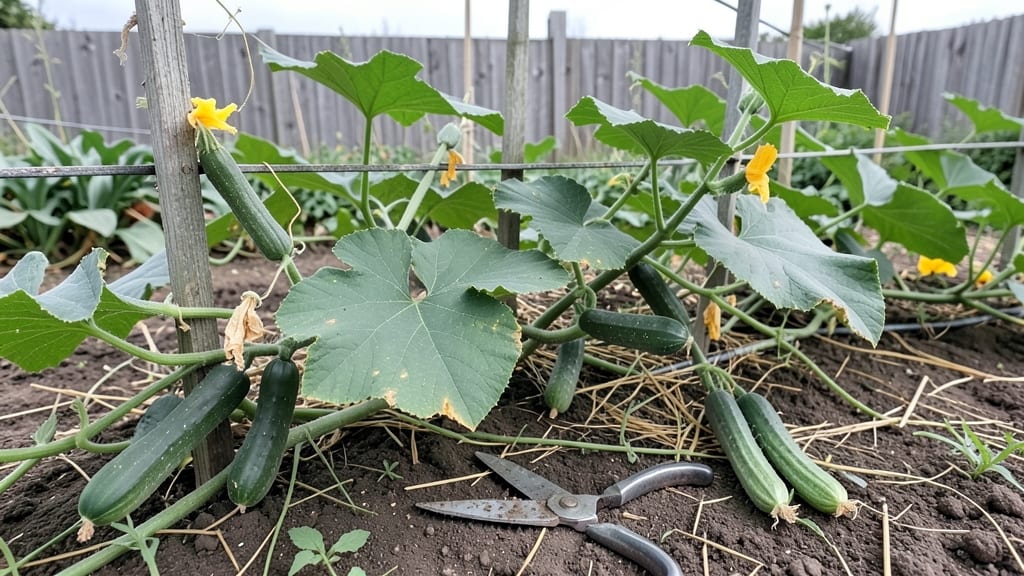
Trimming cucumber plants isn't just pruning—it's the secret to unlocking double the harvest from the same vines. 🌱 I learned this the hard way after watching my first crop sprawl wildly, producing tiny, bitter cucumbers while struggling to support itself.
The right cuts redirect energy where it matters: bigger fruit, stronger stems, and fewer diseases.
You only need three basic cuts and a pair of clean pruners to transform a wild tangle into a productive machine. Start by removing any yellow or diseased leaves—those are energy vampires.
Then, trim back side shoots (the small stems growing from the main vine) to about 2 inches long, leaving just a few leaves. Finally, cut off any suckers growing below the first flower cluster, as they compete with your main harvest.
Within two weeks, you'll see the difference: vines thicken, flowers multiply, and cucumbers grow 20-30% larger than untrimmed plants. The air circulation improves too, keeping powdery mildew at bay. It's not about making your plant look neat—it's about giving it the focus to produce its best work.
Think of it like editing a photo: you remove the clutter to highlight the star.
Here's the kicker: over-trimming is worse than not trimming at all. Leave at least 6-8 main vines on a bush type or 1-2 main runners on vining types—any less and the plant gets stressed. And always cut just above a leaf node, not at a joint.
This guide covers the exact technique, plus what to do when your plant starts looking like a tangled mess again. Let's get those vines working for you.
📚 In This Guide
- What you need
- Instructions
- Tips and common mistakes
- Wrapping up and next steps
What you need
- ● Pruning shears or sharp bypass pruners – Look for clean, sharp blades (1.5”–2.5” cutting capacity) to avoid tearing plant tissue.
- ● Garden gloves – Durable, cut-resistant gloves (e.g., nitrile-coated) to protect hands from thorns and dirt.
- ● Disinfectant (rubbing alcohol or bleach solution) – 1 part bleach to 9 parts water to sterilize tools between cuts.
- ● Compost bin or bag – For disposing of trimmings (avoid composting diseased plants).
- ○ Water spray bottle – Optional but handy for misting plants post-trimming to reduce stress.
- ● Hand pruners with ergonomic grips – For longer sessions without hand fatigue.
- ● Knee pad or small stool – If your cucumbers are tall or ground-level trimming is uncomfortable.
- ○ Plant growth regulator (e.g., seaweed extract) – Optional spray to aid recovery after pruning.
- ● Notebook & pen – To track trimming dates and plant responses.
Instructions for pruning cucumber plants like a pro
Here’s the method I’ve used to double my harvest—focus on these three cuts.
✂️ Step 1: Remove Suckers for Stronger Vines
Cucumber suckers are the small shoots that grow in the crotch between the main stem and a leaf or fruit. These energy vampires divert nutrients from your main vine, so I remove them as soon as they’re 2-3 inches tall. Use clean, sharp pruners to snip them off at the base—never tear them, or you’ll damage the plant.
I start pruning when vines reach 12-18 inches tall and continue weekly. The key is consistency: if you miss a sucker, it’ll grow into a competing vine that steals sunlight and water. You’ll know you’re doing it right when the main stem thickens and leaves turn a deeper green.
🌿 Step 2: Thin Overcrowded Fruit Clusters
Cucumber vines produce fruit in clusters, and too many fruits mean small, underdeveloped cucumbers. When you see a group of 3-4 fruits forming in one spot, leave only the strongest, healthiest-looking cucumber—the one with the most vibrant color and firmest shape. Gently twist off the others at the stem base.
This step is especially critical for slicing cucumbers, which need space to grow long and straight. I prune clusters every 5-7 days during peak production. You’ll notice fewer but larger cucumbers forming, and they’ll ripen faster because the plant isn’t stretched thin.
✂️ Step 3: Prune Lower Leaves for Airflow
As the vine grows, older leaves near the base turn yellow and block airflow, creating a humid microclimate that invites fungal diseases like powdery mildew. I remove these leaves by hand, pinching them off at the stem. Start with leaves below the first fruit cluster and work upward, keeping only the healthiest foliage.
This isn’t just about disease prevention—it also lets sunlight reach lower fruits, improving their flavor and color. I do this every 2-3 weeks or whenever I spot wilting or discoloration. The goal is to maintain an open, airy canopy while preserving the plant’s energy for fruit production.
⏰ Step 4: Trim Damaged or Diseased Growth
Cucumber plants are resilient, but they can’t recover from severe damage. If you notice leaves with holes, yellowing, or black spots, cut them off immediately using sterilized pruners. Disinfect your tools with rubbing alcohol between cuts to prevent spreading pathogens.
I also remove any vines that grow horizontally along the ground, as they’re more susceptible to rot and pests. You’ll know your plant is healthy when new growth appears within 3-5 days of pruning—this shows the plant is redirecting energy to productive areas.
Tips & tricks for perfect cucumber plant trimming
A few strategic adjustments can transform your cucumber harvest from modest to extraordinary. Here's how to maximize every cut you make.
Timing Secret: The weekly pruning schedule in Step 1 isn't just about removing suckers—it's about creating a rhythm. I've found that pruning at the same time each week (like every Monday morning) helps me spot new suckers earlier. This consistency prevents those 2-3 inch suckers from becoming established competitors that steal nutrients from your main vine. Think of it as giving your plant a weekly tune-up rather than sporadic maintenance.
Visual Cue for Step 2: When thinning fruit clusters, focus on the cucumber's "shoulders" - the area where the fruit meets the vine. The strongest cucumber will have a slightly thicker base and more vibrant color at this junction. I often run my thumb along the stem to feel for firmness - the winner should feel like a small watermelon, not a deflated balloon. This tactile check helps me make quicker decisions during harvest season when time is precious.
Equipment Upgrade: While clean, sharp pruners work perfectly, I've found that adding a small pair of garden shears to my toolkit makes Step 4 much easier. The longer blades let me reach deeper into dense foliage without straining. Sterilize them between plants with rubbing alcohol (as mentioned in Step 4) to prevent cross-contamination. For large gardens, consider a pair with ergonomic handles to reduce hand fatigue during long pruning sessions.
Seasonal Adjustment: During peak summer heat, I increase my pruning frequency to every 3-4 days for Step 2. The faster growth rate means fruit clusters develop quicker, and thinning becomes more critical. Watch for vines that grow more than 12 inches in a week - that's your cue to step up your pruning game. The extra effort pays off with cucumbers that reach their full potential size and flavor.
Pro Tips for Trimming Cucumber Plants
- A few strategic adjustments can transform your cucumber harvest from modest to extraordinary.
- Timing Secret: The weekly pruning schedule in Step 1 isn't just about removing suckers—it's about creating a rhythm.
- Visual Cue for Step 2: When thinning fruit clusters, focus on the cucumber's "shoulders" - the area where the fruit meets the vine.
Frequently asked questions
Got questions about trimming cucumber plants?
Here are the answers to the most common ones—so you can prune like a pro and enjoy a bountiful harvest!
When is the best time to trim cucumber plants?
Trim cucumber plants early and often—start when vines are 12–18 inches tall. Focus on removing suckers (side shoots) in the morning for faster healing. Avoid trimming late in the day, as wounds take longer to seal, increasing disease risk.
How do I know which parts to cut?
Look for suckers (small shoots growing between the main stem and branches) and yellow or diseased leaves. Also trim any vines with more than 3–4 fruits to redirect energy to healthier growth. Keep cuts clean with sharp shears!
Can I trim cucumber plants too much?
Yes! Over-trimming stresses plants, reducing yield. Aim to remove no more than 25% of foliage at once. Focus on selective pruning—prioritize suckers, dead leaves, and overcrowded areas. Balance is key!
What if I don’t trim my cucumber plants?
Untrimmed plants may produce smaller, lower-quality fruit due to overcrowding. Without pruning, vines compete for sunlight and nutrients, increasing pest/disease risks. Trimming boosts airflow and fruit size—worth the effort!
Are there alternatives to pruning cucumbers?
If pruning feels tedious, try trellising—guide vines upward to improve airflow naturally. For bush varieties, simply thin out crowded stems. However, pruning remains the most effective way to maximize yield and plant health.
Wrapping up and next steps
Trimming your cucumber plants isn’t just about keeping them tidy—it’s a game-changer for bigger harvests and healthier vines! 🌱 By mastering the three strategic cuts (removing suckers, pruning yellow leaves, and trimming runners), you’ll encourage stronger growth, better air circulation, and a bounty of crisp, flavorful cucumbers.
Whether you’re a seasoned gardener or just starting out, these simple techniques make all the difference.
Now that you’re armed with the know-how, grab those pruners and get to work! 🌿 Start with just one plant to practice, then expand your skills as confidence grows. Happy trimming—and here’s to a juicy, record-breaking harvest this season!