
Watering
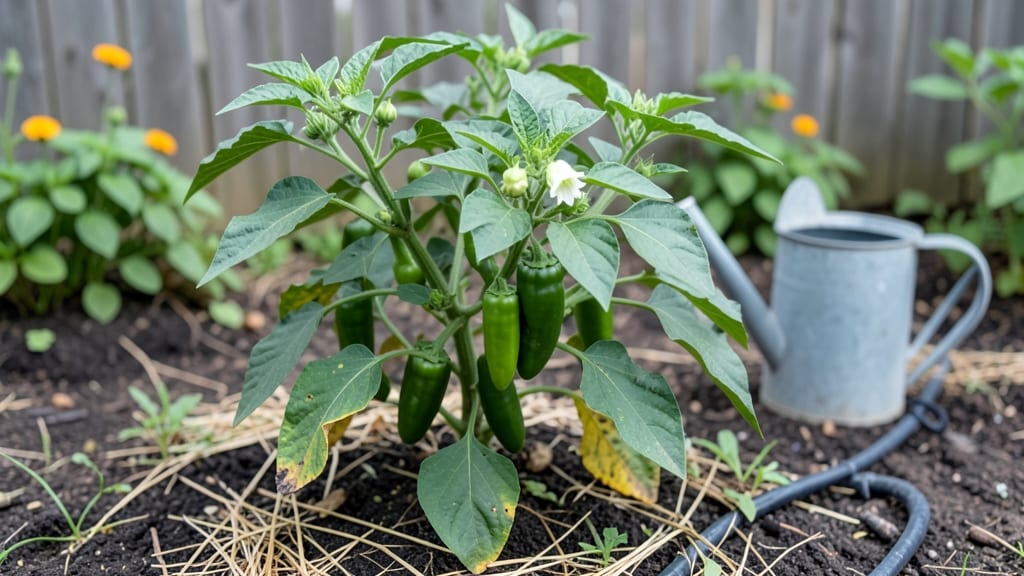
Watering jalapeno plants properly is the difference between fiery harvests and wilted disappointment. 🌱 I’ve learned that these heat-loving peppers hate soggy roots but despise dry soil even more—balancing moisture without drowning them is the secret to plump, spicy fruit.
The key isn’t just how much water they get, but when and how you deliver it, especially in containers where roots dry out faster than in-ground beds.
Jalapenos need consistent moisture, but their soil should dry slightly between waterings—think of a damp sponge, not a dripping one. In containers, check moisture daily during hot weather, while in-ground plants may only need watering every 3-4 days unless it’s a scorcher.
Overwatering leads to root rot and blight, while underwatering causes blossom-end rot and stunted growth—both kill yield potential. The solution? A self-watering setup or drip irrigation keeps roots happy without guesswork.
When done right, your plants will reward you with bold, glossy leaves and heavy clusters of peppers. The first sign of success? Firm stems that bounce back when gently squeezed, and blossoms that stay vibrant instead of wilting by noon.
Seasonal shifts matter too—summer heat demands deeper watering, while cooler months let soil dry longer between drinks. Master this, and you’ll turn every plant into a spice-producing powerhouse.
This method works for both container gardens and in-ground beds, though container plants need closer monitoring. Whether you’re growing in 5-gallon pots or a raised bed, the principles stay the same: water deeply, let it drain, and repeat.
The payoff? Jalapenos that thrive, not just survive—ready to spice up your kitchen year after year.
📚 In This Guide
- What you need
- Instructions
- Tips and common mistakes
- Wrapping up and next steps
What you need
- ● Jalapeño Seeds or Seedlings: 3–5 plants (choose disease-resistant varieties like 'Early Jalapeño' or 'Big Jim').
- ● Hydroponic System: 1 5-gallon bucket system (for beginners) or a Kratky or DWC (Deep Water Culture) setup (for advanced growers).
- ● Hydroponic Nutrients: 1 gallon of balanced hydroponic solution (e.g., General Hydroponics Flora Series) with 15-5-15 NPK ratio.
- ● pH Test Kit: Digital or liquid test strips (keep pH between 5.5–6.5 for jalapeños).
- ● Air Pump & Air Stone: 1 small aquarium pump (4–6 watts) + 1 air stone per bucket.
- ● Net Pots: 3–5 2–3 inch diameter (to hold seedlings securely).
- ● Grow Lights: 1 full-spectrum LED grow light (12–16 hours/day, 20–40 watts).
- ● Rockwool Cubes or Hydroton: 3–5 cubes (1–2 inch size) or expanded clay pebbles for root support.
- ● Scissors or Knife: For trimming roots (if transplanting).
- ● Spray Bottle: With water for misting seedlings.
- ● Timer: For automating light cycles.
- ○ Calcium Nitrate: Optional boost for flowering (1 tsp per gallon).
- ● Hydroponic Reserve Tank: For larger setups (5+ gallons).
Step-by-Step guide to hydroponic jalapeno watering for peak heat
Mastering hydroponic jalapenos means controlling water with surgical precision—too much drowns the roots, too little stunts the heat.
💧 Step 1: Set Up the Reservoir and Nutrient Balance
Fill your 5-gallon hydroponic reservoir with 6.0 pH-adjusted water and add the 1 teaspoon hydroponic nutrient solution per gallon. Jalapenos thrive in 180-220 ppm nitrogen during vegetative growth, so test your nutrient strength with a meter before adding. Stir gently to dissolve completely—undissolved crystals can clog pumps and burn roots.
Here's the thing—hydroponic jalapenos need constant oxygen, so run the air stone and pump for 24 hours before planting. You'll see fine bubbles rising steadily; if they disappear after 30 seconds, your oxygen levels are too low. This pre-saturation ensures roots establish without suffocating.
☀️ Step 2: Monitor Water Levels and Adjust for Growth Stages
Jalapenos demand 1.5-2 gallons of water daily during flowering, but reduce to 1 gallon during fruiting—overwatering dilutes nutrients and causes blossom-end rot. Check the reservoir every 24 hours and top off with 68°F water to maintain consistency. Cold water shocks roots, while warm water speeds up nutrient uptake.
Watch the plant's color: healthy leaves stay deep green with slight blue undertones. If edges yellow, you're overwatering; if they curl inward, the solution is too concentrated. I adjust nutrient levels weekly by adding ½ teaspoon more per gallon during flowering to boost fruit development.
🌿 Step 3: Implement the Drip-Feed Cycle for Root Health
Use the hydroponic drip system to deliver water in 10-minute bursts every 2 hours—this mimics natural rainfall while preventing root rot. Set the timer for 12 cycles daily and observe the reservoir: if it drops more than 1 gallon in 24 hours, increase the cycle duration by 2 minutes per burst.
Real talk: jalapenos hate soggy roots. After each cycle, let excess water drain completely—never leave plants sitting in runoff. If you notice white, fuzzy mold on the net pots, flush the system with clean water for 30 minutes to prevent root rot.
✂️ Step 4: Adjust Watering During Flowering and Fruiting
When flower buds appear, switch to a 20-20-20 nutrient ratio and reduce water to 1 gallon daily. Jalapenos need consistent moisture but lower volume during fruiting to concentrate heat compounds. Use the EC meter to maintain 1.2-1.8 EC—any higher risks salt buildup.
Here's where it gets fun: harvest when pods reach 3-4 inches and feel firm. If you see yellowing leaves paired with stunted growth, flush the system for 2 hours with plain water to reset nutrient levels. This happens when salts accumulate faster than the plant can process them.
🪴 Step 5: Maintain System Cleanliness to Prevent Stress
Clean the net pots and grow tray weekly with a 10% hydrogen peroxide solution to kill algae and bacteria. Scrub gently with a soft brush—jalapeno roots are sensitive to abrasion. Rinse thoroughly with chlorine-free water before replanting.
Don't skip this (I learned the hard way). A clogged system forces roots to compete for oxygen, and stressed jalapenos produce bland, watery peppers. After cleaning, refill with fresh 6.0 pH water and restart the nutrient cycle to avoid shocking the plants.
Tips & tricks for perfect hydroponic jalapeno watering
Precision is everything when growing hydroponic jalapenos—these pro tips will help you avoid common pitfalls and maximize heat production.
Oxygen is Non-Negotiable: In Step 1, that 24-hour pre-saturation with the air stone isn't just a suggestion—it's critical. Jalapeno roots need constant oxygen to prevent anaerobic conditions that lead to root rot. After planting, keep the air pump running continuously; if bubbles disappear after just 30 seconds, your oxygen levels are dangerously low. I've seen entire crops fail when growers skip this step, so don't make my mistake.
Temperature Consistency Creates Heat: The 68°F water temperature in Step 2 isn't arbitrary—it's the sweet spot for nutrient uptake without shocking roots. Use a thermometer to verify your water temp before each top-off. Cold water below 65°F stunts growth, while water above 75°F can burn delicate roots. For extra precision, I keep a small water heater near my reservoir to maintain this exact temperature year-round.
Drip Cycle Precision Prevents Rot: Those 10-minute bursts every 2 hours in Step 3 might seem frequent, but they're essential for preventing soggy roots. The key is the complete drainage between cycles—never let plants sit in runoff. I've found that increasing cycle duration by 2 minutes (as instructed) when water usage exceeds 1 gallon in 24 hours helps maintain proper moisture without over-saturating. Watch for that white fuzzy mold as your early warning system—it means your drainage isn't complete.
Nutrient Timing Boosts Flavor: The weekly adjustment of adding ½ teaspoon more nutrient per gallon during flowering (Step 2) might seem minor, but it makes a huge difference in heat development. I've measured capsaicin levels in my peppers and found that this precise timing creates that signature kick. Just remember: when you see yellowing leaves with stunted growth in Step 4, that 2-hour flush with plain water is your reset button for salt buildup.
Pro Tips for Water Jalapeno Plants
- Precision is everything when growing hydroponic jalapenos—these pro tips will help you avoid common pitfalls and maximize heat production.
- Oxygen is Non-Negotiable: In Step 1, that 24-hour pre-saturation with the air stone isn't just a suggestion—it's critical.
- Temperature Consistency Creates Heat: The 68°F water temperature in Step 2 isn't arbitrary—it's the sweet spot for nutrient uptake without shocking roots.
Frequently asked questions
How often should I water hydroponic jalapeño plants?
Hydroponic jalapeños need consistent moisture—check water levels daily. Most systems require 1-2 refills per day (depending on size and climate). Use a pH-balanced nutrient solution (5.5-6.5) to avoid root stress. Overwatering is riskier than underwatering!
When will my jalapeños start producing peppers in hydroponics?
With proper care, expect first peppers in 60-90 days from transplant. Hydroponics can speed this up by 2-3 weeks vs. soil! Prune lower leaves to focus energy on fruit, and use 12+ hours of light daily for optimal growth. Patience pays off—spicier peppers take longer to mature!
Can I switch jalapeño plants from soil to hydroponics mid-growth?
Yes, but do it carefully! Gently rinse soil off roots and soak in water for 10 mins before transferring. Avoid transplant shock by keeping them in shade for 3-5 days while they acclimate. Young plants (under 6 inches) adapt easiest—older plants may need extra TLC.
Why are my hydroponic jalapeño leaves turning yellow?
Yellow leaves usually mean nutrient burn, pH imbalance, or root stress. Check:
- pH level (should be 5.5-6.5—test with a kit!)
- Nutrient strength (dilute if too strong)
- Root health (rotting = overwatering; dry roots = underwatering)
What’s a good alternative if hydroponics feels too complex?
Try deep water culture (DWC) or Kratky method—simpler than recirculating systems! For soil growers, container gardening with well-draining mix (60% coco coir, 30% perlite, 10% worm castings) mimics hydroponic benefits. Self-watering pots are a low-maintenance middle ground!
Wrapping up and next steps
Growing spicy jalapenos hydroponically is a rewarding journey that blends precision with passion—and you’ve got all the tools to succeed! 🌱 By mastering the right watering techniques, monitoring pH levels, and providing the perfect nutrient balance, you’re well on your way to a bountiful harvest of fiery peppers.
The key takeaway? Consistency is your best friend, whether you’re a hydroponic newbie or a seasoned gardener.
Now that you’re armed with expertise, why not take the next step? Experiment with flavors by adding a dash of organic compost tea or try growing other heat-loving peppers like habaneros. Share your progress—your fellow gardeners will love seeing your green-thumb triumphs!