
Watering
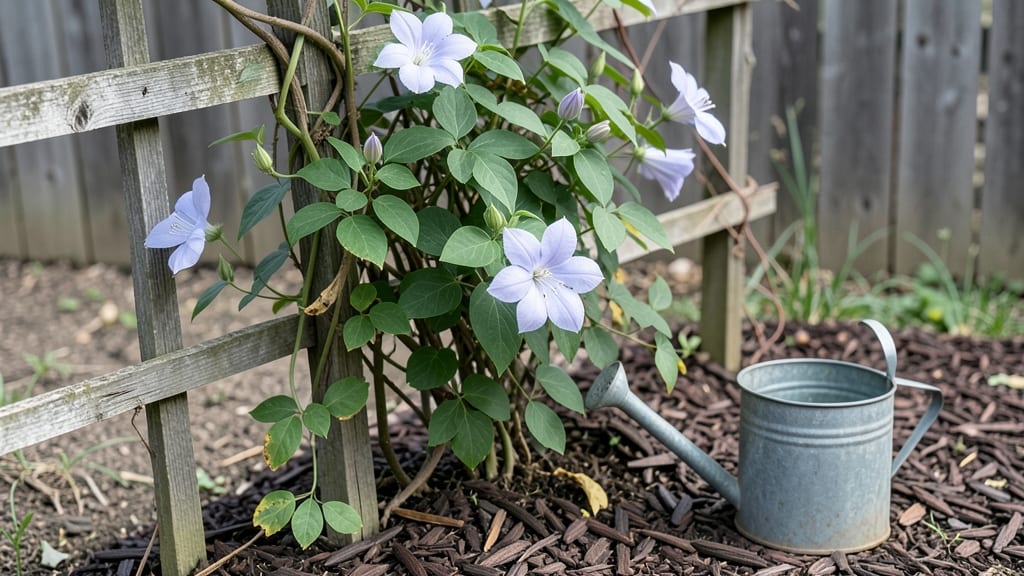
Watering clematis plants is the key to unlocking those stunning 🌸 blooms that keep coming back year after year.
Struggling to keep your clematis blooming lushly year after year? The secret lies in mastering their watering needs—too much or too little moisture can stunt growth or invite disease.
These vines thrive on consistent moisture, but they hate soggy soil just as much as they despise drought. In Zone 6, where many gardeners grow clematis, the right balance means deeper watering less often rather than light sprinkles every day.
Discover exactly how much to water, when to adjust for summer heat or winter dormancy, and how to spot the signs of over- or under-watering before it’s too late.
How often should you water clematis for optimal growth?
Clematis thrives on consistent moisture but despises soggy roots—balancing these needs is key to lush, repeat blooms. Unlike drought-tolerant succulents, clematis roots demand deep, even hydration while avoiding waterlogged soil. The challenge? Overwatering causes root rot, while underwatering leads to droopy stems and stunted flowers.
Let’s break down the perfect watering rhythm for each season, plus how to check soil moisture like a pro.
Young clematis vines (first 1-2 years) need more frequent watering than mature plants because their root systems are still shallow. Aim for 1-1.5 inches of water per week during active growth, delivered directly to the root zone—not the foliage.
Mature clematis, with roots extending 2-3 feet deep, can handle slightly longer dry spells once established, but they still crave consistent moisture to fuel those dramatic blooms.
Pro Tip: Water in the early morning (before 10 AM) to reduce fungal risks and let foliage dry quickly. Avoid evening watering—wet leaves overnight invite powdery mildew, a common clematis nemesis. If you must water in the heat of the day, do it by 6 PM to minimize evaporation.
Now, let’s dive into the seasonal schedule with this quick-reference table:
Spring is all about revving up growth—your clematis will reward you with fresh foliage and buds if you keep the soil consistently moist. Test moisture by sticking your finger 2 inches deep; if it feels dry, it’s time to water.
For young plants, a 5-gallon watering can per plant (delivered slowly) ensures deep root penetration. Mulch with 2-3 inches of straw or wood chips to lock in moisture and regulate soil temperature.
Summer’s heat demands vigilance. Clematis can’t handle dry spells longer than 7 days—their large leaves transpire water rapidly. If your area gets 90°F+ temps, switch to daily watering and use drip irrigation to avoid wetting leaves.
Watch for crispy leaf edges or vines that sag by midday; these are classic drought stress signs. A quick deep watering usually revives them within hours.
Fall marks the transition to dormancy. Reduce watering as daytime highs drop below 60°F, but don’t let the soil dry out completely. Aim for 50% moisture—enough to prevent stress but not enough to encourage late-season fungal growth.
This is also the time to prune dead foliage and add a 2-inch layer of mulch to insulate roots over winter.
Winter watering is minimal, but don’t skip it entirely. If your region gets little to no snow, water once a month to prevent the soil from becoming bone-dry.
Overly dry soil in winter can cause root desiccation, weakening the plant for spring’s rebound. In snowy climates, let nature handle it—snow provides excellent insulation and moisture.
To check soil moisture without guesswork, use the "squeeze test": Grab a handful of soil from the root zone. If it crumbles easily, water; if it stays clumped, wait 2-3 days.
For precision, invest in a moisture meter (under $20) or use a wooden dowel—push it in and check for dampness. Remember, clematis roots extend farther than you think, so water deeply each time to encourage downward growth.
One final secret: Mulch is your best friend
Common watering mistakes that kill clematis blooms (and how to fix them)
Even the most experienced gardeners sometimes struggle with clematis watering—yet overwatering or underwatering can turn your vibrant blooms into sad, wilted stems. The key is understanding the root zone moisture clematis craves: consistently damp but never soggy.
I’ve seen yellowing leaves from overwatering and crispy buds from drought stress, and the fixes aren’t as tricky as they seem.
Clematis roots thrive in well-draining soil with 1-2 inches of moisture in the topsoil. Too much water cuts off oxygen, while too little stresses the plant during blooming season. Let’s diagnose the most common watering blunders and rescue your clematis before it’s too late.
Mistake vs. Solution: Clematis Watering Fixes
| Mistake | Signs | Solution |
|---|---|---|
| Overwatering | Yellow leaves, moldy stems, wilting despite wet soil | Let soil dry 50% between waterings. Add perlite or sand to improve drainage. |
| Underwatering | Brown leaf edges, crispy buds, slow growth | Water deeply 2-3x/week in summer. Use mulch to retain moisture. |
| Inconsistent watering | Floppy stems, uneven blooms, stress marks | Stick to a morning schedule. Install drip irrigation for steady moisture. |
| Watering at night | Fungal spots, slow recovery | Switch to early morning watering to prevent powdery mildew. |
"Clematis roots need oxygen—never let them sit in standing water!"
If your clematis shows yellowing leaves, the first step is to check the soil. Stick your finger 2 inches deep—if it’s damp, you’re overwatering. For underwatered plants, water until it drains 6 inches deep, then repeat every 3-4 days in summer.
A moisture meter (just $10) takes the guesswork out of it!
For long-term fixes, focus on soil health. Amend heavy clay with compost or peat moss to improve drainage. If your clematis is potted, ensure the container has drainage holes and use a well-draining mix like 60% potting soil, 30% perlite, and 10% compost.
This combo keeps roots happy without waterlogging.
Pro tip: Mulch around the base with wood chips or straw to lock in moisture and regulate soil temperature. Just keep mulch 3 inches away from the stem to prevent rot. With these tweaks, your clematis will bounce back—and next season’s blooms will be even more dramatic!
Remember, clematis are resilient once you nail the watering routine. Start with the morning watering rule, monitor soil moisture, and adjust as the seasons change. Your repeat-flowering clematis will thank you with vibrant blooms all season long! 🌸