Planting
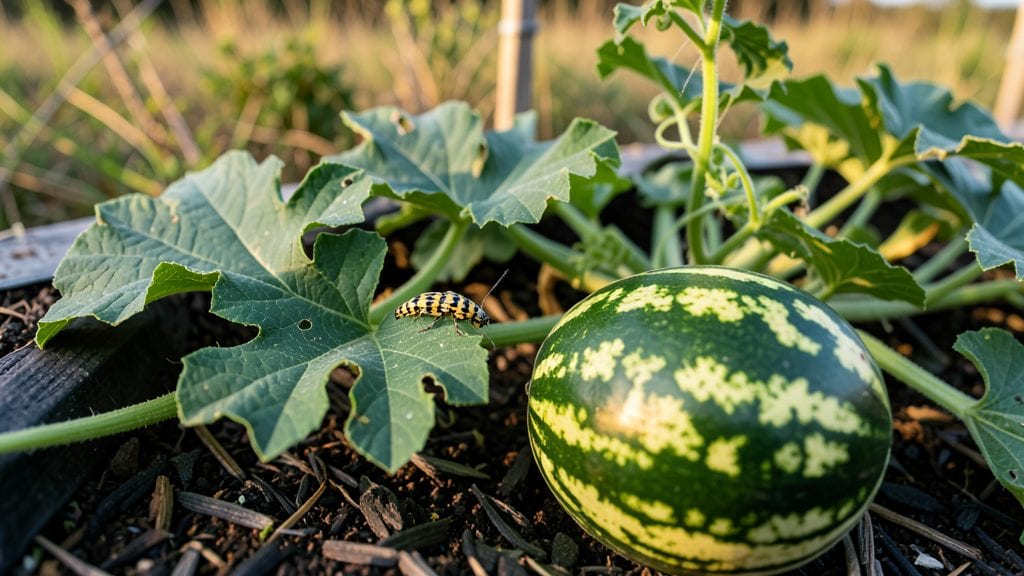
Watermelon plant pests can turn your lush vines into a battleground before you even taste that first ripe slice. 🌱 I’ve watched cucumber beetles skeletonize leaves and aphids turn blossoms into sticky messes—both signs your harvest is at risk if you don’t act fast.
The key isn’t just spotting the pests; it’s knowing how they attack and what to do before they ruin your crop.
Cucumber beetles chew jagged holes in leaves, while aphids cluster on stems and leaves, leaving behind a shiny residue. Spider mites create fine webbing on undersides, and squash vine borers lay eggs that hatch into destructive larvae.
Each pest leaves a distinct footprint—learning to read these signs means you can stop them before they spread. The good news? Most of these invaders respond to early intervention, whether you prefer organic sprays or targeted chemical solutions.
By the time you finish this guide, you’ll recognize the early warning signs of an infestation and know exactly which remedy to reach for.
Whether it’s a quick spray of neem oil for aphids or setting up row covers to block beetles, you’ll have a plan to protect your plants without sacrificing flavor or yield. Your watermelons will grow strong, sweet, and pest-free—just the way they should.
This works for both backyard gardens and larger plots, and the methods scale from small containers to sprawling rows. The goal is simple: keep your vines healthy so you can enjoy that first juicy bite without a single worry. Let’s get those pests under control before they get started.
Root Causes Behind Pest Attacks
Watermelon plants may seem like a low-maintenance crop, but they’re actually prime targets for pests due to their tender vines, sprawling growth, and sweet, juicy fruit. Understanding why these critters invade helps you take preemptive action.
Below, we break down the science—and the real-world factors—that turn your watermelon patch into a pest buffet.
A healthy watermelon plant has natural defenses, but stress weakens them, making it easier for pests to strike. Here’s what triggers vulnerability:
- 🔬 Nutrient Deficiencies Plants low in nitrogen (N), phosphorus (P), or potassium (K) produce thinner, less resilient leaves and stems.
Pests like aphids and cucumber beetles zero in on stressed foliage because it’s easier to penetrate. - Example: Yellowing leaves (chlorosis) signal nitrogen deficiency, while weak stems (even under wind) hint at potassium shortages.
- 💧 Overwatering or Drought Stress - Overwatering: Soggy soil invites fungal gnats and root-knot nematodes, which thrive in anaerobic (low-oxygen) conditions.
Weak roots can’t fend off invaders. - Drought: Underwatered plants produce thicker, waxier leaves—a red flag for spider mites (which prefer dry, dusty surfaces) and fruit flies (drawn to dehydrated fruit).
- 🌡️ Temperature Swings Watermelons struggle in extreme heat (>90°F) or cold snaps (<50°F). Stress hormones like ethylene are released, altering the plant’s scent and making it more attractive to pests like striped cucumber beetles (which use plant volatiles to locate hosts).
Watermelons aren’t just tasty for humans—they’re a magnet for pests thanks to their scent, sap, and habitat. Here’s what makes them irresistible:
- 🌿 Sweet Smell & Sap
- Volatile Organic Compounds (VOCs): Watermelon leaves emit terpenes and aldehydes, which some pests (like whiteflies) use as a homing beacon.
- Sticky Sap: When damaged (e.g., by pruning or hail), the resinous sap attracts aphids and scale insects, which feed on it like a gourmet meal.
- 🏡 Ideal Microhabitats
- Sprawling Vines: The dense, trailing growth provides hiding spots for cutworms and earwigs, while leaf litter at the base traps moisture, perfect for slugs and snails.
- Fruit Cucumbers: Unharvested or overripe fruit ferments, releasing ethanol and acids that lure fruit flies and melon worms.
- 🌍 Crop Monoculture Planting only watermelons in a row (without rotation or companion plants) removes natural predators. For example:
- Aphids explode in monocultures because their natural enemies (like ladybugs) are absent.
- Cucumber beetles thrive when there’s no marigold or nasturtium nearby to confuse their navigation.
Even the best-growing watermelons can fall prey to pests if garden practices create easy access. Common mistakes include:
- 🌱 Poor Soil Health
- Compacted or Clay Soil: Restricts root growth, making plants easier targets for nematodes and wireworms.
- No Mulch: Bare soil stays dry and dusty, inviting thrips and mite eggs to hatch. Mulch (straw or grass clippings) adds a protective barrier.
- 🛒 Contaminated Tools or Seeds - Reused Tools: Pruners or trellises from infested plants can carry bacterial wilt (via striped cucumber beetles) or powdery mildew spores. - Untreated Seeds: Some pests (like seed corn maggots) lay eggs in soil near seed beds.
Starting with certified disease-free seeds cuts risk.
- 🚫 Ignoring Early Signs
- Holes in Leaves? Often beetle larvae or squash vine borers—by the time you see wilting, it’s too late.
- Sticky Leaves? Aphid honeydew is a pest party invitation for sooty mold and ants (which farm aphids for their sap).
Pro Tip: 🔍 Use a 10x magnifying glass to inspect leaf undersides and stem junctions—this is where aphids, mites, and spider egg sacs hide!
Quick Fixes for Common Threats
When pests invade your watermelon patch, acting fast can mean the difference between a bountiful harvest and a sad, chewed-up garden. Below are practical, step-by-step solutions for the most common watermelon plant pests—plus prevention tips to keep your vines thriving.
No fancy tools or chemicals required (unless noted), just smart, hands-on care.
**🔥 Cause: These striped or spotted beetles chew leaves, spread bacterial wilt, and lay eggs that hatch into destructive larvae.
🍳 How to Treat It:
- Handpick & Drop 👨🍳
- Wear gloves and pick beetles off leaves in the early morning when they’re sluggish. Drop them into soapy water to kill them instantly.
- Yellow Sticky Traps 🎯
- Hang
- Neem Oil Spray 🌿
- Mix
- Row Covers 🛡️
- Use
💡 Prevention Tips:
- Plant trap crops like radishes or nasturtiums nearby to distract beetles.
- Rotate crops—don’t plant cucurbits (watermelons, cucumbers) in the same spot yearly.
- Encourage natural predators like ladybugs and lacewings by planting dill, fennel, or marigolds nearby.
**🔥 Cause: These caterpillars tunnel into stems, cutting off water and nutrients—often killing plants overnight.
🍳 How to Treat It:
- Check for Frass & Sawdust 🔍
- Look for
- Cut & Kill ⏰
- Bacillus thuringiensis (Bt) Spray 💊
- Spray
- Collar Barriers 🛡️
- Wrap
💡 Prevention Tips:
- Plant early—borers emerge in June/July, so get a head start.
- Remove garden debris in fall (borers overwinter in old vines).
- Use reflective mulch (aluminum foil) around stems to disorient adult moths.
**🔥 Cause: These tiny sap-suckers cluster on new growth, leaving sticky honeydew that attracts mold.
🍳 How to Treat It:
- Blast Off with Water 💦
- Use a
- Soap Spray 🧼
- Mix
- Ladybugs & Lacewings 🐞
- Buy
- Remove Heavily Infested Leaves 🗑️
- If aphids are overwhelming,
💡 Prevention Tips:
- Avoid over-fertilizing (aphids love tender new growth).
- Plant garlic or chives nearby—their scent repels aphids.
- Inspect new plants before bringing them home (aphids often hitch rides).
**🔥 Cause: These microscopic pests spin webs on undersides of leaves, draining plant juices and causing yellowing.
🍳 How to Treat It:
- Rinse Leaves 💦
- Spray plants with
- Neem Oil or Horticultural Oil 🌿
- Mix
- Predatory Mites 🕷️
- Release
- Increase Humidity 🌡️
- Spider mites thrive in
💡 Prevention Tips:
- Water deeply and regularly—mites hate moisture.
- Avoid broad-spectrum pesticides (they kill beneficial insects that eat mites).
- Prune for airflow—crowded plants stay damp and attract mites.
**🔥 Cause: These caterpillars chew through stems at night, toppling young seedlings.
🍳 How to Treat It:
- Nighttime Patrol 🌙
- Shine a
- Collar Barriers 🛡️
- Wrap
- Beer Traps 🍺
- Bury a
- Diatomaceous Earth ✨
- Sprinkle
💡 Prevention Tips:
- Plant after the last frost—cutworms are less active in cooler weather.
- Avoid mulching too close to stems (they hide in thick mulch).
- Use floating row covers until plants are established.
🌱 Final Pro Tip: Rotate your pest-fighting strategies—don’t rely on just one method. Combine physical removal, natural sprays, and prevention for the best results. A healthy watermelon plant starts with vigilance, not just chemicals! 🚀
Frequently asked questions
What are the first signs that watermelon plants have pests?
Look for jagged leaf edges (cucumber beetles), sticky residue on leaves (aphids), or fine webbing on undersides (spider mites). Wilting vines or sawdust-like frass near stems signal squash vine borers. Check leaf undersides and stem junctions daily for tiny pests.
Can I use the same pest control methods for all watermelon pests?
No—each pest needs a targeted approach. For example, neem oil works for aphids and mites but won’t stop squash vine borers. Use handpicking for beetles, Bt spray for borers, and soapy water for aphids. Always rotate methods to prevent resistance.
How do I know if my watermelon plant is already too damaged by pests?
If leaves are more than 50% chewed, stems are wilted or hollow, or fruit shows visible holes, the plant may not recover. For severe cases, remove the plant and dispose of it in a sealed bag to prevent spreading.
Are there any companion plants that naturally repel watermelon pests?
Yes! Plant marigolds (repel nematodes), nasturtiums (distract beetles), or basil (deters mites) nearby. These act as natural pest barriers while improving soil health. Avoid planting cucumbers or squash too close—they share pests.
What’s the best time of day to treat watermelon pests?
Early morning (before 9 AM) is ideal—pests like aphids and mites are sluggish and easier to remove. Avoid treating in direct sunlight (sprays dry too fast) or late afternoon (can stress plants). Always apply when leaves are dry.