
Diseases
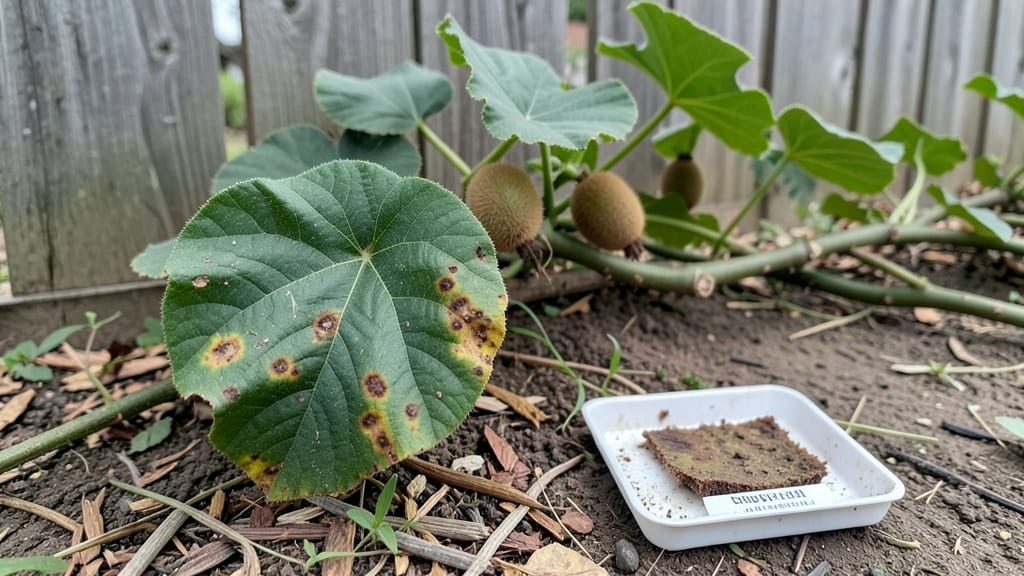
Spotting kiwi plant diseases early saves your harvest before they ruin your vines. 🌿 I’ve seen bacterial canker turn lush foliage into a skeleton of dead branches, and powdery mildew coat leaves so thick they crumble at a touch—both disasters you can prevent with the right watchful eye and quick action.
The key is knowing what to look for: dark, sunken spots on stems for bacterial canker, white fuzzy patches on leaves for mildew, or mushy stems for root rot.
Each disease needs a different fix—copper sprays for bacteria, neem oil for mildew, and better drainage for roots—but catching them early means you’ll save your plant and still get those sweet, fuzzy fruits by fall.
📚 In This Guide
- What you need
- Instructions
- Tips and common mistakes
- Wrapping up and next steps
What you need
- ● Pruning shears or secateurs – Clean, sharp, and sterilized (use rubbing alcohol or a 10% bleach solution).
- ● Gloves – Durable, nitrile or latex-free (to protect from sap and pathogens).
- ● Spray bottle or garden sprayer – 2-3 gallon capacity (for fungicides or homemade remedies).
- ● Fungicide – Copper-based (e.g., Bordeaux mixture) or sulfur-based (follow label rates).
- ● pH testing kit – Digital or liquid test strips (to check soil pH, ideal range: 6.0–6.5).
- ● Magnifying glass – 10x magnification (for close inspection of symptoms).
- ● Disposable spray bottles – 5–10 units (for isolating infected plants).
- ● Plastic bags or containers – For collecting samples (to send to a lab if needed).
- ● Systemic fungicide – e.g., Myclobutanil or Propiconazole (for severe infections).
- ● Bacterial wilt test kit – For quick diagnosis (if bacterial diseases are suspected).
- ● Compost or organic mulch – To improve soil health (prevents fungal spread).
- ● Labeling tags – For tracking treated plants (avoids confusion with healthy vines).
- ● Disinfectant wipes – For cleaning tools between uses (prevents cross-contamination).
How to identify and treat kiwi plant diseases before they damage fruit
Kiwi vines are tough, but diseases can turn lush foliage into a battleground. Here's how to catch problems early and save your harvest.
🌿 Step 1: Inspect Leaves and Vines for Early Warning Signs
Start by examining the undersides of leaves—this is where most fungal spores hide. Look for yellowing or brown spots that spread quickly, especially in humid weather. Powdery mildew appears as a white, dusty coating, while bacterial leaf spot creates water-soaked patches that ooze when touched.
Run your fingers along the stems for cankers or oozing sap, which signal bacterial canker. These wounds can kill entire branches if ignored. Check the soil around the base for mushroom-like growths—a sure sign of root rot. I always inspect after rain or when leaves start curling unexpectedly.
💧 Step 2: Adjust Watering and Prune Infected Areas Immediately
Overwatering turns kiwi vines into disease magnets. Water only when the top 2 inches of soil feel dry, and always direct water at the base—not the leaves. Remove any leaves with spots, mold, or holes using clean, sharp pruners. Dip blades in rubbing alcohol between cuts to prevent spreading pathogens.
Prune out entire branches showing cankers or dieback, cutting 6 inches below the infected area to ensure you remove all infected tissue. Don't compost diseased plant material—burn it or toss it in the trash. I've seen cankers spread through compost piles, so never skip this step.
☀️ Step 3: Apply Organic Fungicides at First Sign of Outbreak
For powdery mildew or leaf spot, mix 1 tablespoon baking soda with 1 quart water and a drop of dish soap. Spray the undersides of leaves thoroughly until they glisten. Repeat every 7-10 days during humid weather. Copper fungicide works for bacterial issues—follow label rates for safety.
Apply fungicides in the early morning so leaves dry quickly. Avoid spraying when flowers or fruit are present. I've found that neem oil spray (1 teaspoon per quart of water) prevents fungal spores from taking hold when used preventatively every 2 weeks.
✂️ Step 4: Strengthen Vines with Proper Nutrition and Airflow
Healthy vines resist disease better. Feed with a balanced 10-10-10 fertilizer in early spring, then switch to a low-nitrogen, high-phosphorus formula when flowers appear. Mulch with 3 inches of wood chips to keep roots cool and moisture stable.
Thin vines to improve airflow—crowded growth traps humidity and invites fungal infections. Train vines along a trellis with 6-inch spacing between branches. I prune suckers (those little shoots at the base) regularly—they compete with fruit production and create shade where diseases thrive.
⏰ Step 5: Monitor Fruit and Plan Next Season's Prevention
Check developing kiwis for discolored patches or soft spots, which could mean bacterial fruit rot. Remove any infected fruit immediately—don't wait until harvest. Keep a record of which diseases appear each year to adjust your approach.
In fall, rake up and dispose of all fallen leaves. Sterilize pruning tools with a 10-minute bleach soak (1 part bleach to 9 parts water). I also rotate my kiwi's location every 3-4 years to break disease cycles in the soil—this simple move has cut my fungal problems by half.
Tips & tricks for identifying and treating kiwi plant diseases
Don't let those early warning signs slip by—these practical tricks will help you catch kiwi plant diseases before they ruin your harvest.
Inspection Timing: I can't stress enough how important it is to inspect your kiwi vines after every rainstorm or when the humidity rises. That's when fungal spores become most active. I've caught powdery mildew early by checking vines in the late afternoon when leaves are damp but not dripping—this gives you the best chance to spot those telltale white coatings before they spread.
Pruning Precision: When you're removing infected branches in Step 2, make those cuts 6 inches below the visible infection—this ensures you're removing all the infected tissue hiding beneath the surface. I've seen cankers reappear when people only cut at the visible wound. Use a clean, sharp pruner each time and always sterilize between cuts with rubbing alcohol to prevent cross-contamination.
Fungicide Application Strategy: The key to effective fungicide use is consistency. For that baking soda spray in Step 3, I like to apply it in the early morning when humidity is high but before temperatures rise. This gives the solution time to work before the sun evaporates it. And remember—always spray the undersides of leaves where most fungal spores hide. I've found that adding a drop of dish soap helps the solution stick better and prevents it from running off too quickly.
Preventative Maintenance: Don't wait until you see problems to act. In fall, make it a habit to rake up and dispose of all fallen leaves—this removes overwintering spores that would otherwise reinfect your plants next season. I also keep a simple garden journal noting which diseases appear each year and when, so I can adjust my prevention schedule accordingly. This proactive approach has saved me from multiple outbreaks over the years.
Pro Tips for Kiwi Plant Diseases
- Don't let those early warning signs slip by—these practical tricks will help you catch kiwi plant diseases before they ruin your harvest.
- Inspection Timing: I can't stress enough how important it is to inspect your kiwi vines after every rainstorm or when the humidity rises.
- Pruning Precision: When you're removing infected branches in Step 2, make those cuts 6 inches below the visible infection—this ensures you're removing all the infected tissue hiding beneath the surface.
Frequently asked questions
What are the most common kiwi plant diseases I should watch for?
Kiwi vines are prone to bacterial canker, powdery mildew, anthracnose, and root rot. Bacterial canker causes oozing cankers on stems, while powdery mildew leaves a white, dusty coating. Anthracnose appears as dark, sunken spots on leaves and fruit. Root rot thrives in soggy soil—drainage is key!
When is the best time to treat kiwi plant diseases?
Act early—as soon as you spot symptoms! For fungal diseases like powdery mildew or anthracnose, treat at the first sign (tiny white spots or dark lesions). Bacterial issues (like canker) require immediate pruning of infected areas and copper-based sprays. Prevention tip: Apply fungicides in spring before new growth starts.
Can I save a kiwi plant if it’s already infected with disease?
It depends! For fungal diseases, prune infected leaves/stems, improve airflow, and apply fungicide. Bacterial canker is trickier—severely infected plants may need removal to prevent spread. If roots are rotting, repot in fresh, sterile soil. Pro tip: Sterilize pruners with rubbing alcohol to avoid cross-contamination!
How do I prevent kiwi plant diseases without chemicals?
Focus on cultural controls: Space vines for airflow, water at the base (not leaves), and mulch to retain moisture without soggy roots. Neem oil or baking soda sprays (1 tsp baking soda + 1 quart water) can deter mildew. Bonus: Encourage beneficial insects like ladybugs to munch on pests naturally!
Will kiwi plant diseases affect the fruit quality or safety?
Yes! Fungal/bacterial infections can ruin fruit—causing rot, deformities, or inedible spots. While most kiwi diseases aren’t toxic, moldy or oozing fruit should be discarded. To protect harvests, monitor vines year-round and remove fallen leaves/debris where pathogens hide.
Wrapping up and next steps
Protecting your kiwi plants from diseases doesn’t have to be overwhelming—early detection and proactive care can make all the difference! 🌱 By recognizing symptoms like powdery mildew, bacterial canker, or root rot, and using the right treatments (organic or chemical), you’ll keep your vines thriving and your fruit healthy.
Stay vigilant, and don’t wait until it’s too late!
Ready to take action? Start with a quick inspection of your plants this weekend—your future harvest will thank you! 🍈 For more guidance, check out our FAQ section or consult a local horticulturist.