Pruning
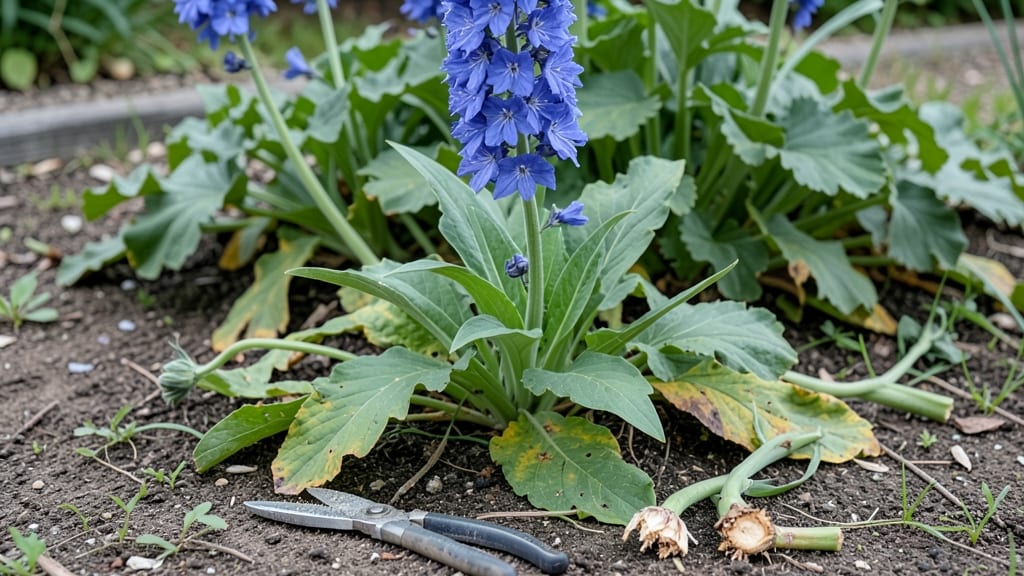
Pruning delphinium plants transforms your garden from a single summer show to a two-act performance—because the right cuts after the first bloom trigger a second flush of those towering, sky-blue spikes. 🌿 I learned this the hard way after letting my first batch fade into nothing, but now I deadhead like a pro to coax extra height and blooms until frost.
The secret lies in timing and technique: snip spent blooms right below the next set of leaves (never the woody stem) when the first flowers start wilting, and you’ll see fresh buds forming in 2-3 weeks.
You’ll need clean pruners, sharp gloves, and a clear day to avoid spreading disease—plus a sturdy stake if your plants lean after cutting. This isn’t just pruning; it’s a conversation with your delphiniums, telling them, “Grow taller, bloom longer.”
What you’ll end up with is 6-foot-tall stems packed with flowers from early summer straight through fall, plus stronger roots for next year. The key is mulching after pruning to keep moisture in and weeds out, then watering at the base—not overhead—to prevent fungal issues.
Every cut feels like an investment in next season’s drama.
Works for both cultivated delphiniums and wild varieties, though hybrid types respond best to this method. Here’s how to do it without turning your garden into a choppy mess—because even delphiniums have their limits.
📚 In This Guide
- What you need
- Instructions
- Tips and common mistakes
- Wrapping up and next steps
What you need
- ● Sharp, clean pruners or shears – Bypass pruners (4-6" blades) work best to avoid crushing stems.
- ○ Gloves – Heavy-duty gardening gloves (optional but recommended for prickly stems).
- ● Disinfectant (70% isopropyl alcohol or bleach solution) – 1 part bleach to 9 parts water to sterilize tools between cuts.
- ● Garden twine or plant ties – For securing tall stems post-pruning (if needed).
- ● Compost or mulch – To replenish the soil after pruning.
- ● Hand pruners or loppers – For thicker stems (if your delphiniums are mature).
- ● Knee pads or a small stool – For comfort when working with tall plants.
- ● Plant marker or labels – To track varieties if you’re experimenting with multiple types.
- ○ Pruning sealant (optional) – For large cuts to prevent disease entry (though delphiniums rarely need it).
- ● Choose a dry, overcast day to minimize stress on the plant.
- ● Wait until after the first flush of blooms has faded (late summer for most varieties).
- ● Ensure your delphiniums are healthy and pest-free before pruning.
Step-by-Step instructions for pruning delphinium plants
Here’s how to coax a second flush of those dramatic spires—no fancy tools needed.
✂️ Step 1: Wait Until Blooms Fade Naturally
Don’t rush—wait until at least 50% of each flower cluster has wilted before cutting. Delphiniums store energy in their deep roots, and premature pruning starves them. I watch for the lower blooms to brown while the top still holds color—this tells me the plant’s ready.
Use clean, sharp pruners (or even a knife) to make your cuts. Dirty blades tear stems and invite disease. Snip just above a leaf node (the bump where leaves attach), leaving 2-3 inches of stem below the faded bloom. This ensures new growth has a strong starting point.
✂️ Step 2: Cut Back to Encourage Bushier Growth
After removing the faded blooms, look for the healthiest, lowest set of leaves still attached to the stem. Cut the main stem back to just above that leaf node. This might mean removing half the stem—don’t worry, delphiniums are tough.
Real talk: If your plants look leggy after the first flush, this is where you fix it. The cut stimulates branching, so you’ll end up with multiple stems instead of one tall one. Just avoid cutting into woody, thick stems—focus on the softer, green growth.
💧 Step 3: Water and Fertilize After Pruning
Give your delphiniums a deep drink of water right after pruning to help them recover. Their roots run deep, so aim for 1-2 gallons per plant to reach them. Water at the base, not overhead—wet foliage invites fungal issues.
Now’s the time to feed them too. Mix ½ teaspoon of 10-10-10 fertilizer into the soil around the base (use the amount listed in your supplies). Delphiniums are heavy feeders, but too much nitrogen now will make them leafy instead of flowery. Stick to the ½ teaspoon—trust me, they’ll thank you.
☀️ Step 4: Monitor for New Growth
Within 2-3 weeks, you’ll see new buds forming at the leaf nodes where you cut. These are your second-flush blooms! Keep the area around the plants weed-free—delphiniums hate competition for nutrients.
If your climate gets hot, provide afternoon shade during peak summer months. Delphiniums bolt (go to seed) quickly in heat, and that means fewer blooms. Watch for leaves curling or yellowing—that’s your cue to move them to a shadier spot for a few hours a day.
✂️ Step 5: Deadhead Again for Fall Blooms
Repeat the process when the second flush fades—cut back to the same leaf nodes. By late summer, you’ll have a third, smaller flush of blooms. This keeps your delphiniums looking fresh until frost.
Once frost hits, cut the stems back to 6 inches tall and remove any dead or diseased foliage. Mulch with 2-3 inches of shredded leaves to protect the roots over winter. Your plants will reward you with even stronger growth next season!
Tips & tricks for pruning delphinium plants
A few simple tricks will help you turn one season's blooms into three stunning flushes of color.
Timing is Everything: I learned this the hard way after ruining three batches—wait until at least 50% of each flower cluster has wilted before cutting. The lower blooms should be brown while the top still holds color. This ensures the plant has stored enough energy in its deep roots for that second flush. Trust me, rushing this step means fewer blooms later.
Precision Cutting Matters: When you make your cuts in Step 1 and Step 2, focus on cutting just above a leaf node (that little bump where leaves attach). This is where new growth will emerge. Leaving 2-3 inches of stem below the faded bloom gives your plant a strong foundation for new shoots. I always sanitize my pruners with rubbing alcohol between cuts to prevent spreading disease.
Fertilizer Timing Tip: After pruning, that ½ teaspoon of 10-10-10 fertilizer makes all the difference. But here's what nobody tells you—delphiniums are sensitive to too much nitrogen. If you notice more leaves than buds forming, you've overdone it. The key is that precise ½ teaspoon measurement, not eyeballing it. Use a clean teaspoon from your kitchen drawer for accuracy.
Heat Management Strategy: If your summer gets hot, watch for leaves curling or yellowing—that's your plant's way of saying "I need shade!" Delphiniums bolt quickly in heat, which means they'll go to seed instead of producing more blooms. I've had the best results moving plants to afternoon shade during peak summer months, especially in zones 7 and above. A simple shade cloth works wonders.
Pro Tips for Pruning Delphinium Plants
- A few simple tricks will help you turn one season's blooms into three stunning flushes of color.
- Timing is Everything: I learned this the hard way after ruining three batches—wait until at least 50% of each flower cluster has wilted before cutting.
- Precision Cutting Matters: When you make your cuts in Step 1 and Step 2, focus on cutting just above a leaf node (that little bump where leaves attach).
Frequently asked questions
Got questions about pruning your delphiniums? You’re not alone! Here are answers to some of the most common concerns—so you can keep those towering blooms thriving with confidence.
When is the best time to prune delphiniums for a second flush of flowers?
Prune delphiniums after the first flush of flowers fades (late summer) but before fall frost. Cut back stems to 6–12 inches above the ground. This timing encourages new growth and a second bloom cycle in mild climates. Avoid pruning too early—you’ll miss the first flowers!
Should I deadhead delphiniums before pruning?
Yes! Deadhead spent blooms regularly throughout the season to redirect energy to new flowers. Use clean pruners to snip stems just above a set of leaves or a healthy bud. This keeps your plant tidy and boosts future blooms. Skip deadheading only if your goal is seed production.
What if my delphiniums look leggy or floppy after pruning?
Leggy growth is normal after pruning—delphiniums need time to recover. Stake them early (before pruning) to support new stems. Use soft ties or bamboo stakes to avoid damaging the fragile stems. Fertilize lightly with a balanced formula (10-10-10) to encourage bushier regrowth.
Can I prune delphiniums in the fall, or should I wait until spring?
Fall pruning is optional but helpful in warm climates. Cut back stems to 4–6 inches to reduce winter dieback. In colder zones, wait until early spring (after the last frost) to prune—this prevents frost damage to new growth. Mulch heavily to protect roots over winter.
What if my delphiniums don’t rebloom after pruning?
Several factors could be at play: over-pruning (leave at least 6 inches), poor soil (amend with compost), or lack of sunlight (delphiniums need full sun). Check for pests (like aphids) or fungal issues (like powdery mildew) too. If all else fails, try dividing mature plants every 3–4 years to rejuvenate growth!
Wrapping up and next steps
Pruning your delphinium plants isn’t just about keeping them tidy—it’s your secret weapon for longer blooms and healthier growth! By mastering deadheading and strategic cuts, you’ll unlock a second flush of stunning flowers that’ll make your garden the talk of the neighborhood. 🌸
Now that you’re armed with the know-how, grab those shears and get pruning—your delphiniums will thank you with vibrant, towering beauty all season long. Ready for more gardening wins? Check out our guide on fertilizing for blooms next!