
Pruning
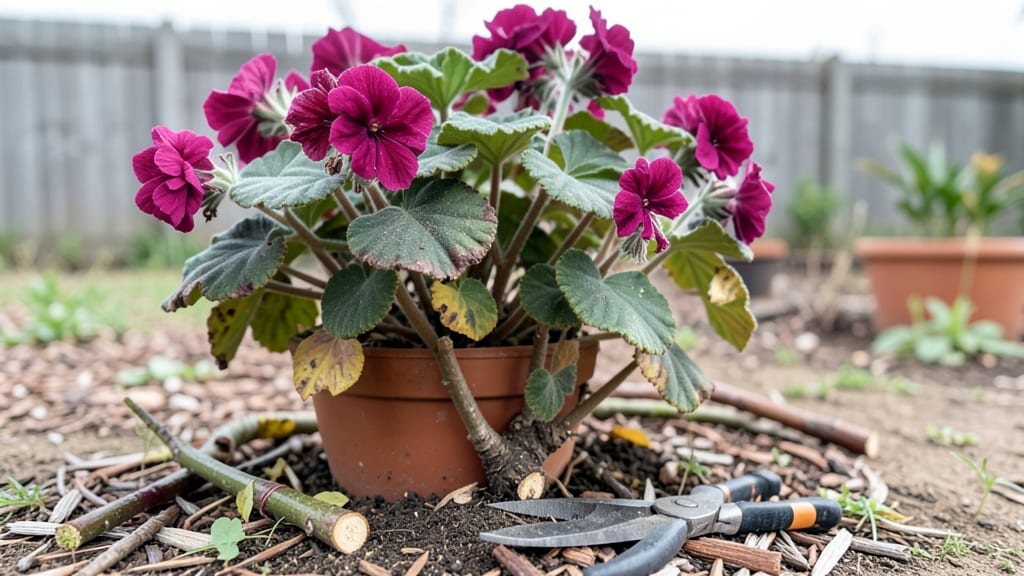
Pruning geranium plants isn’t just about keeping them tidy—it’s the secret to longer blooms and bushier growth. 🌿 I’ve learned the hard way that skipping this step leads to leggy stems and fewer flowers, but mastering three key cuts transforms my geraniums into nonstop blooming powerhouses.
The timing matters just as much as the technique, and I’ll show you exactly when to reach for those shears.
You’ll only need three basic tools: sharp pruning shears, clean gloves, and a small container for clippings. The process takes about 15 minutes per plant, and the best part? You can do it right in your garden or on your patio without any fancy setup.
Most people overlook the importance of sanitizing tools first—that simple step prevents disease from spreading to your healthy stems.
After pruning, your geraniums will respond with new growth within 2-3 weeks, packed with fresh buds. The key is cutting back by one-third each time, always just above a leaf node.
This encourages branching, which means more flowers and a fuller plant. I’ve seen geraniums that looked half-dead after winter bloom like crazy after just one proper pruning session.
This method works for both zone-hardy geraniums and tender varieties grown in pots. Whether you’re dealing with pelargoniums or cranesbill types, the same principles apply. Let’s get those shears ready—your geraniums will thank you with months of vibrant blooms!
📚 In This Guide
- What you need
- Instructions
- Tips and common mistakes
- Wrapping up and next steps
What you need
- ● Pruning shears or bypass pruners – Sharp, clean, and sterilized (alcohol wipes work great!). Choose bypass-style (not anvil) to avoid crushing stems.
- ● Hand pruners (smaller) – For thin stems (≤¼ inch) in tight spots.
- ○ Garden gloves – Optional but recommended for thorny varieties (like Pelargonium species). Pick nitrile-coated for grip.
- ● Disinfectant (70% isopropyl alcohol or hydrogen peroxide) – 1–2 sprays per cut to prevent disease.
- ● Rubbing alcohol or bleach solution (1:9 ratio) – To sterilize tools between plants.
- ● Newspaper or drop cloth – 1–2 sheets to protect surfaces from debris.
- ● Pruning saw – For thick, woody stems (>½ inch) (rare in geraniums but useful for mature plants).
- ● Plant food (balanced 10-10-10 or bloom booster) – ½ tsp per gallon of water post-pruning for a growth boost.
- ● Rooting hormone (gel or powder) – If propagating cuttings from prunings.
- ● Spray bottle with water – To dampen cuttings if taking propagations.
- ● Notebook & pen – To track pruning dates and plant responses.
How to prune geranium plants for continuous, healthy growth
Mastering these three pruning techniques keeps your geraniums lush and flowering season after season.
✂️ Step 1: Early Spring Cleanup (Late February to Early March)
Start by removing any dead or damaged stems with clean, sharp pruners. I always inspect each stem first—look for brown, mushy areas or those that snap easily. These are your first targets. Cut just above a healthy leaf node or bud, angling the cut slightly to prevent water pooling.
Next, trim back each remaining stem by about one-third of its length. This encourages bushier growth and prevents leggy stems. Here's the thing—geraniums are tough, but they need this shock to reset their energy. You'll see fresh green growth within 2-3 weeks if you've cut at the right nodes.
✂️ Step 2: Mid-Season Maintenance (June to Early July)
When you notice spent blooms and stems growing too long, it's time for your second cut. I focus on removing flowers that have faded and any stems that are growing outward instead of upward. This redirection keeps energy flowing toward new blooms rather than seed production.
Pinch or cut just above the next set of leaves where the stem meets the main plant. For larger stems, use your pruners; for smaller ones, your fingers work fine. The goal is to maintain a compact shape. You'll know you're doing it right when you see new buds forming within 10-14 days.
✂️ Step 3: Late Summer to Early Fall Renewal (September)
This final cut prepares your geraniums for winter dormancy. Trim back all stems by about half their length, cutting just above a leaf node or bud. This reduces the plant's size but leaves it with enough energy to recover quickly in spring. Remove any yellowing or diseased leaves at this stage—they won't regrow properly.
After pruning, give your plants a light feeding with a balanced fertilizer. I use a 10-10-10 mix diluted to half strength. This helps them recover and store energy for next year. Place your geraniums in a sheltered spot with some afternoon shade if possible—this prevents stress from sudden temperature drops.
⏰ Step 4: Optional Winter Pruning (February)
If your geraniums survived winter indoors, check for any new growth in late winter. This is your cue to give them a final trim before moving them back outside. Cut back any leggy stems and remove any dead growth. The key here is to encourage fresh, vigorous growth before the growing season kicks in.
Watch for the first signs of new shoots emerging from the base. These are your signal that the plant is waking up. Once you see 1-2 inches of new growth, it's time to fertilize lightly and prepare for the outdoor transition. Geraniums are resilient, but this final pruning ensures they start the season strong.
Tips & tricks for pruning geranium plants
A few key insights will help you transform your pruning routine from good to exceptional.
The Right Cutting Angle: Always angle your cuts just above a leaf node or bud when pruning—this prevents water from pooling on the cut, which could lead to rot. I learned this the hard way after losing a few plants to fungal issues from improper cuts. A slight 45-degree angle also helps the plant heal faster and encourages new growth to emerge from the node below.
Timing is Everything: In Step 1, that one-third trim in late February to early March might feel drastic, but it's essential for resetting your geranium's energy. The 2-3 weeks it takes to see fresh green growth is worth the initial shock—it prevents leggy stems and encourages a bushier, more compact plant. If you're in doubt, err on the side of cutting back a bit more rather than too little.
Equipment Matters: Sharp pruners are non-negotiable. Dull blades crush stems instead of making clean cuts, which can damage the plant and invite disease. I keep a pair of bypass pruners specifically for my geraniums and sharpen them annually. For smaller stems, your fingers work perfectly fine—just pinch just above a leaf node to maintain that clean cut.
Post-Pruning Care: After your September renewal cut, don't just walk away! The light feeding with diluted 10-10-10 fertilizer is crucial for recovery. I've found that placing plants in afternoon shade after pruning gives them time to adjust without stress from sudden temperature swings. This simple step makes all the difference in how well they store energy for next season.
Pro Tips for Pruning Geranium Plants
- A few key insights will help you transform your pruning routine from good to exceptional.
- The Right Cutting Angle: Always angle your cuts just above a leaf node or bud when pruning—this prevents water from pooling on the cut, which could lead to rot.
- Timing is Everything: In Step 1, that one-third trim in late February to early March might feel drastic, but it's essential for resetting your geranium's energy.
Frequently asked questions
Got questions about keeping your geraniums looking their best? Here are some of the most common ones—and their answers—to help you prune like a pro!
When is the best time to prune geraniums for continuous blooms?
Prune geraniums three times a year for nonstop color: early spring (to encourage new growth), mid-summer (to revive wilted stems), and after flowering (to shape and prep for winter). Avoid heavy pruning in fall if you’re growing them as perennials in mild climates.
How much should I cut back geraniums during each pruning session?
For spring pruning, trim back leggy stems by about 1/3 to promote bushiness. In mid-summer, cut back 1/2 to 2/3 of wilted or overgrown stems. After flowering, reduce by 1/3 again to maintain shape. Never remove more than half the plant at once!
Can I prune geraniums in winter, or should I wait until spring?
If you’re growing geraniums as annuals, prune lightly in winter to keep them tidy. For perennials in cold climates, wait until spring (after the last frost) to avoid frost damage. In mild winters, a light trim in late winter can encourage early blooms.
What should I do if my geraniums look sad after pruning?
Don’t panic! Geraniums often look worse before they get better. After pruning, give them bright light, well-draining soil, and regular watering (but avoid soggy roots). New growth should appear in 2–4 weeks. If yellow leaves persist, check for overwatering or pests.
Can I propagate geraniums from cuttings after pruning?
Use 4–6 inch cuttings from healthy stems (remove lower leaves) and dip in rooting hormone. Plant in sandy soil or water, keeping moist until roots form (2–4 weeks). This is a great way to multiply your plants for free!
Wrapping up and next steps
Pruning your geraniums doesn’t have to be intimidating—just a few strategic cuts can keep them thriving and blooming beautifully! 🌸 By mastering the spring cleanup, mid-season maintenance, and late-season reset, you’ll encourage lush growth and vibrant flowers all season long.
Remember, the key is consistency and confidence—your plants will thank you with bold, healthy blooms!
Ready to take the next step? Grab your shears and give those geraniums the care they deserve! For extra tips, check out our full pruning guide or share your progress with fellow gardeners online. Happy pruning!