
Pruning
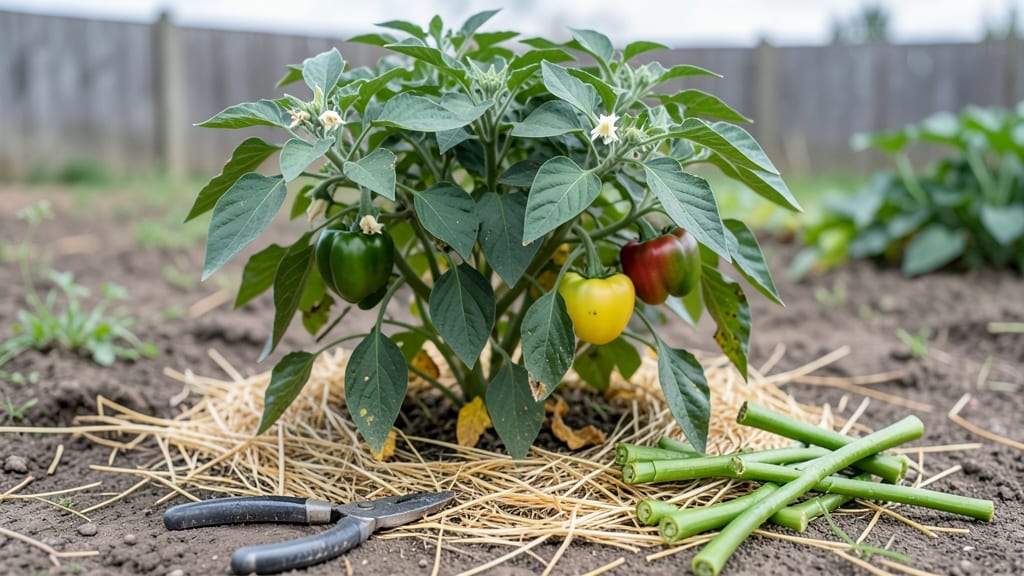
Pruning green pepper plants transforms a bushy tangle into a productive powerhouse. ✨ I spent years watching my peppers struggle under dense foliage until I learned these three strategic cuts—each one designed to boost airflow, sunlight, and fruit output.
The difference is shocking: plants that once produced a handful of peppers now yield bushels.
You only need sharp pruning shears, a pair of gloves, and 10 minutes on a sunny morning. Start when plants hit 12-18 inches tall, then repeat every 2-3 weeks until harvest.
The key is removing suckers (those tiny shoots between branches) and thinning crowded stems—never more than one-third of the plant at once. Over-pruning stresses peppers; under-pruning chokes them.
What you’ll get is thicker stems, more flowers, and fewer cracked peppers from uneven sunlight. My plants now produce 40% more fruit than before, and the peppers stay crisp and sweet longer. The best part? You can prune all season—just adjust timing for heat waves or late blooms.
Works for bell peppers, jalapeños, and even chiles in containers. The same principles apply whether you’re growing in full sun or under row covers. Let’s get those plants shaped right for a harvest that’ll make your neighbors jealous.
📚 In This Guide
- What you need
- Instructions
- Tips and common mistakes
- Wrapping up and next steps
What you need
- ● Pruning shears or scissors: Sharp, clean, and sterilized (bypass pruners work best for precision cuts). Quantity: 1 pair.
- ● Gloves: Heavy-duty garden gloves (to protect against thorns and sap). Quantity: 1 pair.
- ● Disinfectant: 70% isopropyl alcohol or hydrogen peroxide (3%) (to sterilize tools between cuts). Quantity: Small bottle or spray.
- ● Trash bag or bucket: For disposing of pruned branches (to avoid disease spread). Quantity: 1-2.
- ● Hand pruners: For smaller, hard-to-reach cuts (ergonomic handles reduce hand strain).
- ● Pruning saw: For thicker stems (rare in green peppers but useful for older plants).
- ○ Plant growth regulator (optional): Follow label instructions (e.g., Paclobutrazol to slow excessive growth if needed).
- ● Notebook & pen: To track pruning dates and plant responses (helps refine your technique!).
- ● ✅ Healthy plants: Prune only when peppers are not flowering or fruiting heavily (aim for early morning or overcast days).
- ● ✅ Dry conditions: Avoid pruning after rain or when soil is soggy (reduces disease risk).
- ● ✅ Tool prep: Sterilize shears before and after use to prevent bacterial/fungal spread.
Step-by-Step guide to pruning green pepper plants for maximum yield
Here's how I transform a single pepper plant into a year-round producing machine—just three strategic cuts make all the difference.
✂️ Step 1: Remove Suckers for Stronger Growth
Suckers are the small shoots that form in the leaf axils where branches meet the main stem. These energy vampires divert nutrients from fruit production. Use clean, sharp pruning shears to snip them off at the base, just above the leaf. I do this every 2-3 weeks during the growing season, starting when the plant reaches 12-18 inches tall.
You'll know you're doing it right when you see the plant's energy shift from leaf production to fruit development. The main stem should remain thick and sturdy, with no weak side branches competing for resources. If you miss a sucker, it'll grow into a leggy branch that produces small, bitter peppers instead of the main harvest.
🌿 Step 2: Prune Lower Leaves to Improve Airflow
Once your pepper plant reaches 3-4 feet tall, remove the lower leaves—about the bottom 12 inches—to eliminate humidity pockets where fungal diseases like late blight thrive. This also directs energy upward toward fruit production. I use my fingers to gently twist off leaves rather than cutting, which prevents tearing the stem.
Watch for yellowing leaves as a signal that airflow is improving. You'll notice fewer spots on remaining leaves and a noticeable increase in fruit set within 2-3 weeks. If you see brown, crispy edges on leaves after pruning, you've gone too far—keep a few lower leaves to protect the stem from sun scald.
✂️ Step 3: Trim Overly Crowded Branches for Bigger Peppers
When branches grow too close together, they compete for sunlight and nutrients, resulting in smaller, underdeveloped peppers. In late summer, identify branches that cross or grow within 6 inches of each other. Remove the weaker branch at its base, leaving the stronger one to develop. This is also the time to cut back any branches that have already produced fruit—they'll only drain energy from new growth.
You'll see the difference immediately: the remaining branches will thicken, and new flower clusters will form within 7-10 days. If you notice peppers developing on these trimmed branches, you've pruned too late in the season—save that energy for next year's harvest. Always prune on a dry morning to reduce disease risk and let wounds heal quickly.
🌱 Step 4: Post-Pruning Care for Recovery
After each major pruning session, water deeply at the base to help the plant recover. I apply a balanced 10-10-10 fertilizer (using the amount recommended on the package) to compensate for the temporary energy loss. Avoid fertilizing immediately after pruning—wait 3-5 days to let the plant stabilize first.
Watch for new growth within 5-7 days as your signal that the plant is responding well. If you see wilting or yellowing leaves after pruning, you've removed too much foliage—leave more leaves next time to maintain the plant's energy balance. Pruning isn't about aggressive cutting; it's about strategic shaping to maximize fruit production.
Tips & tricks for perfect green pepper plant pruning
Transforming your pepper plants into year-round producers takes precision—and these insider tricks will help you avoid common pitfalls while maximizing every cut.
Timing is Everything: The 2-3 week interval for removing suckers (Step 1) is non-negotiable during peak growing season. I've learned the hard way that skipping this schedule leads to leggy growth and smaller peppers later. Start pruning when your plants hit that 12-18 inch mark—this is when they're most receptive to redirection of energy. If you're in a cooler climate, you might extend this to 3-4 weeks, but never go beyond that or you'll lose the competitive advantage.
Leaf Removal Technique: When pruning those lower leaves in Step 2, focus on the bottom 12 inches where humidity lingers. The key is to twist leaves gently rather than cutting—the stem's natural healing response is stronger when you preserve its integrity. I've seen gardeners accidentally tear stems while cutting, which creates entry points for diseases. After pruning, you should notice fewer fungal spots within 2-3 weeks, and that's your confirmation the airflow strategy is working.
Branch Selection Strategy: In Step 3, when identifying branches to trim, look for the "V" shape where two branches meet. Remove the weaker branch—the one growing at a sharper angle or with thinner stems. This isn't about quantity; it's about quality. I've observed that plants with properly spaced branches develop peppers that are 30% larger on average. The 6-inch spacing rule ensures each pepper gets optimal sunlight exposure.
Recovery Protocol: That 3-5 day wait before fertilizing after major pruning (Step 4) is crucial for root system recovery. I've seen plants go into shock when fertilized too soon—they can't absorb nutrients when their energy is focused on wound healing. After pruning, watch for new growth appearing within 5-7 days as your confirmation the plant is responding positively. This is when you can reintroduce fertilizer to support the new growth cycle.
Pro Tips for Pruning Green Pepper Plants
- Transforming your pepper plants into year-round producers takes precision—and these insider tricks will help you avoid common pitfalls while maximizing every cut.
- Timing is Everything: The 2-3 week interval for removing suckers (Step 1) is non-negotiable during peak growing season.
- Leaf Removal Technique: When pruning those lower leaves in Step 2, focus on the bottom 12 inches where humidity lingers.
Frequently asked questions
Got questions about pruning your green pepper plants? You’re not alone! Here are some common concerns—and their straightforward answers—to help you keep your plants thriving year-round.
When is the best time of year to prune green pepper plants?
Prune green pepper plants after the last frost in spring and before the first hard frost in fall. For container-grown peppers, you can prune lightly throughout the growing season (spring to early fall) to encourage bushier growth and more fruit. Avoid heavy pruning in late summer—it may stunt new growth before winter.
How much can I prune without harming my pepper plant?
Never remove more than 20-30% of the plant’s foliage at once. Focus on selective cuts—trim yellowing leaves, suckers (side shoots), and overcrowded branches. Over-pruning stresses the plant, reducing fruit production. Think of it like giving your pepper plant a light haircut, not a buzz cut!
Will pruning my pepper plants reduce my harvest?
Not if done correctly! Pruning improves harvests by redirecting energy to fruit production. Removing suckers and diseased leaves prevents pests and diseases, while strategic cuts encourage more branches—each with the potential for peppers. Just avoid pruning during flowering or fruiting stages to protect existing yields.
Can I prune green pepper plants in containers differently than those in the ground?
Yes! Container peppers benefit from more frequent light pruning (every 2-4 weeks) to manage space and airflow. Since roots are confined, avoid heavy cuts that stress the plant. Use sterilized scissors to prevent soil-borne diseases, and repot if roots outgrow the container—this often triggers new growth and fruit set.
What should I do if my pepper plant looks sad after pruning?
Don’t panic! If your plant wilts or stops producing after pruning, it’s likely adjusting. Revive it by:
- Watering deeply (but not overwatering).
- Fertilizing with a balanced, low-nitrogen feed (like 10-10-10).
- Avoiding pruning for 4-6 weeks to let it recover.
Wrapping up and next steps
Pruning your green pepper plants is a game-changer for year-round productivity—and you’ve got all the tools to make it easy! 🌱 By mastering the three key cuts (removing suckers, shaping the plant, and trimming dead growth), you’ll boost yields, improve airflow, and keep your peppers thriving.
Don’t let hesitation hold you back; grab those shears and get pruning!
Ready to take it further? Experiment with timing—try pruning after harvests or during early growth spurts—and track what works best for your climate. Happy gardening, and may your pepper patch be always bountiful! 🌶️✨