
How To
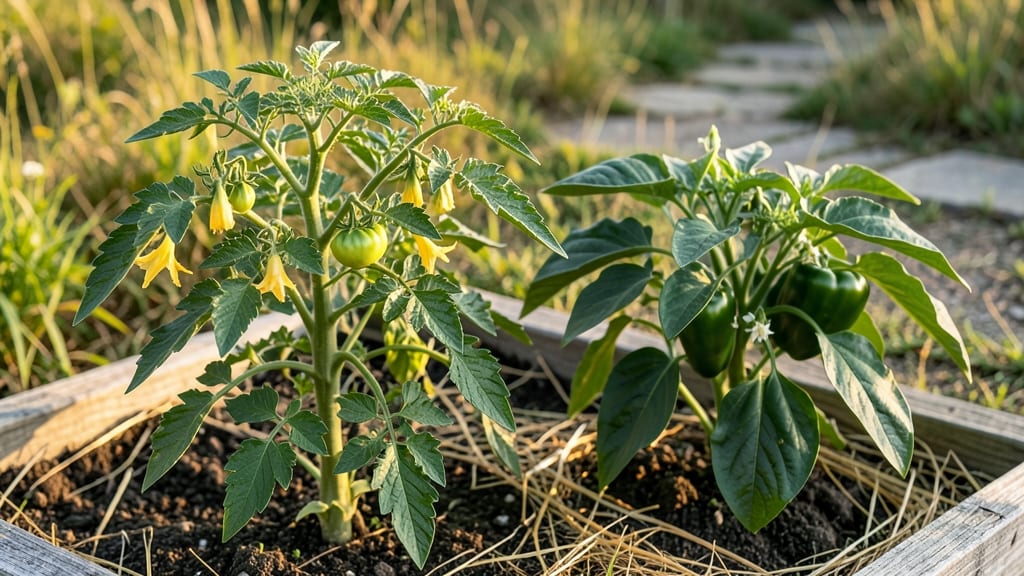
You can plant bell peppers next to tomatoes, but it requires careful planning: both thrive in similar growing conditions, yet tomatoes often draw pests like hornworms that also harm peppers. Proper spacing and vigilant pest control are key to protecting your harvest while maximizing garden space.
This pairing works because both plants demand well-draining soil and consistent moisture, but their proximity creates a double-edged sword. 🌱 Tomatoes' lush foliage can shade peppers if spaced too closely, while shared pests like aphids or whiteflies may spread between them.
I've found that planting peppers on the north side of tomatoes—where they get morning sun but afternoon shade—helps balance their needs without stunting growth.
For best results, space them 18-24 inches apart and interplant with basil or marigolds, which deter pests naturally. Rotating crops yearly also prevents soil-borne diseases from building up, giving both plants a fresh start each season.
💡 In This Article
- Companion Planting Science: Why Tomatoes and Peppers Interact
- Optimal Garden Layouts for Tomatoes and Bell Peppers
Companion planting science: why tomatoes and peppers interact
Tomatoes and bell peppers share a surprising number of growing requirements that make them natural companions in the garden. Both belong to the Solanaceae family and thrive in similar soil conditions: well-draining, slightly acidic to neutral pH (6.0-6.8), and rich in organic matter.
Their root systems also develop similarly—peppers have a shallow, fibrous root structure that spreads about 12-18 inches wide, while tomatoes develop a deeper taproot (up to 24 inches) but also spread widely.
This shared root zone means they compete for the same nutrients like nitrogen and potassium, but their complementary growth habits allow efficient space utilization when spaced properly.
The real science lies in their pest attraction patterns. Tomatoes act as a magnet for hornworms (Manduca sexta), which also devour pepper leaves and fruits. These caterpillars can defoliate a pepper plant in 2-3 days if unchecked.
However, peppers provide an ecological benefit too: their strong aroma from capsaicin compounds can sometimes deter certain soil pests that target tomatoes, like cutworms. The key factor is timing—planting peppers slightly earlier than tomatoes gives them a head start against early-season pests while tomatoes are still establishing their root systems.
Soil-borne diseases create the biggest risk when pairing these plants. Both are susceptible to fusarium wilt (a fungal pathogen) and verticillium wilt, which thrive in warm, moist conditions. The fungi survive in soil for years, and their spores spread through water splashing between plants.
This is why 18-24 inches of spacing isn't just about light competition—it's a critical buffer to prevent fungal spores from jumping between plants during watering. I've seen fusarium wilt wipe out entire pepper crops when planted too close to infected tomato plants, even when using resistant varieties.
Here's what's actually happening at the microbial level: Both plants release similar root exudates that feed beneficial soil bacteria like Pseudomonas fluorescens, which outcompete pathogens. However, these beneficial microbes also create a "shared microbial neighborhood" that can sometimes spread diseases if not managed.
The solution lies in intercropping with pest-repelling herbs like basil (which contains eugenol that deters pests) or marigolds (which release alpha-terthienyl that repels nematodes). These herbs act as living barriers while adding flavor to your harvest.
Consider these key factors when planning your layout:
- Root competition: Tomatoes' deeper roots can outcompete peppers for water in dry spells—mulching helps retain moisture for both
- Pest timing: Monitor for hornworms 4-6 weeks after transplanting when both plants are most vulnerable
- Disease prevention: Avoid planting in the same spot for 3+ years to break disease cycles
- Sun exposure: Peppers need 6+ hours of direct sun; position them where tomatoes' foliage won't shade them afternoons
The most successful pairings I've seen use a 3:1 ratio—three peppers for every tomato plant—with tomatoes trellised to save ground space. This arrangement gives peppers enough room to thrive while allowing tomatoes to grow vertically, reducing the risk of fungal spores splashing between plants during watering.
The vertical growth also improves air circulation, which is crucial for preventing fungal diseases in humid climates.